



Stretch film, the unsung hero of warehouses, shipping docks, and moving vans, is essential for securing pallets and protecting goods. It ensures product safety, reduces material waste, and ultimately saves money. Yet, using it incorrectly can lead to product damage, safety hazards, and wasted money. This guide will walk you through everything—from choosing the right film to mastering the wrapping technique—ensuring your loads are secure, stable, and cost-effective to ship.

Stretch Film Basics: Understanding Your Material
Before you start wrapping, it’s essential to understand the material itself. Knowing the basics will help you choose the right product and use it effectively.
What is Stretch Film and How Does It Work?
Stretch film, or stretch wrap, is a highly elastic plastic film made primarily from linear low-density polyethylene (LLDPE). Its magic lies in its “elastic memory.” When you stretch it, the molecules want to return to their original state. This creates a tight, binding force that holds your items together. The film clings to itself (but not to most products), creating a secure, tamper-evident seal that stabilizes and unitizes a load.
Choosing the Right Type: Hand Film vs. Machine Film
The first major choice is between hand-stretch film and machine-stretch film. This is a key decision point for many users searching for hand stretch film vs machine stretch film guidance.
Here’s a quick comparison:
|
Feature
|
Hand Stretch Film
|
Machine Stretch Film
|
|---|---|---|
|
Gauge (Thickness)
|
Thicker (e.g., 80-100 gauge)
|
Thinner (e.g., 50-80 gauge)
|
|
Width
|
Narrower (e.g., 18-20 inches)
|
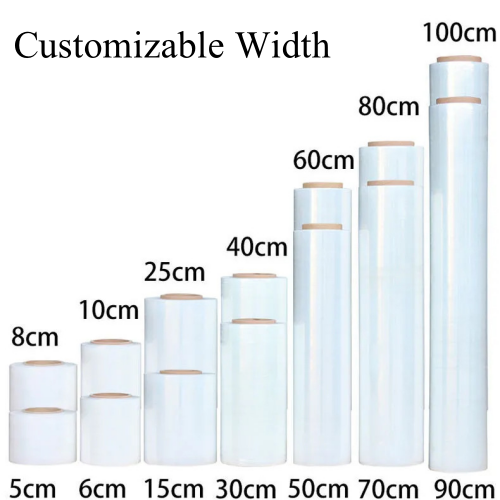
Wider (e.g., 20-30 inches)
|
|
Core Size
|
Standard 3-inch core
|
Larger cores (e.g., 8-inch) for machine arms
|
|
Application
|
Manual wrapping, low-to-medium volume, irregular shapes
|
High-volume pallet wrapping with a stretch wrap machine
|
|
Key Benefit
|
Portability, no equipment needed, more control for odd shapes
|
Speed, consistency, and greater force/efficiency for uniform loads
|
Ultimately, the choice between hand stretch film and machine film depends on your volume, load consistency, and budget.
Gauge, Clarity, and Pre-Stretch: What Do They Mean?
-
Gauge (ga): This indicates thickness. A lower gauge number means a thicker, stronger film (e.g., 60ga is robust for heavy loads), while a higher number means a thinner, more economical film (e.g., 80ga is standard for medium loads).
-
Clarity: Regular cast film is clear, allowing for easy scanning of labels. Black or colored film provides privacy and UV protection for outdoor storage.
-
Pre-Stretch Film: This film is manufactured under tension, allowing it to be stretched further with less effort. Learning how to use pre-stretched film and its benefits is valuable, as it reduces operator fatigue, provides a more consistent wrap, and can lower film consumption by allowing you to use a lighter-gauge film to achieve the same holding force.
How to Use Hand Stretch Film: A Step-by-Step Tutorial
For most small businesses and DIY scenarios, hand wrapping is the go-to method. Here’s how to do it like a pro.
What You‘ll Need
-
A roll of hand stretch film.
-
The palletized load to be wrapped.
-
A stable surface or pallet wrapping turntable (optional but very helpful).
-
A cutting tool (blade, knife, or the built-in cutter on some film dispensers).
Step-by-Step Wrapping Process
Follow this sequence for a secure, professional-looking wrap.
-
Secure the End: Stand facing the pallet. Hold the film roll in your dominant hand and anchor the loose end tightly against the base of the load, about two inches above the floor. Wrap the start of the film around the base 2-3 times to lock it securely. This initial anchor is critical for the entire wrap’s integrity.
-
The Foundation Layer: Continue wrapping 3-4 tight, overlapping layers around the very bottom of the load. This “foundation” prevents the load from shifting upward off the pallet during handling or transit. Ensure each wrap is snug.
-
Spiral Up the Load: Now, begin moving the film upward in a spiral pattern. The key is to maintain a constant, moderate tension and a 50% overlap with each previous spiral. This means half of each new band of film should cover the band below it. This overlap is the secret to getting a tight wrap that won’t unravel. Continue spiraling smoothly to the top of the load.
-
Locking the Top: When you reach the top, make 2-3 full, tight wraps around the very top of the goods to create a secure “lock.” To finish, stretch the film slightly and press it firmly against an upright corner or the top layer. Use your cutting tool to sever the film cleanly. The film’s memory will keep the end adhered.
Pro Tips for Hand Wrapping
-
Move Your Body: Don’t just twist your arms. Pivot your entire torso and step around the pallet. This provides smoother motion and reduces fatigue.
-
Use the “Brake” Technique: Place the fingers of your non-dominant hand lightly against the unspooling film to act as a brake. This gives you precise control over tension, which is essential to know how to prevent stretch film from tearing from over-stretching.
-
Control Tension for Less Waste: Consistent, controlled tension—not maximum pulling force—creates a secure load. Jerky, over-forceful pulls lead to breaks and waste. Mastering this is one of the best tips for reducing stretch film waste.
How to Use a Stretch Wrap Machine (Beginner’s Guide)
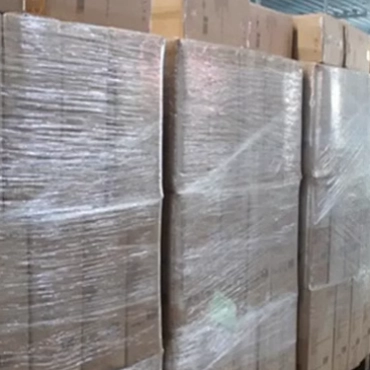
For operations that wrap multiple pallets daily, a machine becomes essential for speed, consistency, and film savings. A stretch wrap machine is a game-changer. It ensures consistent, secure loads faster and with less physical strain. Here’s how to get started.
Types of Stretch Wrap Machines
There are three primary types, each suited for different volume and space needs:
-
Portable (or “Walk-by”) Machines: These are handheld power tools that hold a large roll of machine film. The operator walks around a stationary pallet. It offers semi-automated wrapping with excellent film stretch capabilities, ideal for varied load sizes and facilities with limited space.
-
Turntable (or “Platform”) Machines: The pallet is placed on a rotating platform. The operator holds a film carriage (which can have optional pre-stretch and tension controls) stationary or moves it slightly up and down. This is the most common type, perfect for high-volume, uniform pallet operations.
-
Rotating Arm (or “Ring”) Machines: The pallet remains stationary, while a motorized arm carrying the film roll rotates around it, often with fully automated height control. This is often used for wrapping very tall, lightweight, or unstable loads that shouldn’t be spun on a turntable.
Basic Machine Operation Steps
While each machine model differs, the fundamental process of how to operate a stretch wrap machine follows a universal logic. Always consult your specific machine’s manual first.
-
Load the Film Roll: Power off the machine. Place the roll of machine stretch film onto the machine’s spindle, ensuring it unwinds in the correct direction (usually indicated on the machine). Thread the film end through the designated rollers or brake system.
-
Program the Settings: On the control panel, set the key parameters. This typically includes:
-
Number of Top/Bottom Wraps: How many reinforced layers to apply at the top and bottom of the load?
-
Number of Spiral Wraps (or “Body Wraps”): The main layers that spiral up the load’s body(e.g., 8-10 for a standard load).
-
Overlap Percentage: Set to 50% for standard security.
-
Film Tension/Stretch: A critical setting. Start with the manufacturer’s recommendation (often 150-250% pre-stretch) and adjust based on load stability and film performance.
-
-
Position the Load & Film: Center your pallet on the turntable or in the wrapping zone. Manually bring the film carriage to the bottom start position and attach the film end to the load, usually by tucking it under a top layer or using a quick-attach clamp.
-
Initiate the Cycle: Press the start button. The machine will automatically rotate the load (or the arm), applying film with the pre-set tension, overlap, and number of layers. The operator monitors the first cycle to ensure everything is correct.
-
Cut and Secure: At the end of the cycle, the machine will typically cut the film and apply the end to the load, either with a static-cling tail or a heat seal. Remove the wrapped pallet.

Best Practices and Common Mistakes to Avoid
Following proven techniques separates a secure shipment from a potential disaster. Here are the universal best practices for stretch film application and how to avoid frequent errors.
Best Practices for a Secure Load
Adhering to these core principles constitutes the best practices for stretch film application that professionals rely on.
-
50% Overlap: Whether by hand or machine, a 50% overlap (half of the new film covering the previous layer) is the industry standard. It creates a uniform, shroud-like cover without weak spots.
-
Bottom-to-Top Wrapping: Always start 2-3 inches from the pallet deck and finish at the top. This sequence locks the load down onto the pallet, preventing it from bouncing off during transit.
-
Consistent, Controlled Tension: The goal is firm, even tension—not maximum stretch. Jerky or uneven force creates weak points and wastes film. Let the machine’s pre-stretch or your smooth, controlled pull do the work.
-
Match Film and Wrap to the Load: A standard, stable box pallet may need 8-10 layers. A heavy, dense, or unstable load (like bags or pipes) will require more (12-15+). More weight and instability demand more restraining force. The film should be snug against the load without visibly deforming the boxes. Use the film’s memory, not brute force, to secure the load.
Common Stretch Film Mistakes (And How to Fix Them)
Understanding these common mistakes when using stretch film will save you time, film, and product. Here are solutions for the most common mistakes when using stretch film.
- Mistake 1: Insufficient Wrapping (The “One-and-Done” Wrap)
-
-
The Problem: Only doing 1-2 loose laps around the middle of the load. This provides almost no unitization force. The load will loosen and shift immediately.
-
The Fix: Implement a complete wrap cycle. Always include 3-4 foundation wraps at the bottom, sufficient spiral wraps up the body (with 50% overlap), and 2-3 lock wraps at the top. The entire load, from bottom edge to top edge, must be covered.
-
- Mistake 2: Neglecting the Top and Bottom (“Film Bridging”)
-
-
The Problem: The film is tight across the vertical sides but sagging between the top of the goods and the top lock wrap, or between the bottom of the goods and the pallet deck. This “bridge” allows items to bounce up and down or shift sideways.
-
The Fix: Ensure your spiral wraps go all the way to the very top edge of the product, and your foundation wraps are tight against the pallet deck. For machine wrapping, program adequate “top wraps” and “bottom wraps” to reinforce these critical stress points.
-
- Mistake 3: Excessive Tension (Film Breakage or Crushed Loads)
-
-
The Problem: Pulling the film as hard as possible, especially by hand. This can snap the film mid-wrap or, worse, crush a fragile load (like cardboard boxes) by applying uneven, extreme inward force.
-
The Fix: Use tension, not brute force. For hand wrapping, use the “brake” finger technique for control. The goal is a snug, conforming wrap, not a tourniquet. For machines, reduce the pre-stretch or tension setting. A properly overlapped wrap with moderate tension is far stronger than a highly stretched wrap with thin, weak spots prone to tearing. This directly addresses the issues behind how to prevent stretch film from tearing and protects your goods.
-
Advanced Applications and Problem Solving
Once you’ve mastered standard pallet wrapping, these techniques will help you tackle unique challenges and unlock the full potential of stretch film.
Wrapping Irregular-Shaped Items
Wrapping cylindrical, tapered, or odd-shaped objects is a common challenge. The key is to create a stable base and prevent the film from sliding off. Here’s how to wrap irregularly shaped items effectively:
-
Create a “False Pallet”: For pipes or rolls, first group and stack them on a sturdy wooden pallet or a sheet of corrugated cardboard to create a flat, stable base to wrap from.
-
Use Corner Boards or Edge Protectors: Attach cardboard or foam to sharp protrusions or delicate edges. This protects the film from punctures and provides a more uniform surface for the film to grip.
-
The “Cross-Hatch” or “Diamond” Pattern: Instead of just spiraling, occasionally reverse direction to create a criss-cross pattern. This provides multidirectional stability, crucial for items that aren’t a uniform cube.
-
Segment Wrapping: For a very irregular machine part, wrap sections individually (e.g., the base, then the protruding arm) before wrapping the entire unit together. This prevents movement at the joints.
How to Use Stretch Film for Moving and Storage
Beyond pallets, stretch film is a mover’s secret weapon. Here’s how to use stretch film for moving and protecting belongings:
-
Secure Furniture Doors and Drawers: Wrap film around dressers, cabinets, and wardrobes to keep doors and drawers securely closed during transit. It’s faster and cleaner than tape.
-
Bundle and Protect Upholstery: Use film to wrap sofas, mattresses, and chairs. It protects fabric from dirt and tears. For added protection, first cover with a moving blanket, then wrap with film to hold it in place.
-
Create a Weatherproof Seal: After closing a cardboard box, run a few layers of stretch film over the seams and the top/bottom. This seals out dust and moisture and provides extra strength, preventing the box from bursting.
-
Protect Furniture Surfaces: Lay a sheet of soft cloth or bubble wrap on wooden table tops or other finished surfaces, then loosely wrap with film to hold the padding in place and guard against scratches.
FAQs: Answering Your Top Questions
-
Light Loads (under 1,000 lbs): Use 80-100 gauge. Ideal for stability rather than heavy compression.
-
Standard/Medium Loads (1,000 – 2,000 lbs): 70-80 gauge is the most common choice, offering a good balance of strength and cost.
-
Heavy & Sharp Loads (over 2,000 lbs): Opt for 60-70 gauge or a specialty “high-performance” film for superior puncture and tear resistance.
-
Peel it off slowly at a sharp angle. The film’s memory helps it release cleanly.
-
If a slight haze remains, wipe the surface with a cloth dampened with isopropyl alcohol or a mild citrus-based cleaner.
-
Pro Tip: Always store film rolls in a cool, dry place away from dust and chemicals to prevent surface contamination that can cause residue.
-
Switch to a “Cold Weather” or “Winter” Film: These films are formulated with special additives to remain stretchable and less prone to cracking at low temperatures.
-
Reduce Pre-Stretch and Tension: Stretch the film less (both by hand and machine) to lower the stress on the material.
-
Store Film Indoors: Keep the film rolls at room temperature until just before use. A cold film from an unheated warehouse will perform poorly.
-
Work Slower and More Deliberately: Allow the film to warm slightly from the friction of your hands as you wrap, and avoid sharp, jerky movements.
Conclusion: Wrap It Up Right
Mastering the use of stretch film is more than a mundane task—it’s a direct investment in the safety, efficiency, and cost-effectiveness of your operations. From choosing the right film and applying it with proper technique to avoiding common pitfalls and tackling advanced challenges, each step you perfect translates into fewer damaged goods, lower material waste, and more secure shipments.
Whether you’re hand-wrapping a few pallets a day or operating a high-speed machine line, the principles remain the same: understand your material, apply it with consistent and appropriate force, and ensure complete coverage. By applying the knowledge from this guide, you’re not just wrapping a load; you’re securing your product’s journey and your peace of mind. Now, go wrap with confidence.