



Introduction: Beyond the Basics
If you’ve ever stood in front of multiple bins, holding a piece of trash and wondering, “Which one does this go in?”, you’re not alone. Effective waste management starts with proper separation at the source. But what are the actual categories you need to know?
The four universally recognized methods for separating waste are: Recyclable, Hazardous, Organic (often called Wet), and Residual (or Dry) waste. This “4-category framework” forms the backbone of modern municipal solid waste systems worldwide, from the European Union’s Waste Framework Directive to practices in major cities across North America and Asia.
While the concept seems simple, the devil is in the details. A single misplaced item—like a greasy pizza box in the recycling bin—can contaminate an entire load, sending it to the landfill instead. This guide goes beyond just listing the four methods. We’ll define each category with clear examples, provide tools for instant decision-making, and explain the why behind the rules to help you sort with confidence and make a real environmental impact.
Part 1:The 4-Category Framework – Defined with Examples
Here, we break down each of the four core waste separation methods, their purposes, and what belongs in each category. Think of this as your master reference list.
1. Recyclable Waste
Core Principle: This includes dry materials that can be collected, processed, and remanufactured into new products. Proper recycling conserves resources, saves energy, and supports the circular economy.
-
-
Paper & Cardboard: Newspapers, office paper, cardboard boxes (flattened).
-
Plastics: Bottles, jugs, and containers marked with resin codes #1 (PET) and #2 (HDPE). Always check local guidelines.
-
Glass: Bottles and jars (clear, green, or brown).
-
Metals: Aluminum cans, steel (tin) food cans, clean aluminum foil.
-
-
Clean: Rinse containers to remove food residue. A spoonful of leftover yogurt can contaminate an entire bale of recyclables.
-
Dry: Water damages paper fibers and sorting machinery. Ensure items are drained.
-
Loose: Never bag recyclables. Plastic bags jam sorting equipment. Place items loosely in your bin.
-
Pizza Boxes: Only the clean lid is recyclable. Greasy sections go to residual waste.
-
Plastic Bags & Wraps: These typically do not belong in curbside recycling. Most supermarkets have dedicated collection bins.
-
Coffee Cups: The paper sleeve is recyclable. The wax- or plastic-lined cup itself is usually not.
2. Hazardous Waste
Core Principle: These items contain components that are flammable, toxic, corrosive, or reactive. They pose a significant risk to human health, sanitation workers, wildlife, and the environment if disposed of in regular trash.
-
Electronics (E-Waste): Phones, computers, cables, chargers
-
Batteries: All types—alkaline, lithium-ion, rechargeable
-
Chemicals: Paints, solvents, pesticides, cleaning agents
-
Mercury-containing Items: Thermometers, compact fluorescent lamps (CFLs)
-
Medical Waste: Syringes, expired medications (check local take-back programs)
-
Leach toxins into groundwater from landfills
-
Cause fires or explosions in recycling facilities
-
Endanger sanitation workers
Safe Disposal: Use community hazardous waste collection events or permanent drop-off facilities. Many electronics retailers offer battery and e-waste recycling.
3. Organic / Wet Waste
Core Principle: This stream consists of biodegradable material from kitchen and garden activities. When processed correctly through composting or anaerobic digestion, it turns into nutrient-rich compost or biogas, diverting waste from landfills where it would produce methane, a potent greenhouse gas.
-
Food Scraps: Fruit/vegetable peels, eggshells, coffee grounds, tea bags
-
Garden Waste: Grass clippings, leaves, small branches, houseplants
-
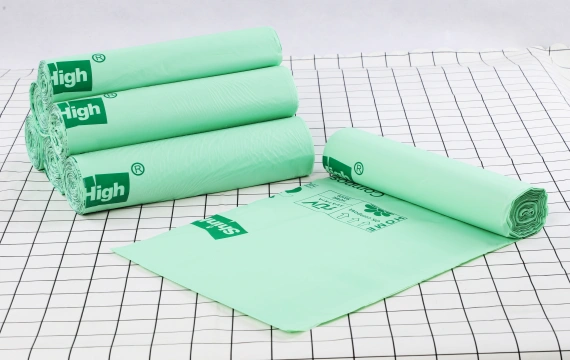
Certified Compostable Products: Look for BPI or OK Compost labels on bags and food service ware
-
Compost: A soil amendment that improves soil health and reduces fertilizer needs
-
Biogas: Renewable energy captured from anaerobic digestion facilities
-
Landfill Diversion: Organic waste in landfills produces methane, a potent greenhouse gas
-
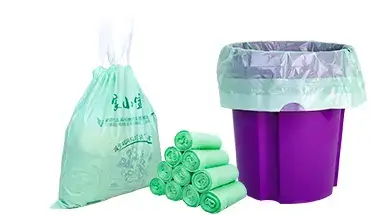
Use a kitchen caddy with a liner (paper bags or certified compostable bags)
-
Empty regularly to prevent odors and pests
-
Avoid adding meat, bones, and oily foods unless your local program explicitly accepts them
4. Residual / Dry Waste
Core Principle: This is the catch-all category for non-recyclable, non-hazardous, and non-organic waste. It is the material with no current viable recovery path and is typically sent to landfills or waste-to-energy facilities.
-
Soiled/Contaminated Items: Used paper towels, napkins, diapers, tissues
-
Composite Materials: Chip bags, juice pouches, plastic-coated paper
-
Disposable Items: Plastic utensils, styrofoam, ceramic dishes, window glass
-
Personal Hygiene Products: Cotton swabs, dental floss, hair
This category represents the current failure point in our waste systems—items that are technically recyclable but economically impractical to process, or products designed without end-of-life consideration. The goal of effective waste separation is to minimize this stream as much as possible.
Reduction Strategy: When faced with an item that might belong here, ask: “Could I choose a recyclable or reusable alternative next time?”
Part 2: Quick-Reference Tools
To make sorting second nature, use these at-a-glance tools.
A Simple Decision Flowchart
Follow these steps for the most common household items:
-
Start: Is the item Hazardous (battery, chemical, e-waste)? → YES: Take to a special drop-off point. NO: Go to step 2.
-
Is it Organic/Wet (food scraps, yard waste)? → YES: Place in compost/green bin. NO: Go to step 3.
-
Is it Clean, Dry, and a commonly Recyclable material (like paper, plastic bottle, can, glass jar)? → YES: Place in recycling. NO: Go to step 4.
-
Place it in the Residual/Dry waste bin.
Remember this mantra: “When truly in doubt, throw it out (to residual) to avoid contaminating the recycling or compost streams.” A single wrong item can spoil an entire batch.
Common Items Cheat Sheet
|
Item
|
Category
|
Key Notes
|
|---|---|---|
|
Lithium-ion Battery
|
Hazardous
|
Tape terminals; recycle at electronics retailer. Do NOT put in trash.
|
|
Pizza Box
|
Recyclable & Residual
|
Clean top half: Recyclable. Greasy bottom: Residual.
|
|
Coffee Pods (plastic/aluminum)
|
Residual (usually)
|
Often, composite materials. Check if the brand has a specific take-back program.
|
|
Glass Drinking Cup
|
Residual
|
Ceramics and heat-treated glass (like cookware, cups) are NOT recyclable with bottle glass.
|
|
Shredded Paper
|
Recyclable (maybe)
|
Often requires special handling. Place in a clear paper bag if allowed. Check local rules.
|
|
Plastic Grocery Bag
|
Recyclable (at store)
|
Do NOT place in curbside bin. Return to the grocery store drop-off bin.
|
Part 3: Why These 4 Methods?
Separating waste isn’t busywork—it’s the fundamental gateway to a functional circular economy. Each stream represents a distinct technological and biological pathway that, when kept pure, creates economic and environmental value.
The Science Behind the Sorting
Recyclables follow a mechanical and sometimes chemical reprocessing path. Paper fibers can typically be recycled 5-7 times before becoming too short. Plastics are shredded, washed, melted, and pelletized for new manufacturing. Glass and metals can be recycled infinitely without quality loss—but only if they arrive at facilities free of contamination.
Hazardous materials undergo specialized treatment. Batteries are dismantled for metal recovery. Electronics are carefully disassembled for component reuse and precious metal extraction. Chemicals are neutralized or used in waste-to-energy applications with advanced emission controls.
Organic waste leverages biology. In composting, microorganisms break down matter aerobically (with oxygen) into humus. In anaerobic digestion, microorganisms work without oxygen to produce biogas (methane) that can generate electricity. Both processes divert methane—a greenhouse gas 25x more potent than CO₂—from landfills.
Residual waste represents the current system’s limitations. Modern waste-to-energy plants can incinerate it to generate electricity with strict emission controls. What cannot be burned goes to engineered landfills designed to prevent groundwater contamination.
From Linear to Circular: The System Perspective
The traditional “take-make-dispose” linear economy depends on extracting virgin resources. The four waste streams form the collection infrastructure for a circular economy that:
-
Designs out waste by keeping materials in use
-
Regenerates natural systems through compost application
-
Reduces extraction pressure on virgin resources
Economic Impact: Pure recycling streams have market value. Contaminated recycling becomes trash with disposal costs. A 2019 study found that contamination reduces the value of recyclable materials by 20-40%, making programs economically unsustainable.
Climate Connection: Proper organic waste management is one of the most effective climate actions available to municipalities. The EPA estimates that food waste in landfills accounts for 58% of landfill methane emissions. Diverting organics to composting or digestion directly reduces greenhouse gases.
Global Variations on the Theme
While the 4-method framework is universal, implementation varies:
-
Germany & Austria: Operate sophisticated 5-6 stream systems, including separate glass by color
-
Japan: Has complex categorization (often 10+ types) with strict collection schedules
-
San Francisco, USA: Achieves 80% diversion through aggressive 3-stream (recycling, compost, landfill) programs
-
Emerging Economies: Often focus first on separating “wet” (organic) from “dry” (recyclable/residual) to reduce landfill volume and create composting opportunities
The common thread? Separation at source—whether into 3, 4, or more streams—consistently delivers higher quality materials and better environmental outcomes than post-collection sorting.
The Global Impact: From Your Bin to the Circular Economy
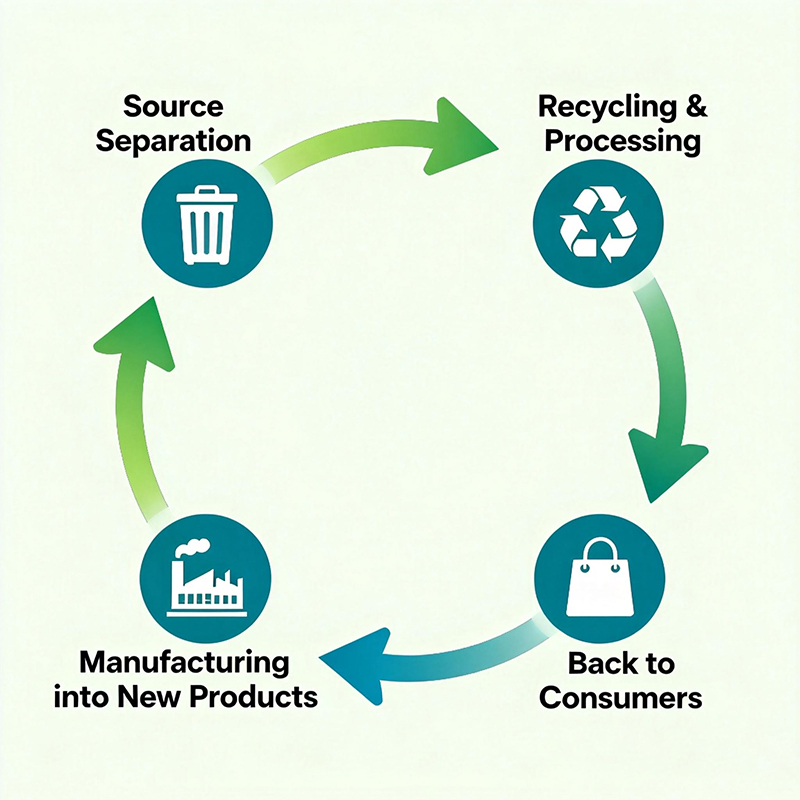
Your sorting action is the first and most crucial link in the circular economy—a system aimed at eliminating waste and continually using resources. By creating clean streams of recyclables and organics, you provide the raw materials for new products and energy, directly reducing the need for virgin resource extraction and cutting greenhouse gas emissions.
The ultimate metric for cities is the “landfill diversion rate.” Your correct sorting directly boosts this percentage, helping municipalities meet climate goals and save millions in disposal costs.
Part 4: Pro Tips for Implementation at Home & Business
Knowing the rules is one thing; setting up a system that works for you is another. Here’s how to make waste separation effortless and effective.
For Households:
-
The Two-Bin + One-Bag Starter Kit: Start simple. Place a Residual bin and a smaller Organic caddy (with compostable liners) under the kitchen sink. Keep a dedicated bag or bin in a utility closet for Recyclables (cans, bottles, paper). This matches where most waste is generated.
-
Handle Hazardous Waste Proactively: Designate a small, safe box in the garage or storage for batteries, burnt-out LEDs, and old electronics. When it’s full, please take it to a collection point. Don’t let them accumulate in drawers.
-
The “When in Doubt” Rule: If you’re unsure about an item after a 30-second check (e.g., looking it up on your municipality’s app), place it in the Residual waste. It’s better to landfill one questionable item than to contaminate a whole batch of recyclables, which then gets landfilled anyway.
-
Leverage Technology: Download your city’s official waste management app. Use tools like Earth911’s Recycling Search or Recycle Coach to look up specific items based on your location.
For Offices & Small Businesses:
-
Standardize & Label: Use consistent, color-coded bins (e.g., blue for recycling, green for organics, black for residual waste) across all common areas. Use clear, icon-based labels on every bin, not just text.
-
Educate & Communicate: Include waste separation guidelines in onboarding. Send a monthly “Waste Tip” email highlighting a common mistake (e.g., “Coffee cups are not recyclable, but the cardboard sleeve is!”).
-
Audit Your Waste: Periodically check what’s in your bins. If you find many recyclables in the residual stream, your system or training needs adjustment.
Frequently Asked Questions (FAQ)
Q1: What’s the difference between “waste separation” and “waste segregation”?
A: In everyday use, they are often interchangeable. However, technically, separation usually refers to the act of dividing waste into different streams by the generator (like you at home). Segregation often implies a more systematic, sometimes regulatory-driven, division of waste at the source to ensure purity for downstream processing.
Q2: Are the 3 R’s (Reduce, Reuse, Recycle) related to these 4 methods?
A: Absolutely. The 4 Methods of Separation are the practical implementation of the “Recycle” step. The hierarchy is crucial: First, reduce your consumption. Then, reuse items as much as possible. Finally, what’s left should be properly separated into these four categories for responsible Recycling, recovery, or disposal.
Q3: What is the single biggest mistake people make when separating waste?
A: “Wish-cycling” — putting non-recyclable items in the recycling bin in the hope they will be recycled. This includes plastic bags, greasy pizza boxes, disposable coffee cups, and tangled electronics cords. Wish-cycling increases processing costs and can lead to entire loads of valid recyclables being rejected.
Q4: Why do recycling rules vary so much from city to city?
A: It depends on the capabilities of your local Material Recovery Facility (MRF) and the end markets for recycled materials. An MRF with advanced optical sorters can handle more plastic types. If there’s a local buyer for a specific material (e.g., glass), it’s more likely to be accepted. Always check your local municipality’s website for the definitive list.
Conclusion
Mastering the four methods of waste separation—Recyclable, Hazardous, Organic, and Residual—is more than a household task; it’s the first and most critical act of modern environmental citizenship. By sorting correctly, you ensure that valuable materials are reclaimed, toxins are contained, nutrients are returned to the earth, and only true waste is landfilled.
Start by implementing the simple systems from Part 4, use the Quick-Reference Tools in Part 2 when in doubt, and remember the ultimate goal: to shrink your residual waste bin. Share this guide with friends, family, and colleagues. When each of us sorts smarter, we collectively build a cleaner, more resource-efficient circular economy for everyone.
Ready to take the next step? Visit your local municipal sanitation website today, bookmark their recycling guide, and make your commitment to zero waste a reality.