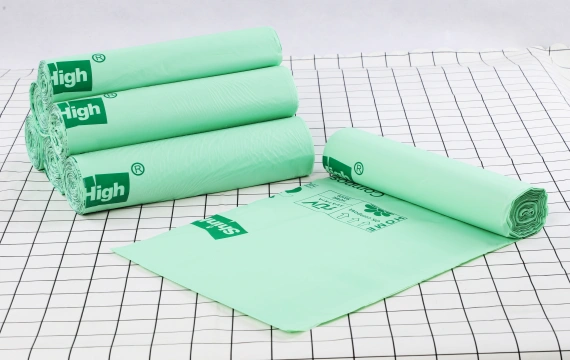




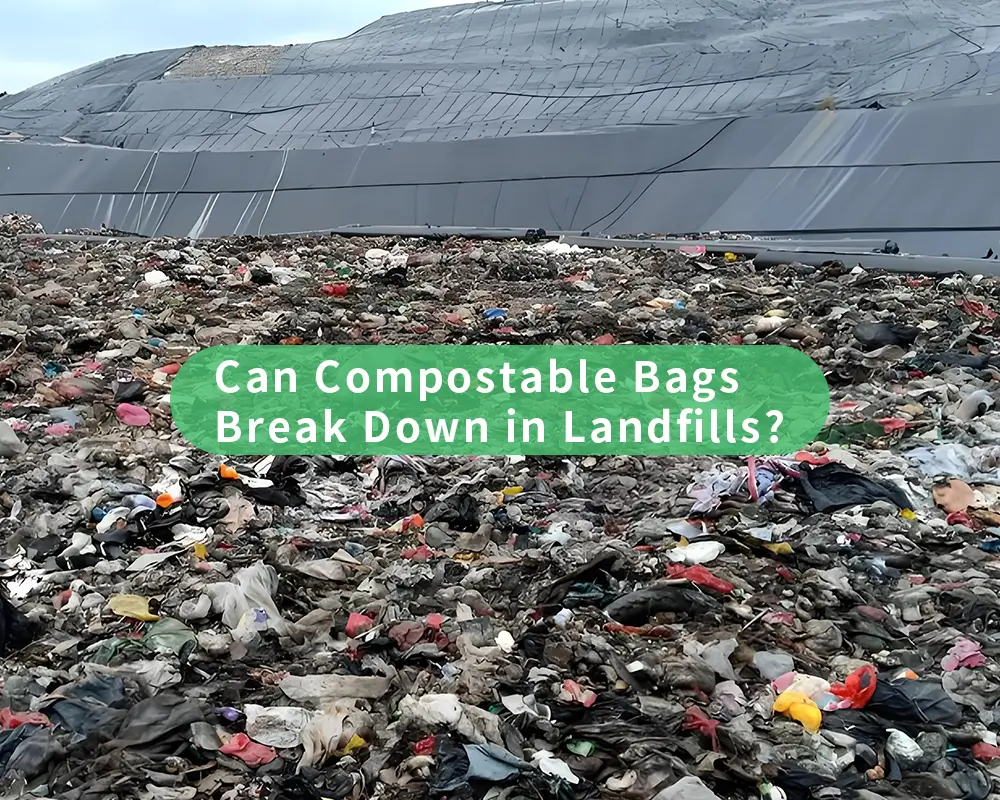
The eco-friendly promise of compostable bags is clear: they’re supposed to break down and return to the earth. But if you’re asking, “Do compostable bags break down in landfills?” the honest answer is: No, not effectively, and sending them there can do more harm than good.
This happens because landfills are designed to bury trash, not break it down. For compostable bags to decompose as intended, they need specific conditions found only in composting facilities. In this guide, we’ll uncover the science behind why landfills fail compostables, the environmental impact of getting it wrong, and crucially—how to dispose of them properly so they fulfill their green promise.
How Landfills Work: Designed for Storage, Not Breakdown
To understand why compostable bags fail, it is essential to understand how a modern landfill operates. They are engineered for containment, not breakdown.
-
Anaerobic (Oxygen-Free) Conditions: Trash is tightly compacted and buried under daily layers of soil or cover material. This severely restricts airflow, creating an oxygen-starved environment.
-
Lack of Moisture and Heat: While some moisture exists, it’s not the consistent, balanced dampness of a compost pile. Landfills also do not generate the sustained high temperatures (50-60°C/122-140°F) required for industrial composting.
-
Goal is Stability: Modern landfill engineering aims to minimize breakdown to reduce settling, odors, and the production of leachate (contaminated liquid).

What Occurs to Organics in a Landfill?
In landfills, organic materials are ensnared between layers of trash, and oxygen, water, and aerobic bacteria are lacking. This results in anaerobic decomposition, during which methane—a potent greenhouse gas—is emitted. If not properly contained, these gases can escape into the atmosphere and significantly contribute to climate change.
Compostable vs. Biodegradable: Why the Difference Matters
This is a critical point of confusion that affects proper disposal.
-
Compostable: Materials that will break down into carbon dioxide, water, and nutrient-rich compost under specific, controlled conditions (like in an industrial composting facility). They must meet standards such as ASTM D6400 and EN 13432, which require decomposition within 90-180 days without leaving toxic residues.
-
Biodegradable: A broader term meaning materials can be broken down by microorganisms over an unspecified time and under various conditions. They may leave behind microplastics and do not necessarily turn into beneficial compost.
Crucially, neither “compostable” nor “biodegradable” guarantees breakdown in a landfill’s anaerobic environment.
The Science: Why Landfills Stop Compostable Bags from Decomposing
Compostable bags, typically made from plant-based materials like PLA (corn starch) or PBAT, are food for specific microbes. These microbes need the “Goldilocks conditions” found in compost piles:
-
Plenty of oxygen (aerobic environment)
-
Balanced moisture
-
Sustained high heat
-
A rich, active microbial community
A landfill provides none of this consistently. In the compacted, oxygen-poor (anaerobic) environment, a different, much slower process called anaerobic digestion takes over. Here, organic matter breaks down and produces methane (CH₄)—a potent greenhouse gas with over 25 times the warming potential of carbon dioxide.
So, a compostable bag in a landfill doesn’t just sit there intact; it very slowly breaks down in the worst possible way, contributing to climate change.
Timeline: How Long Do Compostable Bags Actually Take to Break Down?
The disposal method makes all the difference:
-
In an Industrial Composting Facility: 90 to 180 days, as per certification standards.
-
In a Home Compost Pile:6 to 12 months or more, and only if the bag is certified for home composting (look for the “OK Compost HOME” logo).
-
In a Landfill: Years to decades, or longer. Without the right conditions, the process is drastically slowed or virtually halted. The bag may fragment but will not fully biodegrade into beneficial organic matter within a meaningful human timeframe.
The Environmental Impact
When compostable bags are sent to a landfill, their environmental benefit is not just neutralized—it can be reversed.
-
Methane Emissions: As they slowly break down anaerobically, they contribute to landfill methane emissions.
-
Wasted Resources: The energy, water, and crops used to produce these bags yield no composting benefit.
-
Contamination: In recycling streams, they can contaminate batches of conventional plastic recycling.
The Right Way to Dispose of Compostable Bags
To ensure your compostable bags live up to their promise, follow this hierarchy:
-
Industrial/Commercial Composting (BEST): This is their designed end-of-life. Contact your local waste authority or search for “industrial composting facility near me” to see if they accept them.
-
Home Composting (GOOD, if certified): Only if the bag is labeled “Home Compostable” (look for the “OK Compost HOME” or equivalent logo). Shredding the bag helps.
-
General Waste/Landfill (WORST): Treat this as a last resort. If no composting option is accessible, understand that the bag will not provide its intended environmental benefit and may contribute to methane emissions.
Compostable Bags in Landfills: Frequently Asked Questions (FAQ)
A: No, not effectively. Landfills lack the oxygen, moisture, and consistent heat required for compostable materials to decompose. They break down very slowly via anaerobic digestion, often producing methane.
A: It can take years or even decades, compared to just 90-180 days in an industrial composting facility. The anaerobic conditions of a landfill drastically slow or halt the intended decomposition process.
A: They are buried and compacted. In the anaerobic environment, they undergo a very slow anaerobic digestion process instead of aerobic composting. This slow breakdown can generate methane, a potent greenhouse gas.
A: Neither is designed for nor performs well in landfills. “Biodegradable” is an unregulated term and may simply fragment. “Compostable” items require specific conditions not found in landfills. Reducing overall bag use is best.
A: Only if they are specifically certified for home composting (e.g., with the “OK Compost HOME” logo). Most compostable bags require the high temperatures of industrial facilities.
Reducing, Reusing, Recycling: Optimal Solutions for Landfills
The call “Reduce, Reuse, Recycle” shows an effective strategy for waste management, minimizing the environmental impact of landfills.
By prioritizing reduction, individuals and organizations can significantly decrease the amount of waste they generate. This needs to change consumption habits and select products with less packaging or longer lifespans.
Reusing items extends their utility and decreases premature disposal, thereby reducing the need for new products, which, in turn, lessens resource extraction and energy consumption associated with manufacturing.
Recycling plays a key role in transforming waste into a valuable resource, maintaining materials in circulation rather than throwing them into landfills. Efficient recycling not only conserves natural resources but also reduces greenhouse gas emissions by curbing the extraction and processing of raw materials.
Collectively, these three practices—reduce, reuse, and recycle—include a comprehensive approach that not only alleviates pressure on landfills but also fosters a more sustainable interaction with the environment. Adhering to these principles collectively can significantly reduce the amount of waste, fostering a healthier planet and a more sustainable future.
You Might Also Like
How to Identify if A Plastic Bag is Biodegradable and Compostable?
Ten Compostable Bag Manufacturers in the World
What’s the Difference Between Plastic Bags and Compostable Bags?