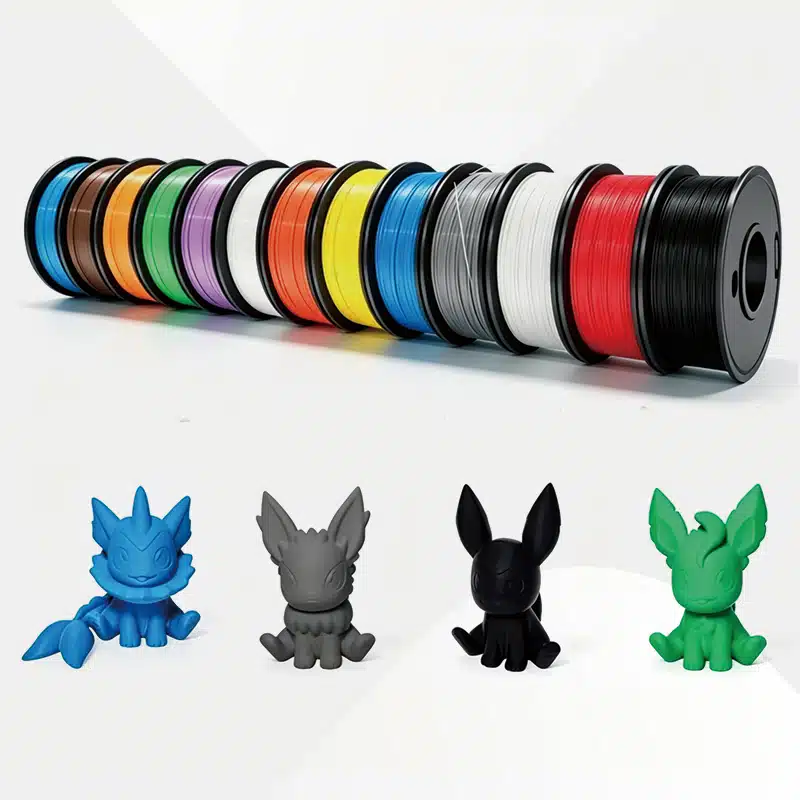




If you’ve bought filament in the last two years, you’ve seen the letters “PLA+” everywhere. It sits on the shelf next to standard PLA, usually costing 4 more per kilogram. But what is it, really? Is it just a marketing gimmick, or does it fundamentally change how your 3D prints perform?
In 2026, the line between standard PLA and its “plus” variants has become sharper—and more confusing. Brands like eSUN, Polymaker, and even source manufacturers like ShinHigh have refined their formulations to target specific mechanical properties.
This guide cuts through the marketing noise. We’ll explain the chemistry behind PLA+, compare real-world strength data, debunk the heat-resistance myth, and help you decide if upgrading to PLA+ is worth it for your next project.
The Chemistry: Why “PLA+” Isn’t a Specific Material
First, let’s clear up a common misconception: There is no official ASTM or ISO standard for “PLA+”.
Unlike “PLA” (Polylactic Acid), which refers to a specific biopolymer derived from fermented corn starch or sugarcane, “PLA+” is a trade term. It generally refers to a modified PLA blend. Manufacturers take standard PLA resin and add various additives (sometimes called “tougheners” or “impact modifiers”).
Common additives include:
-
TPU (Thermoplastic Polyurethane): Added to increase flexibility and impact resistance.
-
Talc or Calcium Carbonate: Sometimes added to reduce shrinkage or alter surface texture.
-
Proprietary Copolymers: Used to improve interlayer adhesion.
Strength Showdown: PLA vs PLA+ Data
When we talk about “strength,” we are usually talking about three things: Tensile Strength (resistance to breaking under tension), Impact Strength (resistance to shattering when dropped), and Flexural Strength (resistance to bending).
Here is how standard PLA generally compares to a quality PLA+ formulation in 2026:
|
Property
|
Quality PLA+ (e.g., eSUN, ShinHigh)
|
The Difference
|
|
|---|---|---|---|
|
Tensile Strength
|
50–60 MPa
|
45–55 MPa
|
Slightly lower or similar. PLA+ trades a bit of rigidity for toughness.
|
|
Impact Strength (Izod)
|
3–5 kJ/m²
|
10–25 kJ/m²
|
Significant Improvement. PLA+ is 2–5x more resistant to shattering.
|
|
Elongation at Break
|
4–6%
|
8–20%
|
Major Improvement. PLA+ is much less brittle and can bend further before snapping.
|
|
Heat Deflection
|
~55–60°C
|
~55–60°C
|
No Change. (See Myth below)
|
If you print a standard PLA cube and drop it on a tile floor, it might shatter into pieces. Drop a PLA+ cube, and it will likely just bounce. For functional parts like brackets, hooks, or drone frames, PLA+ is objectively superior because it won’t snap under sudden stress.
Debunking the Myth: Does PLA+ Handle More Heat?
Standard PLA and PLA+ have nearly identical glass transition temperatures (). Both begin to soften at around 55–60°C (131–140°F). If you leave a PLA+ print in a hot car during a summer day in Texas or Arizona, it will deform just as quickly as a standard PLA print.
Sometimes, additives used to make PLA+ more flexible can slightly alter the thermal properties, but not enough to matter in real-world applications. If your part needs to withstand higher temperatures (e.g., near a light bulb, inside a computer case, or in a hot garage), neither PLA nor PLA+ is the right choice. You should be looking at:
-
PETG (Heat Deflection ~75–80°C)
-
ABS/ASA (Heat Deflection ~95–105°C)
-
Polycarbonate (PC) (Heat Deflection ~120°C+)
PLA+ improves impact strength, not heat resistance.
Print Settings: Do You Need to Tune Your Machine?
Yes, but only slightly. Because PLA+ contains additives, the melting behavior can differ from pure PLA.
-
Nozzle Temperature: While standard PLA likes 190–210°C, PLA+ often prints best between 210–230°C. Printing PLA+ too cold can result in weak layer adhesion because the modified polymers don’t fuse as easily.
-
Bed Temperature: A heated bed is more important for PLA+. Aim for 50–70°C to ensure the bottom layers stay stuck during the longer cooling cycle.
-
Cooling: Like standard PLA, PLA+ loves cooling. Keep your fan at 100% unless printing very small layers or bridging.
-
Retraction: PLA+ tends to be a bit stringier than standard PLA due to the flexible additives. You might need to increase your retraction distance by 0.5–1.0 mm compared to your standard PLA profile.
When Should You Actually Use PLA+?
Don’t buy PLA+ for everything. Standard PLA is cheaper, smells less (like sweet popcorn), and comes in a wider variety of aesthetic finishes (like silky or glow-in-the-dark).
Use PLA+ for:
-
Functional Parts: Anything that will be handled frequently, dropped, or screwed into. Examples: Drone arms, phone cases, tool holders, brackets, and cosplay armor.
-
Mechanical Stress Points: Gears, hinges, or parts that experience vibration.
-
Enclosures: Boxes that need to protect electronics; the added impact resistance helps if the device is bumped.
-
Decorative Models: Figurines, vases, and desk toys where aesthetics beat durability.
-
Rapid Prototypes: When you just need to check the fit of a design quickly and cheaply.
-
Artistic Projects: When you need specific visual effects like translucent or metallic finishes.
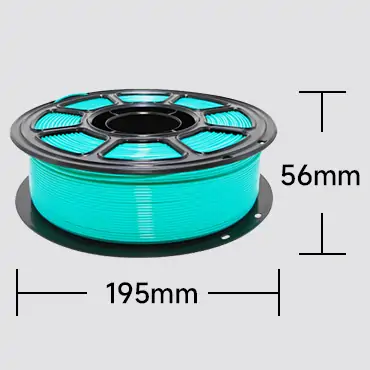
The Manufacturing Perspective: Consistency Matters
For hobbyists printing one spool at a time, the difference between brands is mostly about color and price. But for professional print farms or businesses sourcing bulk PLA filament, the conversation shifts to consistency.
When you buy 100 spools of “PLA+”, you expect the mechanical properties to be identical across every spool. Unfortunately, many small brands simply repackage generic pellets without strict quality control. This leads to “batch-to-batch” variance—where Spool #1 prints perfectly at 210°C, but Spool #2 from the same brand clogs your nozzle because the additive ratio changed.
This is where working with a source manufacturer makes a difference.
Their approach to PLA+ focuses on:
-
Laser Diameter Control: Maintaining a strict ±0.02mm tolerance ensures consistent flow rates, which is critical for maintaining the mechanical integrity of the “plus” additives.
-
Batch Traceability: Providing a Certificate of Analysis (CoA) for every lot ensures that the impact modifiers are present in the same concentration every time.
-
Custom Formulations: For B2B clients, ShinHigh offers OEM/ODM services to tweak the “PLUS” factors—whether you need more UV resistance, specific colors (RAL/Pantone), or enhanced toughness for industrial jigs.
If you are buying PLA+ for a commercial product, sourcing from a manufacturer with 20+ years of experience in bioplastics ensures that the “Plus” in PLA+ is a measurable, repeatable scientific fact—not just a label on the box.
Conclusion: Is PLA+ Worth It in 2026?
Yes, but only for the right jobs.
PLA+ is not a magic bullet. It won’t save your prints from hot environments, and it costs a bit more. However, if you are tired of your prints snapping like a cracker when they hit the floor, PLA+ is the answer. It offers a massive upgrade in impact resistance and durability, making it the go-to choice for anything functional.
For hobbyists, keep both on hand: Standard PLA for the pretty stuff, and PLA+ for the parts that need to work. For businesses and print farms, ensuring you buy from a supplier with rigorous QC—like a dedicated manufacturer rather than a reseller—is the key to unlocking the true potential of modified PLA in 2026.