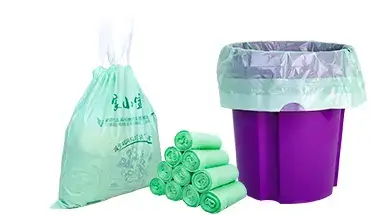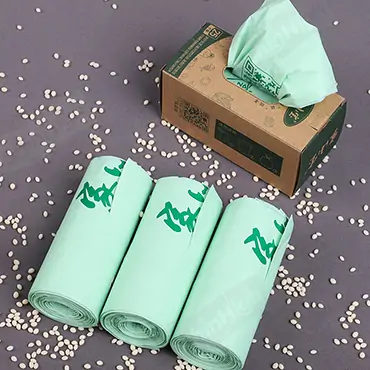




Why 13 Gallon “Tall Kitchen” Bags Dominate Global Retail & B2B
If you import or distribute household disposables in North America or Europe, 13-gallon tall kitchen trash bags are one of the most strategic SKUs you can carry. In the U.S., the standard kitchen step can is sized around 13 gallons (49–50 liters), which makes this bag size the default choice for millions of households.
For distributors, wholesalers, and private label brands, 13-gallon tall kitchen bags are a strategic anchor product:
-
High repeat purchase rate: Households replace them weekly, ensuring steady reorders.
-
Fast inventory turnover: One of the fastest-moving SKUs in the janitorial and household categories.
-
Ideal for private labeling: Consistent sizing and broad demand make it perfect for building your own brand.
👉 What Size Trash Bag Do I Need? (2 Easy Steps)— a great resource to share with your sales team or retail buyers.
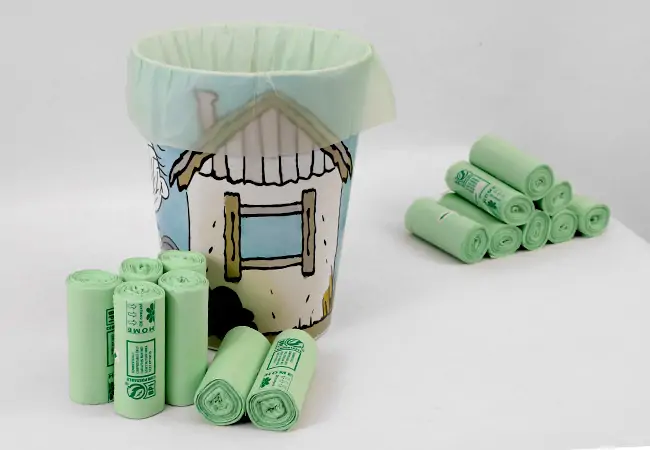
Standard Dimensions – Not All “13 Gal” Are Equal
Here’s a mistake many first-time importers make: assuming every “13-gallon” bag will fit every 13-gallon bin.
In reality, gallon rating describes volume capacity—not physical dimensions.
The industry-standard size for U.S. tall kitchen liners is:
-
Lay-flat width: 24″ (61 cm)
-
Height: 33″ (84 cm)
Quick Fit Formula for B2B Buyers
To ensure compatibility, use these simple calculations:
-
Bag Width = Rim Circumference ÷ 2
-
Bag Height = Can Height + 4–6″ (10–15 cm) overhang
Why This Matters
Even a 1–2 inch deviation can cause the bag to slip inside the bin under weight, leading to messy leaks and unnecessary returns.
Professional buyers always confirm actual inch dimensions, not just gallon labels.
Thickness (Mil/Micron) – Matching Strength to Application
Once dimensions are confirmed, thickness becomes the next critical spec.
In North America, thickness is measured in mils (1 mil = 0.001″); globally, microns (μm) are more common.
Below is a practical reference table for 13-gallon kitchen trash bags:
|
Thickness Grade
|
Mil / Micron
|
Recommended Use
|
|---|---|---|
|
Light-Duty
|
0.5–0.7 mil (12–18 μm)
|
Dry waste, paper, recycling
|
|
Standard
|
0.9–1.1 mil (22–28 μm)
|
General kitchen wet waste
|
|
Heavy-Duty
|
1.2–1.5 mil (30–38 μm)
|
Bones, cans, high-moisture food scraps
|
Material Choice: LDPE vs HDPE
-
LDPE / LLDPE (Low-Density Polyethylene):Stretchier and more puncture-resistant—the preferred choice for kitchen wet waste.
-
HDPE (High-Density Polyethylene):Thinner, stiffer, and more economical—better suited for offices, restrooms, and dry waste streams.
B2B Reminder:
Many buyers focus only on price per unit, overlooking thickness and material grade.
The result? Bags that tear easily, leak in transit, or disappoint end customers—ultimately hurting your margins and brand reputation.
A smart sourcing strategy matches thickness to application, not just to the lowest quote.
Closure Types & Features That Drive Retail Sell‑Through
When it comes to kitchen trash bags, the type of closure is often the deciding factor for end consumers at the shelf—and that directly affects your sell-through rate as a distributor.
Here is the hierarchy of closure types in the North American market:
-
Drawstring (Most Popular): Allows users to lift, tie, and carry without touching the waste. This is the dominant format for private label and national brands in the U.S.
-
Flap-Tie: Utilizes integrated flaps to secure the bag. It uses less material than a drawstring but is slightly less convenient.
-
Open Top (Basic): Requires manual knotting. Typically reserved for budget lines or non-kitchen applications.
Value‑Adding Features for Retail SKUs
-
Scents: Lemon, lavender, or unscented options to match regional preferences.
-
Odor Control / Antibacterial Additives: Additives that inhibit bacterial growth. Especially attractive for kitchen and food‑service segments.
-
Color Options: White (premium look), black (conceals waste), transparent (recycling programs).
Bottom Seal Technology
-
Star‑Seal Bottom: Leak‑resistant, conforms to bin shape, and distributes weight evenly—strongly recommended for kitchen applications.
-
Flat Seal: Economical but more prone to leaks under heavy or wet loads.
Conventional vs Compostable – Material Choices for 2026
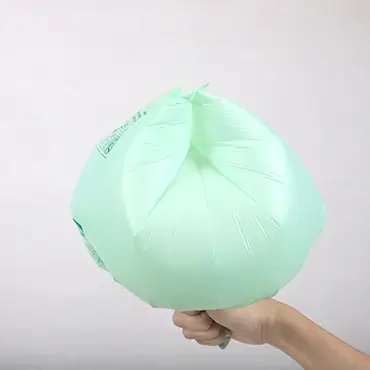
As ESG regulations tighten globally, B2B buyers must decide between conventional plastics and emerging compostable solutions.
Conventional: LDPE / LLDPE (+ PCR Options)
-
Standard Choice: Virgin or recycled LDPE/LLDPE blends remain the benchmark for strength and cost-effectiveness.
-
PCR (Post-Consumer Recycled): Many retailers now require 20%–80% PCR content to meet sustainability goals. Look for suppliers with GRS (Global Recycled Standard) certification.
Compostable: PLA + PBAT Blends
-
Material Composition: Typically a blend of Polylactic Acid (PLA) from plants and PBAT (a biodegradable polymer), designed to break down under industrial composting conditions.
-
Mandatory Certifications:Never accept vague claims. Insist on:
-
USA: ASTM D6400 + BPI (Biodegradable Products Institute) Certified.
-
Europe: EN 13432 + OK Compost or OK Compost HOME.
-
Marketing a bag simply as “biodegradable” without proper certification is increasingly illegal in states like California and countries within the EU. This exposes your brand to fines and recalls.
Many importers lose money not because of the factory price, but because of hidden quality failures after the containers hit the port. Avoid these common pitfalls:
|
Mistake
|
Why It Hurts Your Business
|
|---|---|
|
❌ Chasing the lowest unit price
|
Ignoring mil thickness and tensile strength leads to bags that tear easily, resulting in high return rates and damaged brand reputation.
|
|
❌ Ignoring drawstring design differences
|
Drawstrings use extra material. If the factory doesn’t adjust the bag width accordingly, the finished bag becomes too narrow for standard kitchen bins—and retailers send them back.
|
|
❌ Skipping basic performance tests
|
Without a simple water-load or puncture test before shipping, you won’t know the bag fails until customers complain. At that point, the containers are already sold, and the damage is done.
|
|
❌ Selling compostable bags into the wrong market
|
Some regions have no industrial composting facilities—or their facilities reject bioplastic bags entirely. Retailers get stuck with inventory they can’t sell and return it to you.
|
-
Audit Factories: Ensure they have consistent extrusion controls.
-
Request COA (Certificate of Analysis): Verify thickness and additive claims.
-
Third‑Party Inspection: Hire firms like SGS or Intertek to inspect random samples before shipment.
Pre‑Order Specification Checklist
Before issuing a purchase order for 13-gallon kitchen trash bags, professional buyers run through this specification checklist to prevent costly surprises:
Standard 24″ × 33″ (61 × 84 cm) or custom lay‑flat width × height.
Specify mil/micron and resin type (LDPE / HDPE / Compostable PLA+PBAT).
Choose closure (Drawstring / Flap‑Tie / Open Top) and provide Pantone colors for custom printing.
Verify requirements for BPI / OK Compost / ISO / GRS (Global Recycled Standard).
Agree on MOQ, production lead time, and packaging format (Roll / Header Pack / Retail Box).
FAQs
Q1: Are all “13-gallon” kitchen trash bags the same size?
No. While the volume is similar (~49–50 L), the standard U.S. tall kitchen size is 24″ × 33″. Shorter versions exist, but may slip into the bin. Always confirm physical dimensions.
Q2: What thickness is best for kitchen use?
-
0.9–1.1 mil (22–28 μm) works for most households.
-
Choose 1.2–1.5 mil (30–38 μm) for heavy or wet food waste.Thicker bags reduce breakage complaints and returns.
Q3: What is the typical MOQ for custom‑printed 13-gallon bags?
Most factories require 5,000–30,000 pcs depending on size, thickness, and print colors. Plain stock bags usually have lower MOQs.
Q4: Do compostable 13-gallon bags need certification?
Yes. For the U.S. and EU, look for BPI (ASTM D6400) or EN 13432 / OK Compost. Selling uncertified “biodegradable” bags carries legal risks.
Q5: How long do compostable trash bags last in storage?
Conclusion
Sourcing 13-gallon kitchen trash bags in 2026 comes down to three fundamentals:
-
Accurate Dimensions – Ensure the bag truly fits standard kitchen bins.
-
Correct Thickness – Match strength to real‑world usage, not just price targets.
-
Certification Compliance – Protect your brand with verified eco‑labels where applicable.
👉 Ready to Move Forward?
-
-
-