



The 0.40
The bag? It cost 40.
For B2B buyers—procurement managers for restaurant groups, property management firms, janitorial service providers, and municipal waste contractors—this scenario is far too common. Cheap, low-quality trash bags aren’t a cost-saving measure; they’re a profit drain. True leak-proof performance isn’t a marketing gimmick: it’s a core driver of total cost of ownership (TCO). This guide breaks down exactly what makes a trash bag leak-proof, how to verify supplier claims, and how to source bulk leak-proof bags that actually lower your operating costs.
What Does “Leak-Proof” Actually Mean?
-
Bottom seal failure: The most common leak source, caused by weak welding at the bag’s base. This is why your trash bag leaks at the bottom even when the bag itself looks intact.
-
Sidewall puncture: Sharp edges (bones, glass, metal cans) tear thin, brittle plastic.
-
Closure leakage: Poorly designed drawstrings or flap ties let liquid seep out during transport.
The 4 Pillars of a Truly Leak-Proof Trash Bag
|
Pillar
|
Key Feature
|
Why It Matters for B2B Buyers
|
|---|---|---|
|
Material
|
LLDPE or PLA+PBAT (compostable)
|
LLDPE offers superior stretch (up to 500%) to resist punctures; certified compostable blends maintain leak-proof performance without microplastic pollution.
|
|
Seal Technology
|
Star-seal bottom (vs. flat-seal)
|
Star seals distribute weight evenly, eliminating the rigid stress points where 70% of bottom leaks occur.
|
|
Thickness
|
1.0–3.0 Mil (25–76 Microns)
|
<1.0 Mil fails with wet waste; >3.0 Mil is cost-ineffective for office use.
|
|
Closure
|
Reinforced drawstring
|
Creates a tight, liquid-sealed closure essential for transport.
|
Pillar 1: Material Science — The Foundation of Leak Resistance
For wet, heavy waste (kitchen scraps, medical waste, construction debris), LLDPE is the gold standard for leak resistance. It stretches up to 500% before tearing, compared to HDPE’s 100% stretch limit. For buyers with sustainability mandates, modern PLA+PBAT compostable blends deliver identical leak-proof performance while meeting BPI, ASTM D6400, and EN13432 certifications.
Pillar 2: Seal Technology — Eliminating the Bottom Leak
Flat-bottom seals create a rigid “stress point” at the bag’s base—the #1 reason your trash bag leaks at the bottom. Star-seal bottoms, by contrast, form a flexible, leak-resistant point that conforms to the shape of your trash can. At ShinHigh Bio, we test every batch of star-sealed bags with a 24-hour water suspension test to guarantee zero bottom leaks.
Pillar 3: Thickness (Mil vs. Micron)
-
1 Mil = 25.4 Microns
-
Light office waste: 0.7–0.9 Mil (18–23 Microns)
-
Kitchen/retail waste: 1.0–1.5 Mil (25–38 Microns)
-
Heavy-duty commercial leak-proof bags: 2.0–3.0 Mil (51–76 Microns)
Pillar 4: Closure System
Drawstrings are the only closure type that reliably prevents leaks during transport. Our reinforced drawstrings are tested to hold 50 lbs of wet waste without tearing—critical for janitorial teams moving bags across long distances. To maximize closure effectiveness, master the gooseneck twist method.
Leak-Proof by Application: A B2B Quick Reference
|
Application
|
Recommended Material
|
Thickness
|
Operational Note
|
|---|---|---|---|
|
Restaurants/Food Service
|
LLDPE or Compostable
|
1.2–1.5 Mil
|
Prevents “trash juice” from grease and liquids. 13-gal sourcing guide
|
|
Healthcare/Sanitation
|
Puncture-resistant LLDPE
|
1.5–2.0 Mil
|
Critical for biohazard containment
|
|
Construction/Contractor
|
Heavy-duty LLDPE
|
2.5–3.0 Mil
|
For heavy debris and irregular waste
|
|
Retail/Office
|
Standard LLDPE
|
0.8–1.0 Mil
|
Cost-effective for dry waste
|
B2B Sourcing Checklist: How to Verify “Leak-Proof” Claims
-
Request 24-hour water test results: A truly leak-proof bag should hold 5 gallons of water for 24 hours without a single drop escaping.
-
Ask for certification documentation: Demand BPI, ASTM D6400, or EN13432 certificates—these verify material consistency and protect against greenwashing fines in the EU and California.
-
Confirm factory QC processes: Look for ISO 9001 certification and a documented first-pass yield rate of ≥98%.
-
Test sample bags with your actual waste: Don’t rely on supplier claims—test bags with your specific waste stream before placing a bulk order.
-
Clarify customization options: Can the supplier add your logo, adjust thickness, or modify closure types? We offer full private labeling and custom engineering—learn more about our custom trash bag solutions.

Common Mistakes That Cause Leaks (Even With Good Bags)
-
Wrong sizing: A bag that’s too small stretches thin at the top, causing sidewall tears. Always measure your cans accurately before ordering.
-
Poor tying technique: Loose knots leave gaps for leaks. Train your team to use the gooseneck twist method.
-
Material mismatch: Using a thin HDPE bag for wet kitchen waste is a recipe for leaks. Always match material to waste type—compare HDPE vs LDPE.
FAQ
A: Yes—if manufactured to commercial standards. ShinHigh Bio’s compostable PLA+PBAT bags undergo the same 24-hour water suspension testing as our traditional LLDPE bags. They’re certified leak-proof for wet food waste, with no microplastic residue after composting.
A: Proper sizing is the #1 fix. Bags should be 4–6 inches taller than your can’s height.
A: Absolutely. We offer full-color custom printing, private labeling, and custom sizing for all bulk orders. Minimum order quantities start at 5,000 units for standard designs—contact us for custom project quotes.
A: Standard MOQs start at 10,000 units for stock designs, with lower MOQs available for repeat customers.
A: Yes—we provide free sample packs for qualified B2B buyers. Samples include our full range of leak-proof LLDPE and compostable bags for real-world testing.
Conclusion & Custom Quote Request
Leak-proof trash bags aren’t an expense—they’re an investment in lower labor costs, fewer customer complaints, and reduced liability. For B2B buyers, the difference between a 0.22 leak-proof bag and a 0.
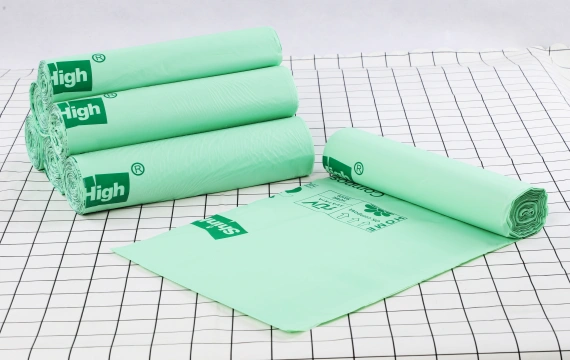
As a certified compostable trash bag manufacturer, ShinHigh Bio delivers factory-direct leak-proof bags that meet the strictest performance and sustainability standards. We back every order with third-party test reports, ISO 9001 quality assurance, and flexible customization options.