



You walk into your kitchen and freeze. The scene is one of pure, unadulterated chaos. Used coffee grounds, eggshells, and a confetti of shredded paper towels are strewn across the floor. The culprit? Your beloved dog, sitting innocently amidst the wreckage of the overturned kitchen trash can, perhaps with a piece of plastic wrapper still clinging to their chin.
If this scenario is familiar, you’re not alone. A dog’s fascination with the garbage is one of the most common—and frustrating—behavioral challenges pet owners face. Beyond the mess, it’s a serious safety hazard that exposes your dog to risks such as choking, intestinal blockages, or poisoning from spoiled food and toxic substances.
Having manufactured pet waste management products for over 25 years and heard thousands of customer stories—from sneaky Beagles to determined Labradors—we’ve distilled what actually works into this guide. The good news is that this behavior can be stopped. Successfully stopping it requires understanding why it happens and implementing a strategic combination of management, training, and enrichment.

Why Do Dogs Raid the Trash? (4 Root Causes)
Before you can change the behavior, you need to understand the motivation. Dogs don’t raid trash cans out of spite; they are driven by instinct and need. Simply getting angry or punishing your dog after the fact is ineffective because it doesn’t address the root cause. So, why do dogs get into the trash? The drive typically comes from one or more of these core factors:
Scavenging Instinct
Dogs are natural scavengers. Their ancestors survived by finding and consuming calorie-dense food wherever they could. From a dog’s perspective, your kitchen trash can is a treasure trove of powerful, enticing smells promising a feast. A dog’s sense of smell is estimated to be 10,000 to 100,000 times more sensitive than a human’s. What smells like yesterday’s leftovers to you smells like a five-star buffet to them. It’s not “misbehavior”—it’s a successful foraging expedition.
Boredom & Excess Energy
A dog with pent-up physical or mental energy will find its own entertainment. An unstimulated dog left alone may see the trash can as the most exciting “puzzle toy” in the house—it’s interactive, makes a great noise when knocked over, and delivers a high-value reward (food scraps). The act of ripping, tearing, and exploring is inherently reinforcing.
Separation Anxiety
For some dogs, particularly when left alone, raiding the trash is a coping mechanism. Items like used napkins or food wrappers carry their owner’s strong scent, which can be comforting. The destructive act of digging and chewing can also help relieve anxiety and stress.
Hunger or Nutritional Deficiency
If your dog’s regular meals aren’t satisfying their caloric needs or leaving them feeling full, they will seek out additional resources. This can be a sign that the portion size, food quality, or feeding schedule needs adjustment with your veterinarian’s guidance.
Understanding which of these drives is primary for your dog is the crucial first step toward choosing the most effective solution.
7 Immediate Ways to Dog-Proof Your Trash Can
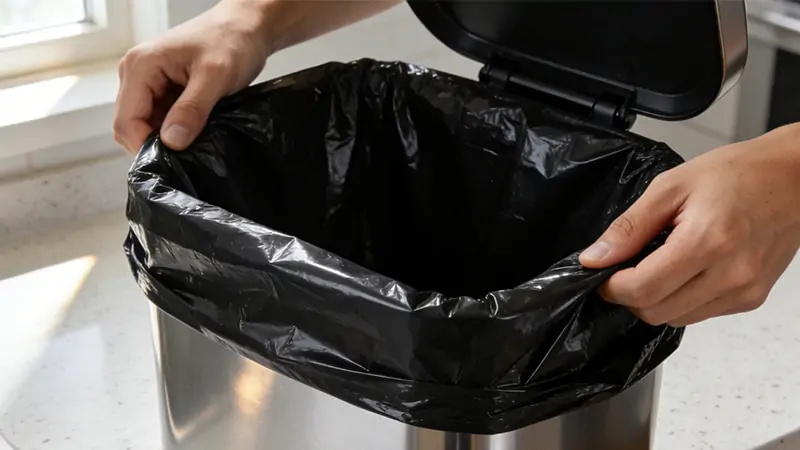
Management is the fastest and most effective first step. By changing the environment, you remove the opportunity for the behavior to happen, giving you a crucial window of peace to work on training. Think of it as putting the cookies on a high shelf. Here are the most effective dog-proof trash can solutions:
1. Locking-Lid & Step-On Bins
A sturdy metal or thick plastic kitchen bin with a secure, pedal-operated lid is a good start for less determined dogs. However, clever dogs quickly learn to nose-press or paw at step-on mechanisms. For persistent pups, you need something more robust.
2. True Dog-Proof Bins: Features That Actually Work
Not all “dog-proof” bins are created equal. Based on our analysis of hundreds of customer scenarios, here are the features that actually stop determined dogs:
- Locking mechanisms: Slide locks, button locks, or PetGuard-style latches require actions dogs can’t mimic.
- Weighted base: Look for 20+ lbs of base weight to prevent tipping from pawing or leaning.
- Motion sensor + soft-close lid: Keeps the lid shut automatically and won’t startle your pet with a loud slam.
- Odor containment: Charcoal filters or tight seals block the smells that attract dogs in the first place.
- Material: Stainless steel resists dents and chewing; heavy-duty resin is a lighter alternative.
If you’re not ready to invest in a specialized bin, start with the right bag. Our 2-step guide to choosing trash bag size helps you pick the perfect fit for your existing can—because even the best bin fails if the bag leaks.
3. Cabinet Locks & Enclosed Storage
One of the most effective and simple dog-proofing solutions is to keep your current bin inside a lower kitchen cabinet. Install a child-proof safety latch on the cabinet door. It’s inexpensive, completely out of sight, and eliminates visual temptation. This is often the most underrated fix—dogs can’t raid what they can’t see or access.
4. Relocate: Pantry, Laundry Room, or Garage
Sometimes, the best defense is distance. Move the trash can to a room that can be closed off, such as a pantry, laundry room, or garage. For smaller dogs, placing the can on a stable countertop or inside a pulled-out drawer can be effective—just ensure no hazardous items are within reach.
5. Baby Gates & Physical Barriers
A baby gate or pet gate is an excellent tool for blocking access to the kitchen or the specific area where the trash can is kept when you can’t directly supervise. This works especially well for larger dogs who might otherwise shoulder a cabinet door open.
6. Double-Bag with Tough, Leak-Proof Liners
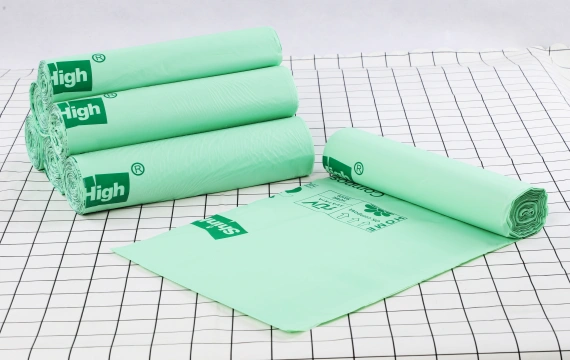
Even the most secure bin fails if the bag leaks or tears. Use thick, 13-gallon compostable trash bags engineered to resist punctures from bones and sharp scraps. A durable liner means that even if your dog somehow breaches the bin, the mess stays contained and easy to clean.
Thickness matters: For kitchen wet waste, choose heavy-duty bags at 1.1+ mils. Standard 13-gallon bags are typically 0.85–1.1 mil for compostable variants, which compensates for lower puncture resistance with superior flexibility.
Fit matters: A 13-gallon “Tall Kitchen” bag measures approximately 24″ × 33″—ensure your bag matches your can’s dimensions. Here’s our complete 13-gallon trash bag size guide to find your perfect fit.
7. Taste & Smell Deterrents
Dogs rely heavily on smell, but certain scents are natural repellents. Lightly spraying the outside of your trash bag or bin with a diluted mixture of white vinegar, citrus essential oil (dog-safe in very small amounts), or a commercial bitter apple spray can make the trash less appealing. Avoid anything caustic or toxic—when in doubt, consult your vet before applying any substance to surfaces your dog may lick.

Long-Term Training: Teaching “Leave It” (4-Phase Protocol)
While management prevents the behavior, training addresses the desire. Teaching a solid “Leave It” command is the cornerstone of training a dog to stay out of the kitchen trash. It provides a clear way to communicate your expectations, even when a management system fails.
Phase 1: Basic Object Training
Start with your dog on a leash if needed. Place a low-value treat (like a piece of kibble) in your closed hand. Let them sniff and paw at it. The moment they stop and pull their nose away, say “Yes!” (or click) and immediately reward them with a high-value treat (like chicken or cheese) from your other hand. You are teaching that ignoring something good leads to something even better. Repeat until your dog immediately looks at you when you close your hand.
Phase 2: Adding Distance & Distraction
Place the low-value treat on the floor and cover it with your hand. The process is the same: the instant they look away from your hand, mark (“Yes!”) and reward from your other hand. Gradually progress to uncovering the treat, then placing it a few inches away. Practice until your dog reliably looks away from the uncovered treat on the floor.
Phase 3: Applying to the Trash Can
With the trash can empty and clean on the floor, put a boring item inside (like a crumpled paper ball). Stand a short distance away with your dog on a leash. Give the “Leave it” cue before they move toward the can. When they comply and look at you instead, mark and reward heavily. Gradually decrease the distance between your dog and the can over multiple sessions.
Phase 4: Generalizing to Real-Life Scenarios
Practice with increasingly tempting items (such as a chew bone or a piece of cheese on a plate) in different locations. Eventually, practice near the actual trash can with mild food smells inside. Consistency is everything—you are competing with the incredible scent of yesterday’s dinner, so your reward must be more compelling.
Address the Root Cause: Exercise, Anxiety, Diet
Stopping the symptom (getting into the trash) is one thing. Preventing the behavior from resurfacing requires addressing the underlying motivation. A happy, fulfilled, and well-nourished dog is far less likely to go treasure-hunting in the garbage.
Mental & Physical Enrichment
Often, trash raiding is a sign of a bored dog. Ensure your dog gets sufficient daily exercise (walks, runs, playtime) and mental stimulation. Engage their powerful sense of smell with “sniffari” walks, food-dispensing puzzle toys, or simple “find it” games with treats hidden around the room. Before you leave the house, provide a legal and engaging “treasure hunt,” like a frozen Kong or a snuffle mat filled with their meal. A tired and mentally satisfied dog is more likely to nap than plot a trash heist.
Separation Anxiety Protocol
If the behavior occurs exclusively when your dog is alone, it may be a symptom of separation anxiety. Signs include distress as you prepare to leave, destructive behavior focused on exits or your belongings, and excessive drooling or barking. In this case, dog-proofing is a temporary fix. The long-term solution involves a dedicated desensitization and counterconditioning program—consult a veterinarian or a certified animal behaviorist for a tailored plan.
Diet Review: Fiber, Portion Size, Feeding Frequency
Sometimes, the answer is simple: your dog is hungry. Consult with your veterinarian to ensure you are feeding a high-quality, nutritionally complete diet in the correct amount for your dog’s age, size, and activity level. Splitting their daily food into three smaller meals, or using a portion of their kibble for training and enrichment throughout the day, can help them feel more satiated and less driven to scavenge.
Emergency: What to Do If Your Dog Ate Something from the Trash
Disclaimer: This article is for informational purposes only and does not replace professional veterinary advice. If your dog has ingested something toxic or potentially dangerous, contact your veterinarian or the ASPCA Animal Poison Control Center (888-426-4435) immediately.
Immediate Steps (Don’t Panic, Don’t Induce Vomiting)
Stay calm. Panicking won’t help your dog. If safe to do so, quickly try to identify what and how much they may have ingested. Look for torn packaging that might reveal contents (e.g., a chocolate wrapper, medication foil, or bones). Do NOT induce vomiting at home unless explicitly instructed by a veterinarian or animal poison control center. For some substances—like caustic chemicals, sharp objects, or certain foods—vomiting can cause more severe injury on the way back up.
When to Call Your Vet or Pet Poison Helpline
Call your veterinarian right away. If it’s after hours, call the nearest emergency veterinary clinic. Alternatively, call a Pet Poison Helpline (e.g., ASPCA Animal Poison Control Center at 888-426-4435 or Pet Poison Helpline at 855-764-7661). Be ready to provide your dog’s weight, the suspected toxin, the estimated amount ingested, and the time of ingestion.
Warning Symptoms
While seeking help, monitor your dog closely for any of the following signs, which require immediate emergency care: vomiting or retching, diarrhea (especially with blood), lethargy or weakness, loss of appetite, abdominal pain (whining, a hunched back, reluctance to move), excessive drooling, or seizures/tremors.
FAQ
A: Dogs eat trash primarily due to instinct (they’re natural scavengers with an extraordinary sense of smell), boredom, separation anxiety, or genuine hunger. Understanding which drive applies to your dog is the first step to stopping the behavior.
A: Dogs generally dislike the smells of citrus (lemon, orange), white vinegar, and bitter apple spray. Lightly applying these to the outside of your bin or bag can act as a deterrent—but never use anything caustic or toxic
A: Yes, a sturdy baby gate or pet gate can effectively block access to the kitchen or the area where the trash can is kept, especially when you can’t directly supervise. It’s one of the simplest management tools available.
A: The best garbage cans for dogs feature locking lids (slide locks or button mechanisms), weighted bases (20+ lbs) to prevent tipping, motion sensors with soft-close lids, and odor-containing charcoal filters. Stainless steel models resist chewing better than plastic.
A: Teach a reliable “Leave It” command starting at home, then practice on walks with low-value items before progressing to tempting street trash. Keep your puppy on a short leash in high-risk areas and reward them heavily for making eye contact instead of sniffing.

Conclusion
Solving your dog’s trash-raiding habit is rarely about finding one magic solution. Lasting success comes from a consistent, three-pronged approach: Management, Training, and Fulfillment.
Start by managing the environment. Invest in a dog-proof trash can with a locking lid, place it behind a cabinet door, or use a sturdy baby gate to block access. This stops the rehearsal of the bad behavior immediately. Simultaneously, implement the “Leave It” training protocol—a reliable cue empowers you to guide your dog’s choices and reinforces what you want them to do. Most importantly, address the root cause by ensuring your dog’s needs for exercise, mental work, and proper nutrition are fully met.
With patience, consistency, and an understanding of your dog’s instincts, you can transform your canine trash bandit into a well-mannered companion. The result is a safer home for your dog, a cleaner kitchen for you, and a stronger, more trusting bond between you both.
💡 Looking for eco-friendly, tear-resistant 13-gallon bags that can withstand even the most determined dog? Explore our BPI-certified compostable trash bags — engineered for leak-proof, food-safe performance that keeps messes contained even when curiosity strikes.