



Introduction: Why “Qualified” Means More Than “It Closes”
If you’re sourcing resealable bags for the North American or European market in 2026, you’ve probably noticed two things: first, every supplier claims their bags are “eco-friendly.” Second, the regulatory landscape has never been stricter.
The EU Single-Use Plastics (SUP) directive, the UK Plastic Packaging Tax, and mounting ESG pressure from retailers mean one thing: a bag that simply “works” is no longer enough. A truly qualified resealable bag must be verifiably compostable, functionally reliable, and backed by a supply chain you can trust.
Yet many B2B buyers still get burned. Suppliers use vague terms like “biodegradable” without third-party proof. Bags arrive with seals that fail after three opens. Or worse—certificates turn out to be expired or don’t cover the finished product at all.
This guide walks you through the four non-negotiable criteria for qualifying a compostable resealable bag supplier—so you can spec with confidence and avoid costly compliance surprises.
1. Certification: The First and Hardest Filter
“Biodegradable” Is a Marketing Word. “Compostable” Is a Legal Standard.
In the EU and US, biodegradable has no binding definition—a product labeled this way could take 500 years to break down. Compostable, by contrast, means the material will disintegrate into CO₂, water, and biomass within a defined timeframe under specific conditions, leaving no toxic residue.
But here’s the catch: not all compostable claims are created equal.
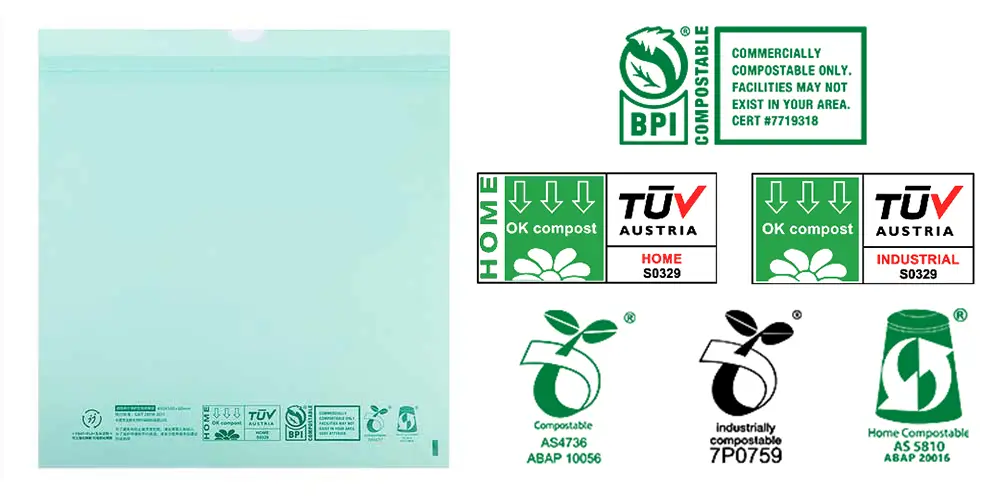
Match the Certification to Your Market
|
Target Market
|
Required Certification
|
Standard
|
Composting Condition
|
|---|---|---|---|
|
North America
|
BPI Certified
|
ASTM D6400
|
Industrial composting
|
|
European Union
|
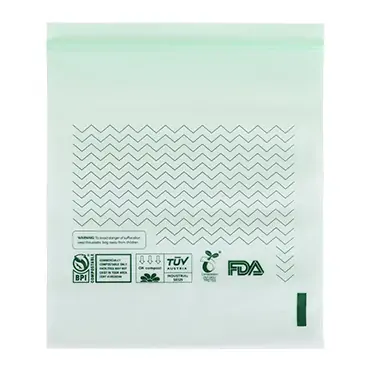
TÜV AUSTRIA OK Compost INDUSTRIAL
|
EN 13432
|
Industrial composting
|
|
Home composting (global)
|
OK Compost HOME
|
—
|
Backyard/home pile
|
|
Germany / DACH
|
DIN CERTCO
|
EN 13432
|
Industrial composting
|
|
Australia / NZ
|
AS 4736 / AS 5810
|
—
|
Industrial / Home
|
⚠️ Common trap: A supplier shows you an industrial compost certificate and implies it covers home composting too. It doesn’t. Home composting requires a separate OK Compost HOME certification—and the failure rate for bags in home piles is the #1 consumer complaint in this category.
How to Verify a Supplier’s Certificate (In 3 Steps)
- Ask for the certificate number — then look it up yourself on the BPI database or TÜV AUSTRIA certified product search.
- Check the expiry date — expired certificates are a red flag at customs and during retailer audits.
- Confirm the scope — the certificate must cover the finished bag (including ink, adhesive, and the resealable zipper), not just the raw PLA resin or base film.
What Full Certification Looks Like
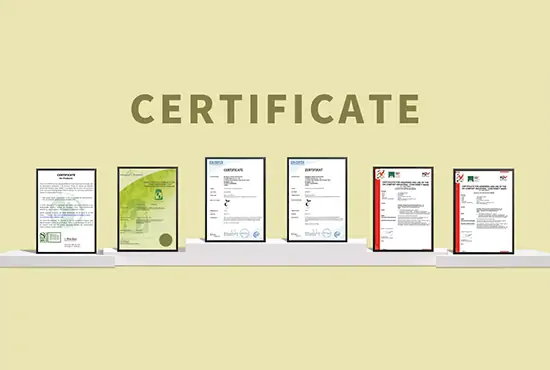
- ✅ BPI Certified (ASTM D6400)
- ✅ TÜV AUSTRIA OK Compost INDUSTRIAL (EN 13432)
- ✅ TÜV AUSTRIA OK Compost HOME (if applicable)
- ✅ DIN CERTCO (EN 13432)
- ✅ AS 4736 / AS 5810
- ✅ ISO 9001 Quality Management
- ✅ BSCI Social Compliance (Grade A)
2. Physical Performance: Compostable Should Not Mean Fragile
The second-biggest concern we hear from B2B buyers: “I love the sustainability angle, but will the bag actually hold up?”
The short answer: a properly formulated PLA+PBAT blend performs comparably to conventional polyethylene (PE) bags—and here’s what to look for.
Understanding the Material Science
- PLA (Polylactic Acid) — derived from corn starch; provides stiffness, clarity, and printability
- PBAT (Polybutylene Adipate Terephthalate) — a flexible, elastomeric co-polyester that gives the bag tear resistance and sealability
- Corn starch filler — reduces cost and accelerates biodegradation
This tricomponent system is the industry standard for high-performance compostable films. The PLA provides the “crisp” feel buyers expect; the PBAT prevents the brittle failure that plagued first-generation PLA-only films.
The 5 QC Checks That Matter
|
Test
|
Why It Matters
|
What “Good” Looks Like
|
|---|---|---|
|
Film thickness tolerance
|
Uneven gauge = weak spots that split under load
|
±5% or tighter
|
|
Tensile strength (MD/TD)
|
Resistance to stretching and tearing
|
Comparable to LDPE at equivalent gauge
|
|
Tear resistance
|
Critical for bags holding sharp-edged items (e.g., pet treats, coffee beans)
|
Validated via Elmendorf or similar method
|
|
Heat seal/zipper strength
|
The resealable closure is the most failure-prone point
|
No separation under normal filling pressure
|
|
Ink adhesion
|
Print must not rub off during packing or transit
|
Cross-hatch or tape test passed
|

Real-World Validation
- Drop test: Fill to rated capacity, drop from 1.2m onto a hard surface — no seam burst
- Leak test: Fill with water, seal, leave 24 h — zero leakage
- Shelf life: 12 months when stored in cool, dry conditions away from direct sunlight
3. Printing, Food Safety & the PFAS Question
Food Contact Compliance
- US: FDA food contact material regulations
- EU: EU 10/2011 framework regulation
Ink Matters More Than You Think
- Do you use Pantone color matching?
- Can you provide a heavy metal content declaration for your inks?
PFAS: The 2026 Deal-Breaker
4. Supplier Qualification: The B2B-Specific Layer
A bag can be perfectly certified and perfectly functional—but if the supplier can’t deliver consistently, it’s not a qualified partnership.
What to Verify Before You Order
|
Criterion
|
What to Ask
|
Why It Matters
|
|---|---|---|
|
Factory audits
|
BSCI, SEDEX, ISO 9001, Amazon FQA
|
Major retailers won’t onboard unaudited suppliers
|
|
Production lead time
|
Typically 2–3 weeks for custom orders
|
Can they handle your peak season?
|
|
MOQ flexibility
|
Plain bags: no MOQ vs. printed: ___ kg minimum
|
Affects your cash flow and SKU flexibility
|
|
Customization scope
|
Size, thickness, color, print, closure type
|
One supplier for all SKUs = simpler supply chain
|
|
Shipping terms
|
FOB, CIF, or DDP?
|
Impacts your landed cost calculation
|
5. Traditional PE vs. Compostable: The Real Cost Comparison
|
Factor
|
Conventional PE Bag
|
Certified Compostable Bag
|
|---|---|---|
|
Unit cost
|
Baseline
|
+20–40% (varies by spec)
|
|
Plastic tax exposure (UK, Italy, Spain)
|
Taxable
|
Typically exempt or reduced
|
|
Regulatory risk (EU SUP, state bans)
|
High
|
Near-zero
|
|
Brand ESG value
|
Negative/neutral
|
Positive — supports CSR reporting
|
|
Consumer willingness to pay
|
Baseline
|
Premium categories can charge 5–15% more
|
|
Retailer acceptance (Whole Foods, etc.)
|
Declining
|
Preferred / required
|
6. Conclusion: Your Qualified Bag Checklist
- ✅ Certificates verified on BPI/TÜV/DIN CERTCO databases — covering the finished bag, not just raw material
- ✅ Material disclosed — PLA+PBAT+starch blend, not vague “bio-based” claims
- ✅ QC protocol documented — thickness tolerance, seal strength, drop test
- ✅ Food safety declared — FDA and/or EU 10/2011 compliance on file
- ✅ PFAS status confirmed — test report or supplier declaration available
- ✅ Factory audited — ISO 9001, BSCI, or equivalent
- ✅ Lead time realistic — 2–3 weeks, not “it depends”
Ready to Spec Your Next Order?