



Last updated: 2026-09-08
Compostable vs Biodegradable Bags: What’s the Real Difference?
If a supplier tells you their bags are “biodegradable,” they have told you almost nothing. If they tell you the bags are “compostable” and can hand you a certificate number, you have something you can defend to a regulator, a retail buyer, and your own customers.
That gap — between a word with no deadline and a word with a test behind it — is where most greenwashing in this category lives.
But there is a second gap, and it catches buyers who have already learned the first lesson. Compostable bags are a subset of biodegradable ones, and every compostable bag carries a certificate. Yet a certified industrial-compostable bag dropped into a backyard heap can sit there for years, largely intact, looking exactly like the plastic it was meant to replace. The certificate is real. The bag is real. The disposal route was wrong.
This guide covers both gaps: what the words mean, and what actually happens to the bag afterward.
The One-Sentence Answer
Biodegradable means a material can be broken down by microorganisms. Compostable means it breaks down under specific conditions, within a defined timeframe, leaving no toxic residue — and someone tested it to prove that.
Everything compostable is biodegradable. Almost nothing that is merely biodegradable meets the compostable bar.
Biodegradable: A Claim With No Deadline
The word describes a process, not a result. Technically, a steel shipping container biodegrades — given enough centuries. Without a standard attached, a biodegradable claim carries:
- No defined timeframe. Months or hundreds of years both qualify.
- No temperature requirement. A claim tested at 58°C says nothing about a backyard pile at 20°C.
- No residue limit. Fragmenting into microplastics and calling it degradation is, technically, still degradation.
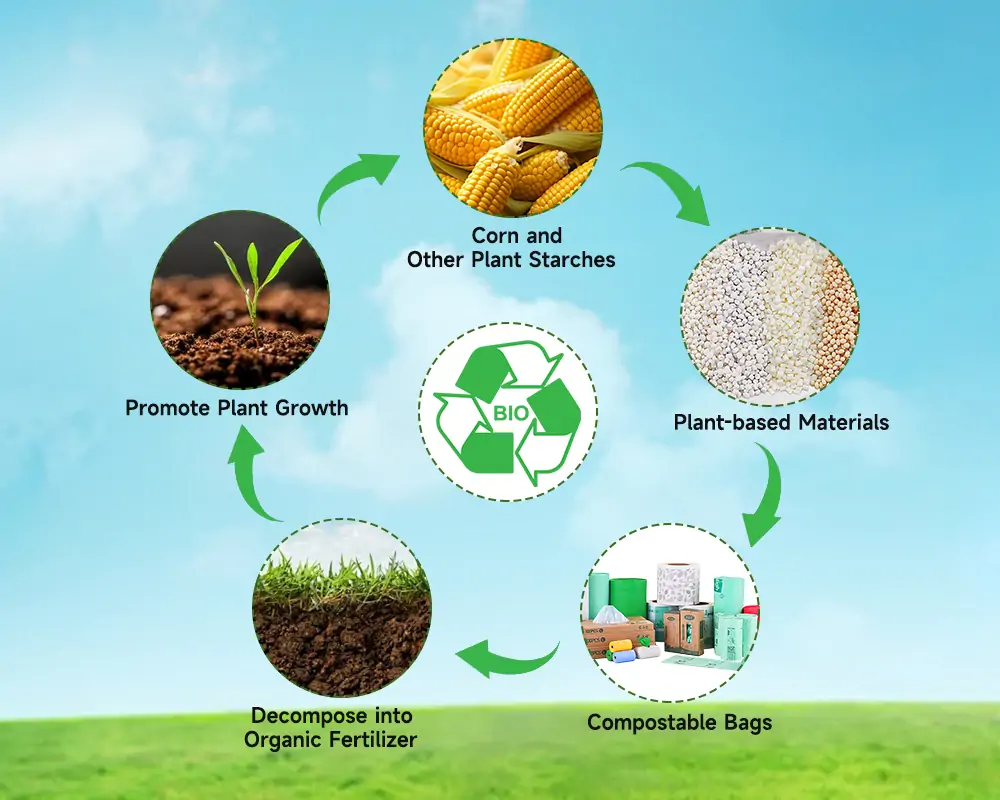
There is a second trap underneath this one. “Biodegradable” says nothing about what the bag is made from. Bio-based bags come from renewable feedstock like corn or cassava starch. Fossil-based bags are conventional petrochemical plastic with additives — and those are legally sold as biodegradable in many markets. The claim describes the end of life, not the beginning. Our modified raw material page breaks down what actually goes into the resin.
Then there is oxo-degradable, which deserves its own warning. These are conventional plastics with additives that make them fragment faster. They do not biodegrade in any meaningful sense — they shatter into smaller plastic pieces sooner. Several jurisdictions have moved to prohibit them outright. If a supplier offers you “oxo-biodegradable,” treat it as a compliance liability, not an eco-option.
The criticism worth taking seriously here comes from people who are not trying to sell you anything. Eartheasy, a retailer that has sold reusable goods for two decades, argues that most bioplastics do not break down in home composting or landfill, that they contaminate conventional recycling streams, and that many contain a substantial share of conventional plastic anyway. They are right about the first two points when the claim is “biodegradable.” The response is not to argue — it is to buy certified compostable, match it to the disposal route, and verify the certificate.
Compostable: A Claim With a Test Behind It
Compostable flips every one of those three blanks into a number.
|
Requirement |
What it means in practice |
|
Timeframe |
Disintegration within a defined window — commonly 12 weeks for industrial, 6 months for home |
|
Conditions |
A specified temperature and microbial environment — industrial or home |
|
Residue |
No toxic residue, no microplastics; ecotoxicity testing on the resulting compost |
Which standard applies depends on where the bag will be sold and disposed of:
- ASTM D6400 — the US benchmark, administered in practice by BPI. Industrial composting.
- EN 13432 — the European equivalent, marked by the Seedling logo.
- AS 4736 (industrial) and AS 5810 (home) — Australia, via ABA. Both Australian standards add an earthworm toxicity test that ASTM D6400 and EN 13432 do not require.
- OK Compost and OK Compost Home — TÜV Austria. The “Home” variant is the only meaningful backyard-compostable credential.
- NF T51-800 — the French home-composting standard, one of the bases for OK Compost Home.
Here is the part that catches experienced buyers. Certification applies to the finished product — the resin, the ink, the adhesive, the drawstring, and the thickness — not to the pellet the resin came from. A supplier who says “PLA is compostable” has told you about a polymer, not about a bag. Ask for the certificate that matches the exact SKU you are buying, then look the number up on the issuing body’s own registry.
How a Bag Actually Breaks Down: Hydrolysis First, Microbes Second
This is the part most comparison articles skip, and it explains everything that follows.
Breakdown is not one process. It is two, and they must happen in this order:
1. Hydrolysis. Water molecules attack the ester bonds holding the polymer chains together, cutting them into shorter fragments. For PLA and PBAT, this needs heat and moisture. PLA in particular requires sustained temperatures above roughly 55–60°C to hydrolyse at any meaningful rate. Below that threshold, the reaction slows to near zero.
2. Microbial digestion. Once the chains are short enough, bacteria and fungi metabolise the fragments into carbon dioxide, water, and biomass.
The constraint is the order: microbes cannot digest intact long-chain polymers. Hydrolysis has to happen first. And hydrolysis is temperature-dependent.
That single dependency is why conditions are decisive rather than incidental. It is not that a bag breaks down slower in a cool pile — it is that the first step essentially does not start.
Not All Compostable Resins Behave the Same
The material decides the temperature threshold, and the thresholds are far apart:
|
Material |
Source |
Typical behaviour |
|
PLA |
Fermented plant sugars (corn) |
Fast in industrial composting; very slow in home compost — often years, sometimes effectively never within a useful timeframe |
|
PBAT |
Petroleum co-polymer, genuinely biodegradable |
Flexible; blended with PLA or starch. Composts under industrial conditions, slow in home |
|
Starch blends |
Potato, corn, or cassava starch |
Bonds are more vulnerable to water attack at lower temperatures — viable for home composting |
|
PHA |
Produced by microbes |
Broader compostability; can break down in home compost within months |
|
Cellulose films |
Plant fibre |
Generally home compostable in cool piles |
|
Polyethylene (PE) |
Petroleum |
Does not hydrolyse. Fragments into microplastics but never fully mineralises |
Two things follow from this table. First, “compostable” is not a material — it is a performance claim that depends on the resin and the route. Second, being bio-based does not make a bag fast to compost. PLA is plant-derived and is among the slowest materials in a backyard heap.
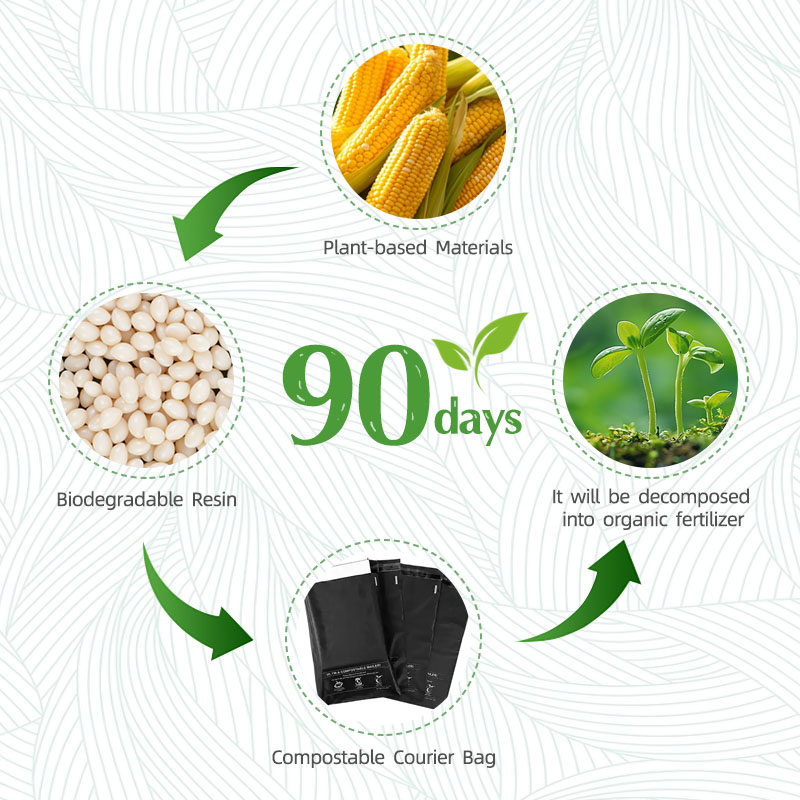
Industrial vs Home Composting: The Gap That Decides Everything
This is where most sourcing mistakes happen.
|
|
Industrial composting |
Home composting |
|
Temperature |
Sustained 50–70°C, actively managed |
Ambient, typically 20–35°C, seasonal |
|
Management |
Controlled aeration, moisture, regular turning |
Whatever the owner does |
|
Typical window |
Fragments within 6–12 weeks; fully mineralises within roughly 3–6 months |
Home-certified products: 6–12 months. Industrial-certified products: unpredictable, often years |
|
Certification |
ASTM D6400, EN 13432, AS 4736 |
OK Compost Home, AS 5810, NF T51-800 |
|
What it handles |
PLA, PBAT, starch blends, and food-contaminated packaging |
Starch blends, PHA, cellulose — and only products with home certification |
The practical consequence: a bag certified to EN 13432 or ASTM D6400 is certified for industrial conditions only. Putting it in a home bin is not a slower version of the same outcome. For PLA-based bags at ambient temperature, the hydrolysis step barely starts. Home-compostable bags cost more because the resin has to be formulated to break down without industrial heat — that is a material difference, not a marketing tier.
Where does industrial composting actually exist? Coverage varies enormously by municipality. Before specifying a bag, confirm what your market’s organics programme accepts — some accept certified compostable liners, some explicitly do not, and a contaminated load can be rejected at the gate regardless of what the bag is certified to.
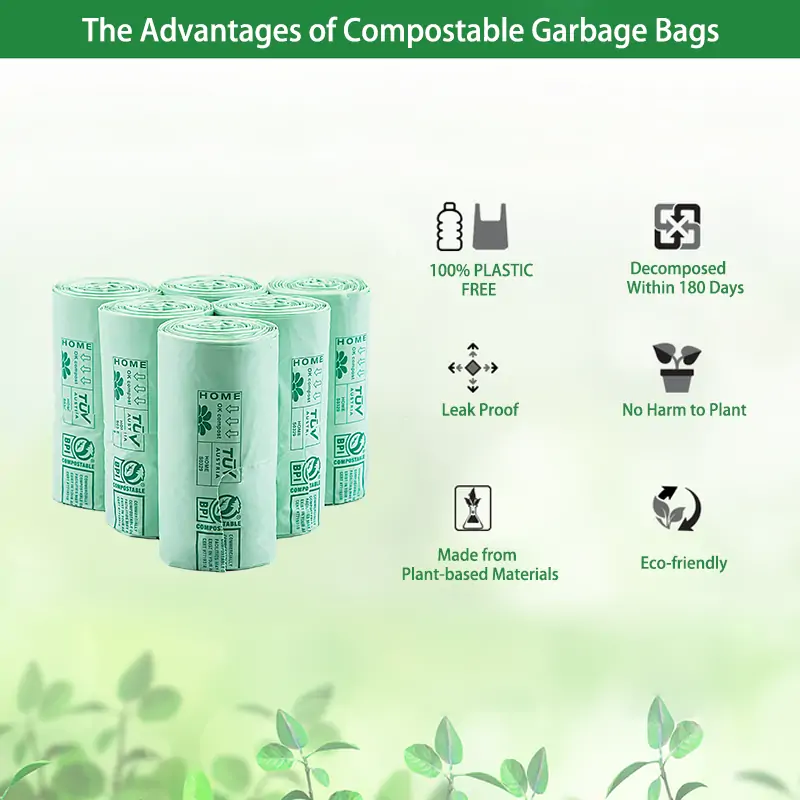
Where the Bag Ends Up: Four Destinations, Four Outcomes
The same certified bag has four very different fates. This is the part buyers should model before committing to a spec.
|
Destination |
What happens |
Verdict |
|
Industrial composting |
Heat, oxygen, and microbial density are present. The bag fragments and mineralises within the tested window, and food-contaminated bags are an asset rather than a problem |
✅ The intended route |
|
Certified home composting |
Works if the bag carries home certification. Without it, it persists |
✅ With the right certification |
|
Landfill |
Anaerobic, no light, no oxygen. Degradation largely stalls. Any breakdown that does occur can release methane — a greenhouse gas far more potent than CO₂ |
⚠️ Honestly: no better than conventional plastic, and arguably worse on climate |
|
Recycling stream |
Compostable film is a contaminant in PE recycling. It does not belong here |
❌ Never |
The landfill row deserves emphasis because it is the one most marketing avoids. A compostable bag buried in landfill does not deliver its environmental benefit. It is not that the bag is bad — it is that the route determines the outcome. If your market has no organics collection, a compostable spec still reduces fossil content and persistent microplastic load, but you should not build a marketing claim on end-of-life compostability you cannot evidence.
This is also why compostable trash bags specified for food-waste programmes look different from bags specified for dry retail carry. Same material family, different certification, different end-of-life assumption.
What Compostable Actually Buys You — and What It Doesn’t
The environmental case, stated honestly
When the route exists, certified compostable bags deliver:
- Organics diversion. Food waste and its packaging go to compost instead of landfill, which is the single largest lever in most municipal waste strategies.
- Fossil displacement. PBAT aside, the resin is substantially plant-derived, reducing dependence on virgin petrochemical feedstock.
- No persistent microplastics. Certified compostable film mineralises. Conventional PE fragments into microplastics that persist indefinitely — it never fully breaks down; it just gets smaller.
- Soil return. The output is compost, not residue. Ecotoxicity testing is a certification requirement, not an optional extra.
The commercial case
Beyond the environmental argument, there are four reasons B2B buyers switch:
- Regulatory risk. Single-use plastic restrictions keep tightening across multiple markets. A certified spec removes the scramble when a rule changes and removes the exposure of an unsubstantiated claim.
- Channel access. Some retail programmes and municipal contracts require certified compostable packaging. Without the certificate, you are not in the conversation.
- Brand differentiation. Packaging is the one part of your sustainability story the customer physically holds. It is more tangible than a webpage.
- ESG reporting. Packaging is a visible, reportable metric in most frameworks — and one that independent certification makes defensible.
What it does not buy you
Let us be direct about the limits, because overselling here is how buyers get burned:
- Unit cost is higher. Compostable resin costs more than conventional PE. The premium moves with resin grade, thickness, certification scope, and order volume.
- Infrastructure is not guaranteed. If your market has no organics collection, the end-of-life benefit largely disappears.
- The certificate is not the whole product. It certifies the SKU as tested, not the supply chain behind it.
If you are sourcing at volume, our compostable bag manufacturing and supply team can quote against your exact market, SKU, and disposal route — which is the only way a cost comparison means anything.
Side-by-Side: 5 Differences That Decide Compliance
|
Dimension |
Biodegradable |
Compostable |
|
Timeframe |
No defined limit — “eventually” |
Defined window, tested and certified |
|
Conditions |
Unspecified |
Specified: industrial (50–70°C) or home (ambient) |
|
Residue |
May leave microplastics or additives |
Must leave no toxic residue; ecotoxicity tested |
|
Verification |
No mandatory testing in most markets |
Independent third-party certification, traceable number |
|
Disposal route |
Usually general waste |
Industrial composting or certified home composting |
The fifth row is the one that decides your specification. A compostable bag is only better than a conventional one if the infrastructure exists to process it.
How to Read the Certification Logos
Four marks cover most commercial markets:
|
Logo |
Issuer |
Standard |
Covers |
|
BPI (circular mark) |
Biodegradable Products Institute |
ASTM D6400 |
US industrial composting |
|
Seedling |
European Bioplastics, licensed via bodies including DIN CERTCO |
EN 13432 |
EU industrial composting |
|
OK Compost / OK Compost Home |
TÜV Austria |
EN 13432 / home variant |
EU; “Home” for backyard |
|
ABA (with AS number) |
Australasian Bioplastics Association |
AS 4736 / AS 5810 |
Australia, industrial / home |
For the full standard-by-standard breakdown, see compostable bag certification.
Two habits protect you more than memorising logos. First, check the number, not the artwork — our walkthrough on how to identify compostable bags shows what valid documentation looks like and where to verify it. Second, match the standard to the destination, not to where the bag was made. A bag certified for EU industrial composting is not automatically accepted by a US municipal programme, and our certifications page lists the ones we hold.
Regulators have also started policing the language itself. Advertising standards bodies in several markets have ruled against “compostable” claims where consumers reasonably understood them to mean home compostable and the product was not. If your packaging says compostable, say which kind — and don’t let the artwork imply more than the certificate covers.
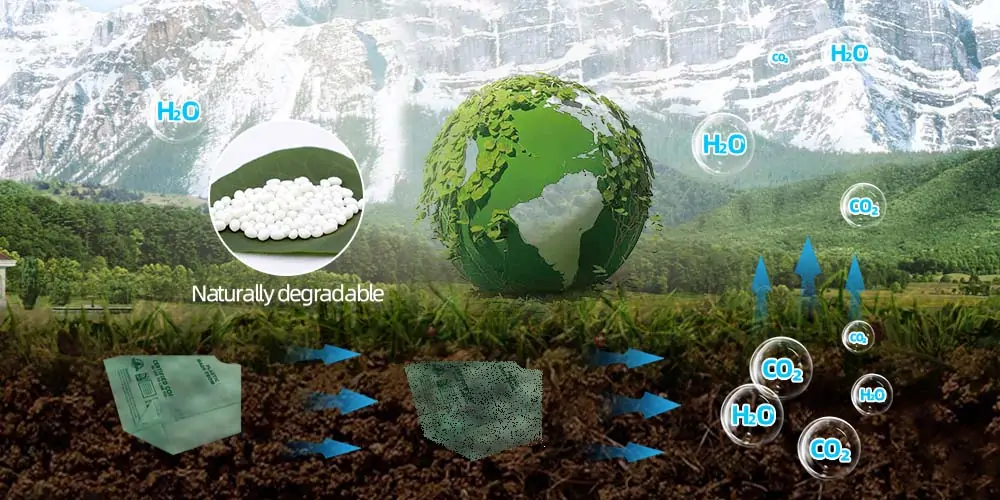
What People Actually Experience (and What to Do About It)
Search any zero-waste community, and you will find the same complaint in different words: I put a compostable bag in my bin months ago, and it is still there.
It is worth understanding why, because the answer is seldom “the bag was fake”:
|
Cause |
Why it stalls |
|
Wrong certification for the route |
An industrially certified bag in a home pile. This is the most common cause by a wide margin |
|
Pile never gets hot enough |
Ambient temperature is below the resin’s hydrolysis threshold |
|
Too dry, or too wet |
Hydrolysis needs moisture; waterlogged piles go anaerobic and slow further |
|
Bag is too thick |
Thicker film has less surface area relative to mass and takes longer |
|
Not enough oxygen |
Aerobic breakdown needs airflow; compacted piles stall |
What helps in practice:
- Cut the bag into strips before adding it. More surface area, faster attack.
- Match the bag to the bin. Home-certified bags for home bins; industrial-certified bags for municipal organics collection.
- No home bin? Look for community composting drop-offs, council organics programmes, or small-space options — worm bins, Bokashi, or an electric kitchen composter. If landfill is genuinely the only option, that changes which bag you should buy, and it is better to know that upfront.
- Check the certificate for the word “home.” A generic “compostable” mark without home certification means industrial only.
One more specification note that saves warranty claims: compostable resin ages on the shelf. PLA/PBAT blends lose mechanical properties over roughly 12 months in hot or humid storage, and bags start tearing. We cover storage conditions and how to check the age of a batch in the shelf life of compostable bags. Store cool and dry, and rotate stock.
Which One Should Your Business Actually Buy?
Start with the question nobody asks early enough: where will this bag end up, and who collects it?
- Municipal or commercial organics collection exists → industrial-compostable certification (BPI / EN 13432 / AS 4736). This covers most food-service, grocery, and food-waste liner applications.
- No collection; customers compost at home → home-compostable certification (OK Compost Home / AS 5810 / NF T51-800). Slower to break down, but it degrades without industrial heat.
- Neither exists → say so honestly. Compostable still reduces fossil content and persistent microplastic load, but the end-of-life story is weaker, and you should not build a marketing claim on it.
On cost: the useful comparison is per-unit landed cost against your current spec — including the compliance risk you are removing. Rather than quote a number that will be stale in a quarter, request a quote against your actual market, volume, and disposal route.
The Bottom Line
The distinction is not academic — it decides whether your packaging claim survives contact with a regulator, a retail compliance team, or a customer’s compost bin.
Three things matter, in this order:
- Buy the tested claim, not the adjective. “Biodegradable” has no deadline, no temperature, and no residue limit. “Compostable to EN 13432, certificate number attached” has all three.
- Match the certification to the disposal route. This is the step that most buyers skip, and it is where the money is lost. An industrial-certified bag in a home bin is not a slower outcome — for PLA-based resins, the chemistry barely starts.
- Verify the number, not the artwork. Certification applies to the finished product. Look the certificate up on the issuing body’s registry and confirm it covers the SKU you are buying.
Get those three right and the bag does what the label says. Get the second one wrong, and you have paid a premium for a bag that behaves like the plastic it replaced.
FAQ
No. This is the most common misconception in the category. All compostable bags are biodegradable, but most biodegradable bags do not meet compostable requirements — they lack the timeframe, temperature, and residue guarantees that certification enforces.
Industrial composting runs at a sustained 50–70°C with controlled aeration, moisture, and regular turning, and completes within roughly three to six months. Home composting runs at ambient temperature — typically 20–35°C — takes six to twelve months for products certified for it, and is far less predictable. They require different certifications and different resin formulations.
Most often because the bag is certified for industrial composting only. PLA-based bags need sustained temperatures above roughly 55–60°C to begin hydrolysing; a home pile rarely gets there, so the first step of breakdown never properly starts. Other common causes are a pile that is too dry, too wet, too compacted, or a bag that is too thick. Cutting the bag into strips helps.
Under industrial conditions, certified bags typically fragment within six to twelve weeks and fully mineralise within about three to six months. Certified home-compostable bags are tested over a longer horizon — disintegration within six months and biodegradation within twelve months at ambient temperature. A cool or dry backyard pile will run slower than the test conditions.
No. Compostable film is a contaminant in conventional plastic recycling streams. It should go to industrial composting, a certified home compost bin, or — if neither is available — general waste.
Not meaningfully. Landfills are anaerobic, so degradation largely stalls, and any breakdown that does occur can release methane — a greenhouse gas far more potent than carbon dioxide. Compostable bags will not shed persistent microplastics, but landfill is still the wrong end-of-life for them.
Most are PLA (from fermented plant sugars), PBAT (a petroleum co-polymer that is genuinely biodegradable), starch blends from potato, corn, or cassava, or blends of these. PHA and cellulose films are also used. The material determines the temperature at which breakdown begins, which is why resin choice and disposal route have to be decided together.
No. Biodegradable describes a process with no defined deadline, temperature, or residue limit. Compostable describes a tested result under specified conditions within a defined timeframe. The second is a subset of the first.
It is neither. Oxo-degradable bags are conventional plastic with additives that accelerate fragmentation into microplastics. They do not biodegrade in any certified sense, and several jurisdictions have moved to prohibit them.
Match the mark to the market: BPI with ASTM D6400 for the US, Seedling or OK Compost with EN 13432 for the EU, and ABA with AS 4736 or AS 5810 for Australia. For backyard composting specifically, look for OK Compost Home, AS 5810, or NF T51-800. Verify the certificate number on the issuing body’s registry.
Yes, per unit. The premium varies with resin grade, film thickness, certification scope, and order volume, so a single published price would be misleading — the meaningful number is landed cost per bag against your current specification. Home-compostable grades cost more than industrial-only grades because the resin has to work without industrial heat.
Yes, and it is shorter than conventional plastic. PLA/PBAT blends lose mechanical properties over roughly twelve months in hot or humid storage, and bags start tearing. Store cool and dry, and rotate stock.
About ShinHigh Bio
ShinHigh Bio (Dongguan Xinhai Environment-Friendly Materials Co., Ltd.) has compounded and converted compostable materials in Dongguan since 2000. We run our own resin compounding — 10 underwater pelletising lines and 30,000 tonnes of annual capacity — which is why we can formulate for a specific disposal route rather than selling one general-purpose film. Two grades cover most applications: XH-918 (PBAT/PLA/cornstarch), certified for home composting, and SH-133 (PBAT/PLA) for general compostable use.
Holding both industrial and home compostable certifications matters commercially, because the two serve different buyers: a customer supplying a market with municipal organics collection needs EN 13432 or ASTM D6400, while a brand selling to households that compost at home needs OK Compost Home or AS 5810. Ours are certified by TÜV Austria, BPI, DIN CERTCO, and ABA, with third-party testing by OWS.
We supply OEM and ODM, and provide the extrusion parameters — screw temperature and speed — that converters need to run these resins without guessing. Free samples available.
About us · View certifications · Get a quote