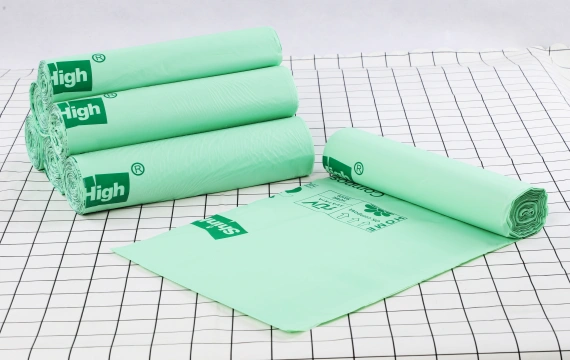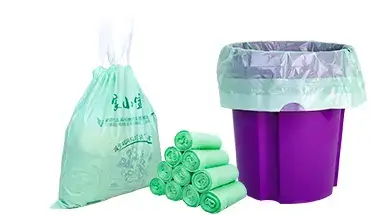




Sourcing compostable bags wholesale from China gives you access to the world’s largest concentration of compostable resin and film capacity — and to a wide spread of quality. Some factories run their own compounding lines and hold verifiable BPI, EN 13432, and AS 4736 certificates; some resell film they did not make and hand over a scan of a certificate that belongs to someone else.
This guide compares five compostable bag manufacturers in China on the four things that actually decide whether a wholesale order goes smoothly: certifications, MOQ, capacity, and lead time. We make our BPI-certified compostable bags in Dongguan, so we know what wholesale buyers should ask before they wire a deposit — including the questions we would rather you asked us.
How We Vetted These 5 China Compostable Bag Factories
Most “top manufacturer” lists are assembled from Alibaba rankings. We scored each factory on five criteria instead, all of which a buyer can check independently:
- Certificate verifiability — Can the certificate be found in the issuing body’s public database? BPI lists certified products and company IDs on its site; TÜV Austria and DIN CERTCO maintain their own registers. A PDF alone is not proof.
- Resin control — Does the factory compound its own PBAT/PLA blend, or buy film on the spot market? Factories that control the resin control batch consistency, and they can adjust thickness without changing the compostability profile. See how the compostable resin grades behind the film affect finished-bag performance.
- Stated capacity vs. realistic output — Annual tonnage is easy to claim. Monthly output on your specific bag type is what matters.
- Export documentation — Does the factory routinely ship to your market and know its labeling requirements?
- Audit record — Walmart FCCA/SCS, Target, Amazon FQA, BSCI, BRC, and ISO 22000 audits are third-party evidence that a factory survives inspection. Any supplier can say “high quality”; not every supplier has let Walmart’s auditors in.

5 Compostable Bag Manufacturers in China (Comparison Table)
|
# |
Manufacturer |
Location |
Main Products |
Certifications |
Since |
|
1 |
ShinHigh Bio (Dongguan Xinhai) |
Dongguan, Guangdong |
Compostable trash bags, shopping bags, ziplock bags, mailing bags, pet waste bags, gloves, aprons, compostable resins |
BPI (ASTM D6400), DIN CERTCO (EN 13432), TÜV Austria (OK compost / OK compost HOME), ABA (AS 4736, AS 5810) |
2000 |
|
2 |
Shandong Aisun ECO Materials |
Shouguang, Shandong |
Garbage bags, shopping bags, dog poop bags, PLA cups/straws, biopolymer pellets |
TÜV OK Compost, EN 13432 (Seeding), BPI (ASTM D6400) |
2011 |
|
3 |
Guangzhou Oemy Environmental Friendly Packaging |
Guangzhou, Guangdong |
Coffee & tea bags, stand-up pouches, eight-side-seal bags, back-seal bags, roll film |
— |
2017 |
|
4 |
Foshan DXC Packaging |
Foshan, Guangdong |
Kraft paper flat-bottom bags, stand-up pouches, pet food and coffee packaging |
ISO 22000, BRC, FSC, TÜV OK compost / HOME, BPI |
2005 |
|
5 |
Suzhou Hemcbags |
Zhangjiagang, Suzhou |
Shopping bags, pet waste bags, trash bags, die-cut handle bags, courier bags |
ISO 17088, DIN, BPI, AS 4736 |
2004 |
ShinHigh Bio (Dongguan Xinhai) — Certified Custom Bags
ShinHigh Bio has been making compostable resins and bags since 2000. The Dongguan plant covers 30,000 m², runs 10 biodegradable compounding lines, and has an annual capacity of 30,000 tons across resin and finished bags, with over 200 staff.
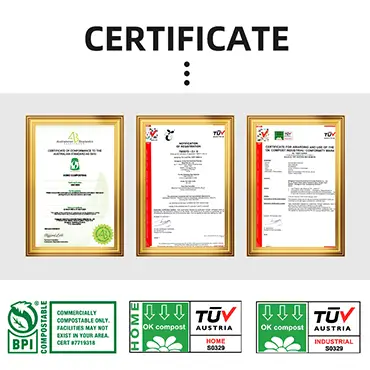
Two things separate a resin maker from a bag converter. First, we compound our own grades — XH-918 (PBAT + PLA + corn starch, certified home compostable) and SH-133 (PBAT + PLA) — so film formulation is adjusted in-house rather than negotiated with a supplier. Second, we hold six product certifications (BPI/ASTM D6400, DIN CERTCO EN 13432, TÜV Austria OK compost and OK compost HOME, ABA AS 4736 and AS 5810), with third-party testing by OWS in Belgium.
On the compliance side, the plant has passed Walmart FCCA + SCS, Target, Amazon FQA, and Woolworths audits, and holds BSCI A-grade, BRC, ISO 9001, ISO 14000, ISO 45001, ISO 22000, and OK Kosher — which matters if you supply food retail.
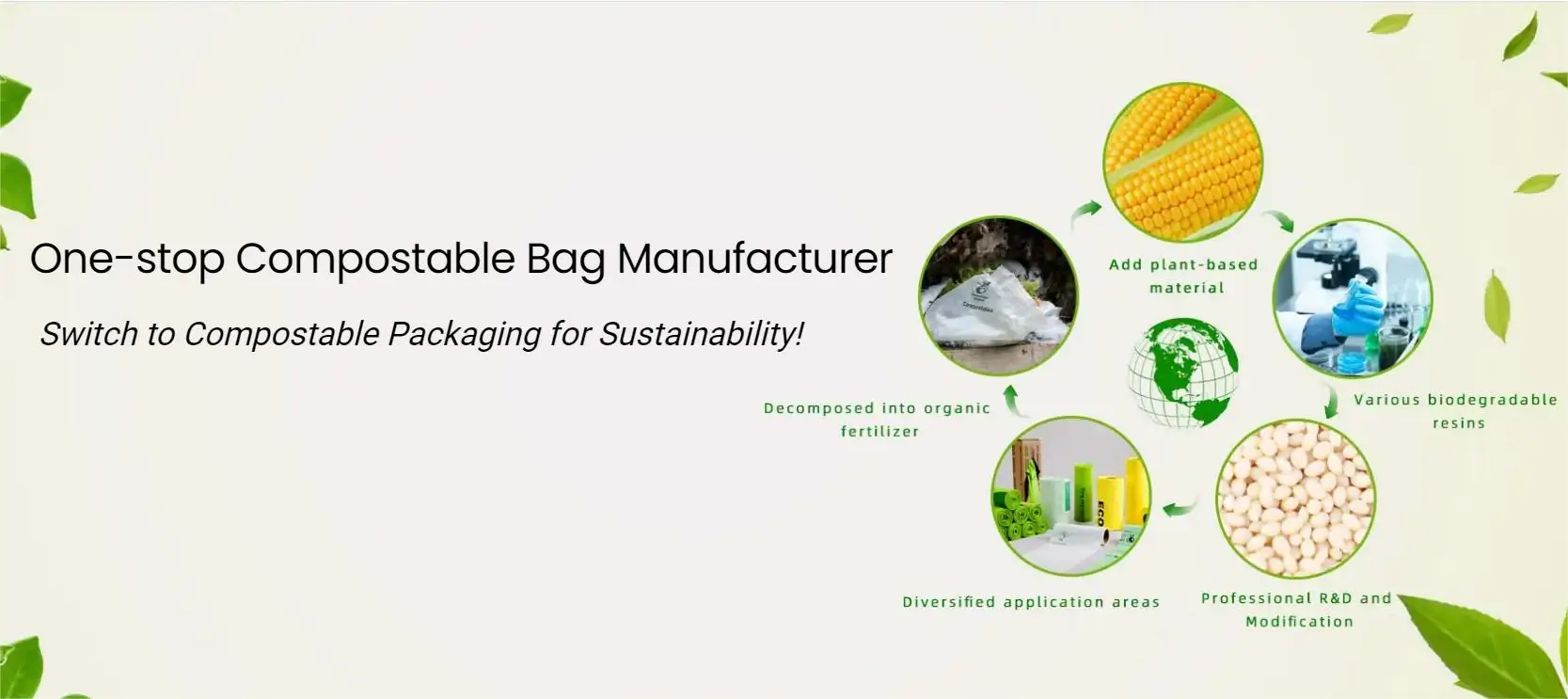
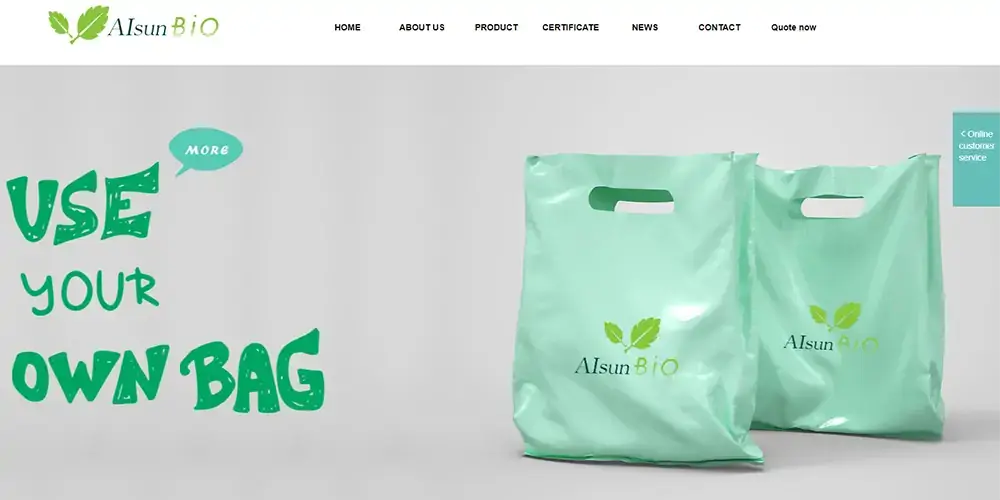
Shandong Aisun ECO Materials Co., Ltd
Based in Shouguang, Shandong, Aisun specializes in modifying and producing biodegradable plastics. The company runs a highly automated line reported at up to 800 tons per month of fully biodegradable material and products, and its R&D team works directly with customers on product development. A reasonable fit if you need PLA drinkware alongside your bag program.
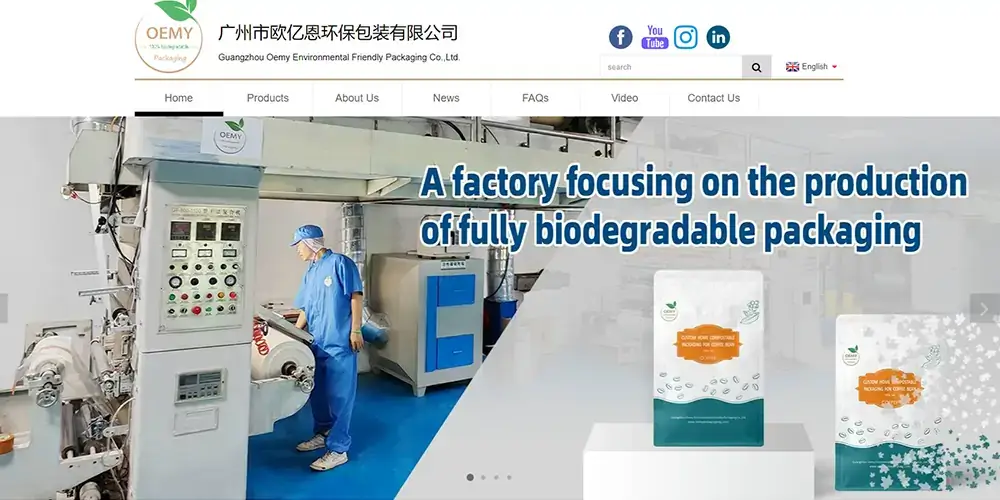
Guangzhou Oemy Environmental Friendly Packaging Co., Ltd
Oemy focuses on flexible biodegradable packaging — coffee and tea bags, stand-up pouches, eight-side-seal and back-seal bags. Established in 2017 with 51–100 staff, it offers OEM and ODM with an emphasis on print quality. Best suited to food and coffee brands that care more about print finish than about trash-bag volume.
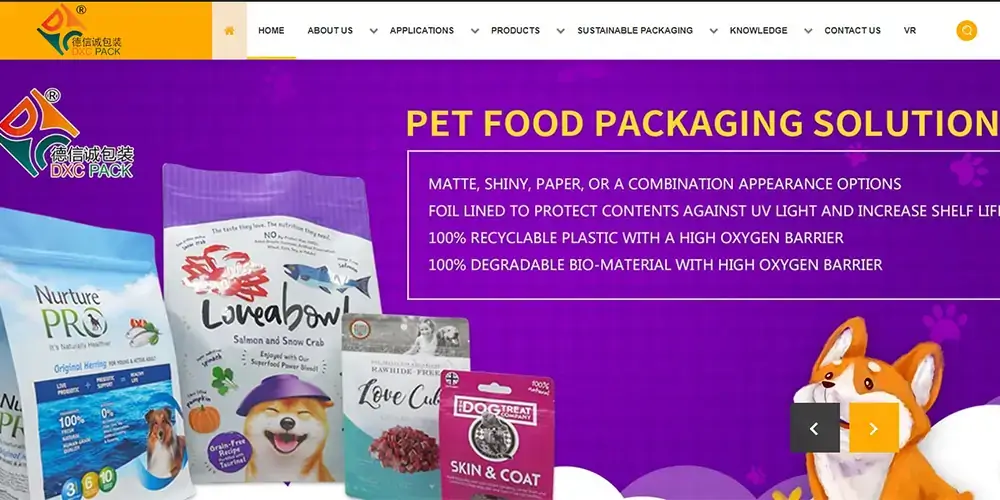
Foshan DXC Packaging Co., Ltd
Founded in 2005, DXC supplies compostable kraft paper flat-bottom bags, stand-up pouches, and pet food packaging. Its certificate stack is unusually broad for the segment — ISO 22000, BRC, FSC, TÜV OK compost and OK compost HOME, BPI. A strong option if your bags need to sit in food retail where BRC is a gate requirement.
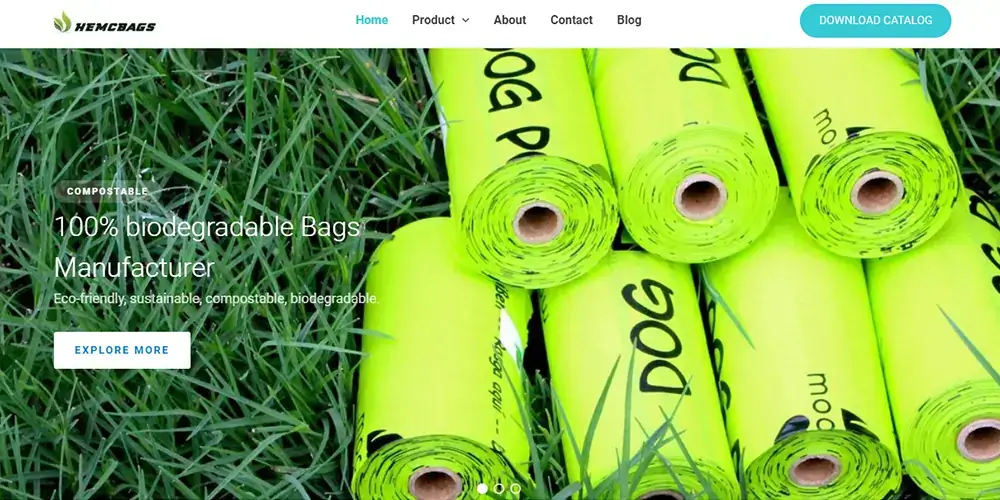
Suzhou Hemcbags Co., Ltd
With roughly two decades in the industry and 130+ staff, Hemcbags supplies shopping bags, pet waste bags, trash bags, die-cut handle bags, and courier bags, certified to ISO 17088, DIN, BPI, and AS 4736. Positioned for buyers who want a generalist catalogue rather than deep customization.
Compostable Bags Wholesale: MOQ, Bulk Orders, and What Drives Pricing
MOQ is the first thing that kills a first wholesale order, and the answer is rarely one number.
What the market charges. Across Chinese compostable bag factories, the standard wholesale MOQ sits around 5,000–10,000 pieces per order, or roughly 500 kg per specification when quoted by weight. JXD Eco-Packaging publishes a 10,000-piece default; Orizon and Techuang both quote around 500 kg. Quoting by weight rather than by count is common because film thickness drives cost more than piece count does.
What “one specification” means. A specification is one combination of bag size × thickness × film color × print design. Three sizes in one supermarket program usually means three production runs — they do not share a single MOQ. This is the single most common source of surprise cost in a first wholesale order, and it is worth confirming in writing before you compare quotations.
What moves a wholesale MOQ up or down:
|
Factor |
Effect on MOQ |
|
Custom printing (flexo plates) |
↑ plate cost is amortized across the run |
|
Special film color (beyond standard green/white) |
↑ minimum dye lot |
|
Non-standard thickness |
↑ separate film run |
|
Repeat order on an approved spec |
↓ often negotiable |
|
Standard size, no print |
↓ lowest entry point |
Our wholesale MOQ: 5,000–10,000 pieces per order. Samples are available before you commit to a production run — request free samples.
 Certifications to Require: EN 13432, ASTM D6400, AS 4736, AS 5810
Compostability is not a marketing adjective — it is a test result against a published standard. Require the standard that matches your destination market:
|
Market |
Standard to require |
Certifying bodies |
|
United States |
ASTM D6400 |
BPI |
|
European Union |
EN 13432 |
DIN CERTCO, TÜV Austria |
|
Australia — industrial composting |
AS 4736 |
ABA |
|
Australia — home composting |
AS 5810 |
ABA |
|
Home composting (EU/global) |
OK compost HOME |
TÜV Austria |
Two practical points buyers miss. First, the certificate must cover the finished bag, not just the resin — thickness, colorants, and inks all sit inside the certified scope. Second, certification marks may only be printed where the authorization allows it; check before you approve artwork.
You can see our full certificate list and copies before you request a quote.
Lead Time, Shipping Terms and Payment
Sampling and production. A useful industry benchmark: unprinted bags run in roughly 15 days, printed bags around 20 days, and bulk orders generally land in the 15–20 day window once the specification is approved. Custom sampling adds a few days on the front end.
Shipping terms — the three you will be quoted:
|
Term |
Who owns the goods |
Typical use |
|
FOB (Free On Board) |
Risk passes to you once goods are loaded at the origin port |
Most common for sea freight; you control the freight forwarder |
|
CIF (Cost, Insurance & Freight) |
Seller pays insurance to your destination port |
Convenient if you do not have a forwarder |
|
DDP/DDU (Door-to-door) |
Seller handles freight, duties, and delivery to your address |
Maximum convenience, highest unit cost |
How to Verify a Chinese Compostable Bag Manufacturer (5 Checks)
Greenwashing in this category is real and cheap to spot. A bag can be labelled “biodegradable” because it fragments into smaller plastic pieces; that is not compostability, and in several jurisdictions the claim is now actionable.
Check 1 — Look up the certificate, don’t accept the PDF. Search the issuing body’s database for the company name. BPI publishes certified products and company IDs; TÜV Austria and DIN CERTCO keep their own registers. If the certificate can’t be found, it doesn’t exist.
Check 2 — Confirm the scope covers your bag. Certificates are issued to a defined formulation and thickness range. Ask directly: does this certificate cover this bag, at this thickness, with these inks?
Check 3 — Ask what the resin is. PBAT + PLA, or a PE film with an oxo-degradable additive? If the answer is vague, or if “biodegradable” is claimed without a standard number, walk away. Our guide on how to tell a real compostable bag from a fake one covers the physical tests you can run on a sample.
Check 4 — Request QC data, not promises. Tensile strength, load-bearing capacity, and leak resistance should come as numbers from a test report, not as assurances.
Check 5 — Book a live video audit. Any factory that has passed Walmart, Target, or Amazon audits will show you the floor without rehearsal. Ask to see the compounding line, not just the packing table.
Why Source Compostable Bags From China: Cost and Capacity
- Cost at scale — Established manufacturing infrastructure and raw-material access bring unit cost down materially at volume.
- Capacity you can grow into — A factory running its own compounding lines can take you from a first container to a recurring program without re-qualifying the product.
- Category breadth — Trash bags, compostable trash bags for food waste programs, compostable mailing bags for e-commerce, produce bags and cling film are made in the same industrial clusters, so a multi-SKU program ships from one origin.
- Certification coverage — Chinese factories serving export markets routinely hold BPI, EN 13432, AS 4736 and AS 5810 simultaneously, which removes the need to qualify a second supplier for a second market.
If your program spans regions rather than China alone, see our separate roundup of compostable bag manufacturers outside China.
Frequently Asked Questions
What is the typical MOQ for compostable bags from China?
Most factories quote 5,000–10,000 pieces per order, or about 500 kg per specification when measured by weight. The figure rises with custom printing, non-standard thickness, or special film colors.
Are compostable bags from China actually certified, or just labelled?
Both exist. The distinction is whether the certificate can be found in the issuing body’s public database and whether its scope covers the finished bag at your thickness. Ask for the certificate number and look it up — BPI, TÜV Austria and DIN CERTCO all publish searchable registers.
How long does a custom compostable bag order take?
Industry-wide, plan on roughly 15 days for unprinted bags and around 20 days for printed ones, after the specification is approved. Add sampling time before production starts.
Can I get samples before placing a bulk order?
Yes — reputable factories send existing or similar-specification samples for qualified B2B projects, and custom samples can be produced when required. Request free samples.
What’s the difference between compostable and biodegradable?
“Biodegradable” has no agreed time limit or residue requirement and is often applied to films that merely fragment. “Compostable” refers to a tested standard — ASTM D6400, EN 13432, AS 4736 or AS 5810 — that sets degradation time, disintegration, and eco-toxicity thresholds.
Which certification do I need for the US versus Europe?
The US market generally requires ASTM D6400 (BPI). The EU requires EN 13432 (DIN CERTCO or TÜV Austria). Australia requires AS 4736 for industrial composting and AS 5810 for home composting.
Can you print my logo on compostable bags?
Yes. Flexographic, screen, and heat-transfer printing are all used on compostable film, with water- or soy-based inks. Printing increases both MOQ and lead time because plates must be made.
How should I store compostable bags?
Cool, dry, and out of direct sunlight. Compostable film begins to lose strength if stored hot or humid for extended periods — how long these bags stay usable on the shelf covers the practical limits.
What information do I need to send for a quotation?
Bag type, dimensions (width × length × thickness or micron), material, film color, print design, and estimated quantity per size. Quotations are only comparable when the specification is identical.
What payment and shipping terms are standard?
T/T with 30% deposit and 70% before shipment is the norm. FOB is most common for sea freight; CIF and DDP are available at a higher unit cost.
About ShinHigh Bio
ShinHigh Bio (Dongguan Xinhai Environment-Friendly Materials Co., Ltd.) has been making compostable resins and bags since 2000. Our 30,000 m² factory in Dongguan runs 10 biodegradable compounding lines with a 30,000-ton annual capacity and over 200 staff. We hold two patented resin grades — XH-918 (PBAT/PLA/cornstarch, home compostable) and SH-133 (PBAT/PLA) — both certified by BPI (ASTM D6400), TÜV Austria (OK compost and OK compost HOME), DIN CERTCO (EN 13432) and ABA (AS 4736, AS 5810). The plant is audit-approved by Walmart, Target, Amazon, and Woolworths, and holds BSCI A-grade, BRC, and ISO 22000.
Written by the ShinHigh Bio technical team. Product data comes from in-house testing and production records.