



What are the best trash bags for heavy-duty use?
“Heavy-duty” gets used loosely. For a compostable trash bag, it means one thing in procurement: the liner holds a sharp, wet, or bulky load without tearing at the seam or leaking through the film. Below is a criteria-driven shortlist of heavy-duty compostable configurations, built for importers, municipal organics programmes, facility managers, and contractors buying in volume — not a single “winner,” because the right bag depends on the load and the composting route.
What “heavy-duty” means for a compostable trash bag
A compostable film is weaker than conventional HDPE when wet, so heavy-duty performance comes from three controllable variables:
- Gauge (thickness) — more material between the load and the floor.
- Seal type — how the bottom and sides distribute weight and resist puncture.
- Resin formulation — the ratio of flexible PBAT to rigid PLA and starch.
Any claim of “heavy-duty” should name at least two of these. A logo alone does not make a bag heavy-duty.
Selection criteria we used
We ranked each option on the same five attributes so the table is comparable.
Gauge, in mil and microns. One mil is one-thousandth of an inch (0.0254 mm); roughly 25 microns. For a deeper read on Mil vs. micron and resin families, see HDPE vs LDPE trash bags explained. Trade guides put reliable kitchen compostable bags at 0.9–1.2 mil and heavy-duty territory at 2.0 mil and above. ShinHigh’s standard liner runs 0.018–0.020 mm (about 0.7–0.8 mil); for contractor and industrial loads we customise the gauge upward rather than quoting a single fixed number.
Seal type:
- Star-seal — gathers at the bottom, spreads weight evenly; best for irregular or sharp waste.
- Drawstring — fast tie-off for high-volume facilities.
- Flat-top / handle-tie — simple, low-cost liners for kitchen and office streams.
- Gusseted — expandable sides for bulky loads.
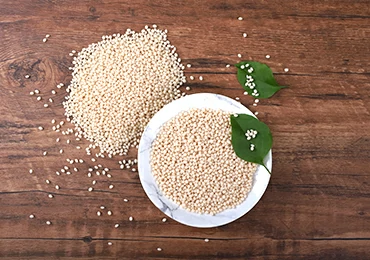
Material grade. XH-918 (PBAT + PLA + cornstarch) and SH-133 (PBAT + PLA). Both are patented and certified by BPI and OK Compost. The difference that matters for procurement is the composting route — see the grade section below. See the resin grades behind each bag.
Certification. Industrial composting: BPI / ASTM D6400, EN 13432, OK Compost, AS 4736. Home composting: OK Compost HOME, AS 5810. Ask for the certificate number, not a logo.
Capacity. 10-gallon (medium), 13-gallon (kitchen), 33-gallon (large / contractor), and fully custom dimensions.
The shortlist: heavy-duty compostable trash bags compared
| Option | Best for | Capacity | Seal | Material grade | Gauge | Certification |
| 33-gallon contractor & industrial bags | Yard waste, contractor clean-up, bulky sharp debris | 33 gal/custom | Star-seal or flat | SH-133 or XH-918 | Custom thicker (above 0.020 mm) | BPI, EN 13432, OK Compost, AS 4736 |
| Star-seal garbage bags | Irregular, sharp loads (glass, wood, metal) | 13–33 gal | Star-seal | XH-918 / SH-133 | 0.018–0.020 mm std; thicker custom | Industrial composting set |
| Drawstring trash bags | High-volume facilities, fast changeovers | 10–33 gal | Drawstring | XH-918 / SH-133 | 0.018–0.020 mm std | BPI, EN 13432, OK Compost |
| Handle-tie / flat-top kitchen liners | 13-gal kitchen and office streams | 13 gal | Flat-top / handle-tie | XH-918 | 0.018–0.020 mm | Full set, incl. OK Compost HOME, AS 5810 |
| Gusseted/custom heavy-duty bags | Bulky loads, private-label programmes | Custom | Gusseted | Per specification | Custom | Per programme |
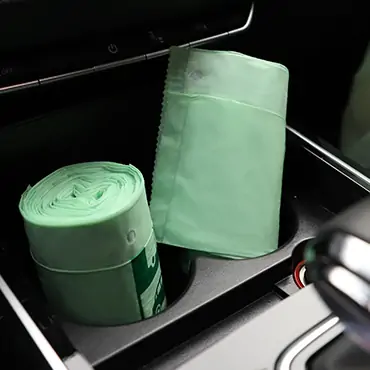
33-gallon contractor & industrial bags
The largest standard size in the range, built with a thicker custom gauge for yard waste, renovation debris, and contractor clean-up — see our compostable contractor trash bags and compostable yard waste bags for the dedicated SKUs. Star-seal or flat bottoms handle sharp corners without concentrating stress at one seam.
Star-seal trash bags
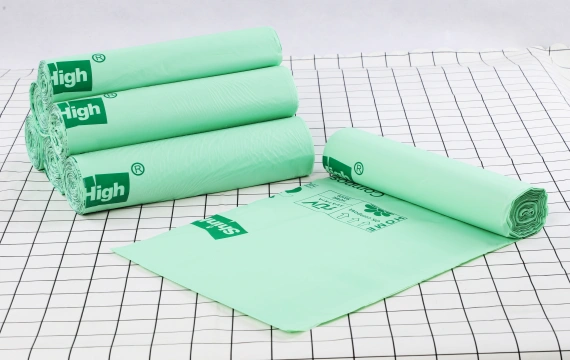
Star-seal bottoms gather the film into a rosette, so weight sits in the middle of the bag instead of pulling on a single seam. For glass, wood offcuts, or metal scrap, this is the seal to specify.
Drawstring garbage bags
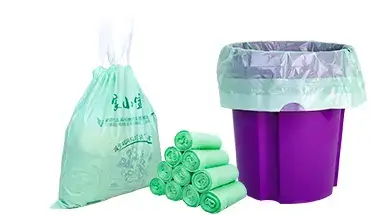
For facilities changing liners all day, a drawstring closure beats tying a flat top. The film stays at the standard 0.018–0.020 mm; the advantage is operational, not thickness.
Handle-tie / flat-top kitchen liners
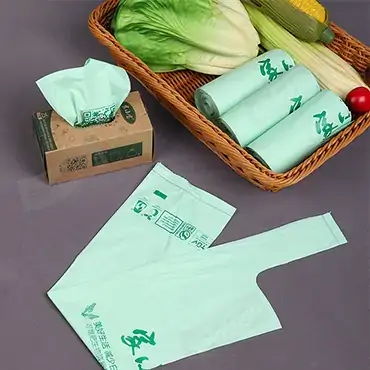
The 13-gallon workhorse for kitchen and office organics. Specified in XH-918 when the programme accepts home-compostable liners, so the same bag qualifies for both industrial and home routes.
Gusseted/custom heavy-duty bags
When the load is bulky rather than sharp, gusseted sides add volume without a bigger flat dimension. Fully custom size, thickness, print, and handle — the route for private-label and OEM programmes.
How material grade changes the decision
This is where the composting route decides the bag, and where “compostable” gets misused.
- XH-918 carries a home-compostable statement: it is certified for both industrial composting (BPI / ASTM D6400, EN 13432, OK Compost) and home composting (OK Compost HOME, AS 5810). Specify it for municipal programmes that accept home-compostable liners or for retail sold to home composters.
- SH-133 is certified for industrial composting only — OK Compost, BPI / ASTM D6400, EN 13432. It is not home compostable under any phrasing. If the disposal route is a backyard pile, do not specify SH-133.
If a buyer cannot confirm the local stream, the safe default is industrial-compostable film with a note on the pack: “industrial composting facility required.” Never imply a bag breaks down in landfill or in the open environment — it does not.
Where compostable heavy-duty bags are not the best fit
Honesty beats a sale that fails at the curb.
- No composting infrastructure. A compostable bag only delivers its breakdown claim inside a managed composting stream. Where curbside or industrial composting is unavailable, the bag behaves like conventional plastic in landfill and will not degrade as labelled.
- Extreme wet-and-sharp industrial loads. Beyond the custom gauge we can supply, very heavy or saturated loads may still need conventional HDPE or double-bagging. Tell us the load, and we will spec the gauge, not guess.
- Home-compost routes with SH-133. Covered above — SH-133 is industrial only; use XH-918 for home composting.
How to specify your heavy-duty bag
A four-point checklist before you request samples:
- Confirm the composting route. Industrial only, or home accepted? That picks the grade (SH-133 vs XH-918).
- Match gauge to the load. Standard 0.018–0.020 mm for kitchen and office; thicker custom gauge for yard, contractor, and industrial waste.
- Pick the seal. Star-seal for sharp and irregular; drawstring for speed; gusseted for bulk.
- Verify the certificate, not the logo. Ask for the BPI, EN 13432, OK Compost, AS 4736 (industrial) or OK Compost HOME / AS 5810 (home) certificate number for the exact SKU.
ShinHigh runs 30,000 tonnes of modified material and finished bags a year from a 30,000 m² plant, with standard lead times of 15–20 days and free samples for specification work. Shelf life for finished bags is 10–12 months, so plan bulk inventory to turn within the window.
Conclusion
Heavy-duty does not mean one bag. Match the gauge, seal, and material grade to the load and the composting route, and verify the certificate for the exact SKU. ShinHigh supplies the full range — from 13-gallon kitchen liners to 33-gallon contractor bags — in both industrial-compostable SH-133 and home-and-industrial XH-918.
Compare specifications for your programme, or get a quote with your target size, gauge, and composting route. Talk to our team about heavy-duty compostable trash bags.

FAQ
Are compostable trash bags strong enough for heavy or sharp waste?
At the right gauge, yes. Standard 0.018–0.020 mm liners handle kitchen and office organics; contractor and industrial loads use a thicker custom gauge with star-seal or flat bottoms to spread weight. Beyond the gauge we can supply, very wet or sharp loads may need double-bagging or conventional HDPE.
What thickness should a heavy-duty compostable bag be?
Trade guides put reliable kitchen compostable bags at 0.9–1.2 mil and heavy-duty at 2.0 mil and above. ShinHigh’s standard liner is 0.018–0.020 mm (about 0.7–0.8 mil); we customise gauge upward for contractor and industrial use rather than quoting one fixed number.
Which certification do I need — industrial or home composting?
It depends on the disposal route. Industrial composting uses BPI / ASTM D6400, EN 13432, OK Compost, or AS 4736. Home composting requires OK Compost HOME or AS 5810. Confirm the local stream before specifying the grade.
Is SH-133 or XH-918 better for heavy-duty bags?
Both are patented, BPI- and OK Compost-certified, and handle heavy-duty loads. XH-918 is certified for both industrial and home composting; SH-133 is industrial-composting only. If the route includes home composting, specify XH-918.
How long do compostable trash bags take to break down?
In an industrial composting stream, certified film disintegrates in roughly three months. Home composting takes considerably longer — at least a year under good conditions. The condition is not optional; breakdown depends on the facility, not the bin.
Can I get custom heavy-duty bags with my print and size?
Yes. Size, thickness, colour, and printing (up to 4 colours) are fully custom, with OEM and private-label support and low MOQ for custom orders. Free standard samples are available; custom samples may carry a nominal fee.