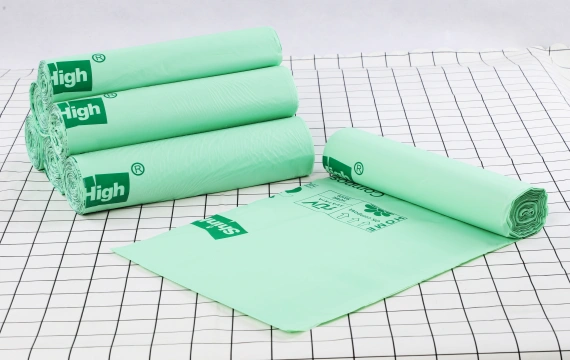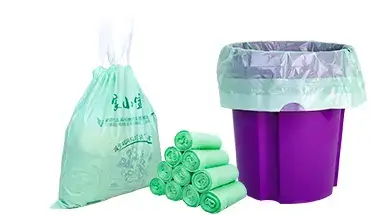




HDPE (High-Density Polyethylene) bags are thin, stiff, and ideal for dry, light waste like paper. LDPE/LLDPE (Low-Density) bags are thick, stretchy, and built for heavy, wet, or sharp kitchen trash.
Although both are types of plastic, they perform completely differently. Choosing the wrong one leads to ripped bags and messy floors. This guide breaks down the differences so you can buy the right bag every time.
HDPE vs LDPE: Quick Comparison Table
|
Feature
|
HDPE (High-Density)
|
LDPE / LLDPE (Low-Density)
|
|---|---|---|
|
Feel & Sound
|
Stiff, crinkly, translucent
|
Soft, stretchy, quiet, opaque
|
|
Thickness Unit
|
Microns (µm)
|
Mils (0.001″)
|
|
Puncture Resistance
|
Low (tears easily)
|
High (stretches around sharp objects)
|
|
Best For
|
Offices, bathrooms, paper
|
Kitchens, food waste, yard debris
|
|
Cost
|
Budget-friendly
|
Premium / Heavy-Duty
|
|
Recycling Code
|
#2
|
#4
|
-
Texture: Thin, rigid, and makes a distinct “crinkly” sound. They are usually clear or white.
-
Strength: They have high tensile strength (they resist pulling apart).
-
Thickness: Measured in Microns (µm). Typical office bags range from 8 to 20 microns.
-
Best Uses: Paper waste, restroom trash (tissues, paper towels), and hotel housekeeping. They are perfect for dry, lightweight, non-sharp garbage.
- Weakness: They have zero stretch. If you poke an HDPE bag with a sharp corner, it will tear immediately. They also become brittle in freezing temperatures.
What is LDPE / LLDPE (Low-Density Polyethylene)?
-
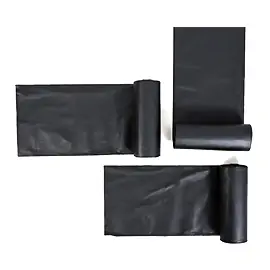
Texture: Soft, smooth, and quiet. They are often black and opaque to hide garbage.
-
Strength: Their superpower is puncture resistance through elasticity. Instead of tearing, the plastic stretches around the object, preventing leaks.
-
Thickness: Measured in Mils (1 mil = 0.001 inch). Common kitchen bags are typically 0.9 to 1.5 mil thick. Heavy-duty contractor bags are 2.0 to 3.0+ mil.
-
Best Uses: Kitchens (food scraps, bones, cans), yard waste (sticks, thorns), and construction sites. They are built for heavy, wet, or sharp waste (like bones or glass).
Mil vs Micron: Understanding Thickness
One of the biggest sources of confusion is the unit of measurement. You cannot compare HDPE and LDPE by their numbers alone because they use different scales.
|
Measurement
|
Unit
|
Typical Range
|
Used For
|
|---|---|---|---|
|
Micron
|
µm (Metric)
|
8 µm – 25 µm
|
HDPE Bags (Office/Bathroom)
|
|
Mil
|
0.001 inch
|
0.5 mil – 4.0 mil
|
LDPE Bags (Kitchen/Heavy Duty)
|
Conversion Tip: 1 Mil is equal to approximately 25.4 Microns.
Warning: Never compare a 15-micron HDPE bag to a 15-mil LDPE bag. A 15-mil bag would be nearly 1/4 inch thick—more like a rubber tire than a trash bag!
How to Choose the Right Bag (Decision Guide)
Stop guessing. Match your trash type to the bag type:
-
Office / Bathroom / Paper: HDPE (8-15 µm). It’s the cheapest option and more than strong enough.
-
Kitchen / Food Waste: LDPE / LLDPE (0.9 – 1.2 Mil). You need the stretch to handle leaks and sharp edges.
-
Yard Waste / Branches: Heavy-Duty LDPE (2.0 Mil+). Prevents sticks from poking through.
-
Construction / Renovation: Contractor Bags (3.0 Mil+). Maximum durability for heavy debris.
-
Cold Garages / Winter: LDPE. Avoid HDPE in the cold, as it becomes brittle and shatters easily.
FAQs
Q: Are high-density trash bags stronger than low-density?
A: HDPE has higher tensile strength (it resists pulling apart), but LDPE has higher puncture resistance (it resists tearing from a hole). For general household use, LDPE is considered “stronger” because it is less likely to leak.
Q: Can I use HDPE bags in the kitchen?
A: Only if you generate very little wet or heavy waste. If you throw away food scraps, coffee grounds, or cans, an HDPE bag will likely tear. Stick to LDPE for the kitchen.
Q: What does “0.9 Mil” or “13 Micron” mean on the box?
A: It refers to the thickness of the plastic film. “Mil” is used for thick, stretchy bags (LDPE). “Micron” is used for thin, crisp bags (HDPE). Never compare the numbers without checking the unit.
Q: What does “Linear Low-Density” (LLDPE) mean?
A: LLDPE is a newer version of LDPE. It combines the flexibility of LDPE with the strength of HDPE. It is currently the gold standard for premium kitchen trash bags because it is thinner than LDPE but just as tough.
Q: Are biodegradable bags HDPE or LDPE?
A: Most biodegradable or compostable bags are made from PLA (Polylactic Acid) or PBAT, not traditional polyethylene. They should never be mixed with HDPE or LDPE recycling streams, as they contaminate the batch.