



Introduction: Why PLA Remains the King of 3D Printing
PLA (Polylactic Acid) is a bioplastic derived from renewable resources, such as corn starch. It is the easiest material to print with due to its low printing temperature (195–230°C) and minimal warping. It is ideal for prototypes, educational models, and aesthetic prints, but it becomes brittle above its glass transition temperature of ~60°C.
PLA (Polylactic Acid) remains the undisputed king of 3D printing filaments. Whether you are running a print farm, managing a school lab, or prototyping industrial parts, understanding PLA is crucial. Unlike petroleum-based plastics, PLA is derived from plants, offering a lower carbon footprint. This guide covers everything from material properties to choosing the best PLA filament for your specific application, including insights into bulk purchasing for industrial efficiency.
What Is PLA Filament Made Of?
Best PLA Filament Print Settings (Nozzle & Bed Temp)
The optimal print settings for standard PLA filament typically involve a nozzle temperature between 190°C and 220°C and a heated bed temperature of 50°C to 60°C.
-
Nozzle Temperature: 200°C – 215°C (Start here; raise by 5°C for the first layer).
-
Bed Temperature: 50°C – 60°C (A clean PEI sheet or blue tape works well even without heat).
-
Print Speed: 40 – 100 mm/s (High-speed variants can handle 150 – 300 mm/s).
-
Cooling: 100% fan speed after the first layer to prevent warping and improve bridging.
-
Retraction: 3 – 6 mm (Direct Drive) or 6 – 8 mm (Bowden setups) to minimize stringing.
Does PLA Filament Absorb Moisture?
Yes, PLA filament is hygroscopic, meaning it readily absorbs moisture from the air, which can ruin print quality and make the filament brittle.
When exposed to humidity for extended periods, PLA becomes saturated with water molecules. You will know your filament is wet if you hear popping or hissing sounds during extrusion, notice excessive stringing, or see bubbles on the surface of your prints.
How to Dry Wet PLA:
If your filament shows signs of moisture absorption, drying it is straightforward. Preheat a convection oven or filament dryer to 65°C (149°F) and dry the spool for 4–6 hours. Do not exceed 70°C, as PLA’s glass transition temperature (~60°C) means it will soften and deform if too hot. After drying, store it in a sealed bag to maintain performance.
How to Store PLA Filament Long Term?
To store PLA filament long-term, keep it in an airtight container with desiccants, away from direct sunlight and humidity.
Moisture is the enemy of 3D printing. Even unused filament sitting on a shelf can become brittle over months. Professional print farms and manufacturers rely on strict storage protocols:
-
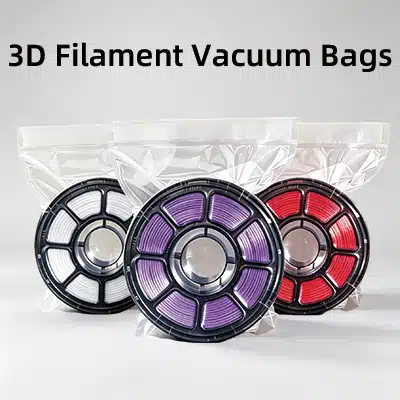
Vacuum Sealing: The gold standard for storage.
-
Desiccant Packs: Silica gel packets are essential to maintain a <10% humidity environment.
-
Dry Boxes: Printing directly from a dry box prevents mid-print failures.
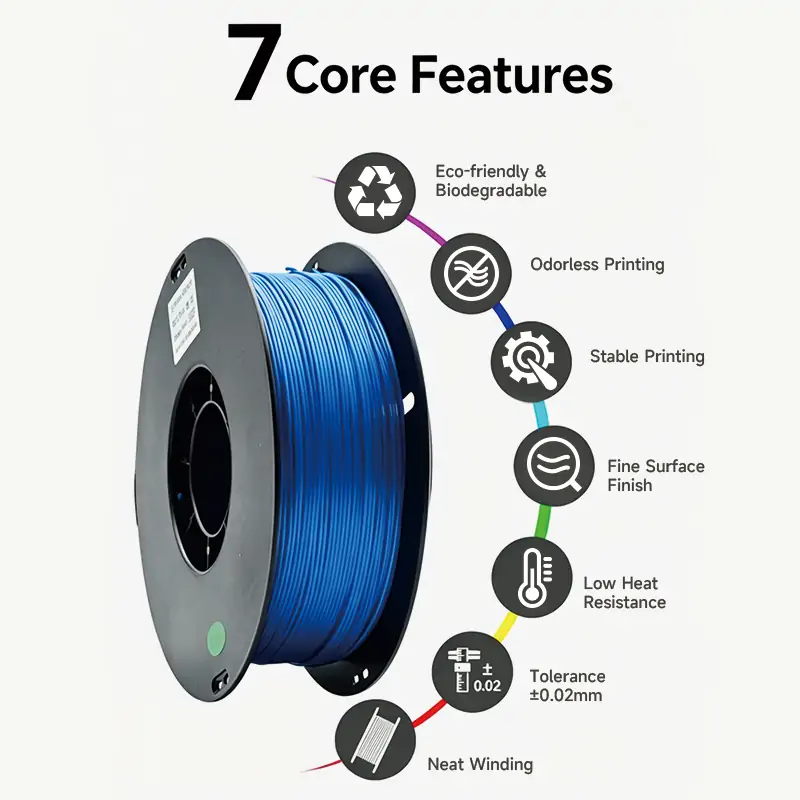
At ShinHigh, we vacuum-seal every spool with silica gel immediately after production to guarantee zero moisture content upon arrival—a critical factor for professional print farms requiring consistent quality.
PLA vs. PETG: Which Is Better for Your Project?
PLA is better for aesthetic models, educational tools, and low-stress prototypes due to its ease of use, while PETG is superior for functional parts requiring durability and heat resistance.
|
Feature
|
PLA Filament
|
PETG Filament
|
|---|---|---|
|
Ease of Printing
|
Excellent (Low warp)
|
Good (Requires tuning)
|
|
Heat Resistance
|
Low (~60°C Glass Transition)
|
High (~75°C – 85°C)
|
|
Strength
|
Rigid but Brittle
|
Tough and Flexible
|
|
Outdoor Use
|
Poor (UV Degrades)
|
Good (UV Resistant)
|
|
Best For
|
Figurines, Prototypes, Schools
|
Functional Parts, Outdoor Use
|
What Are the Different Types of PLA Filament?
-
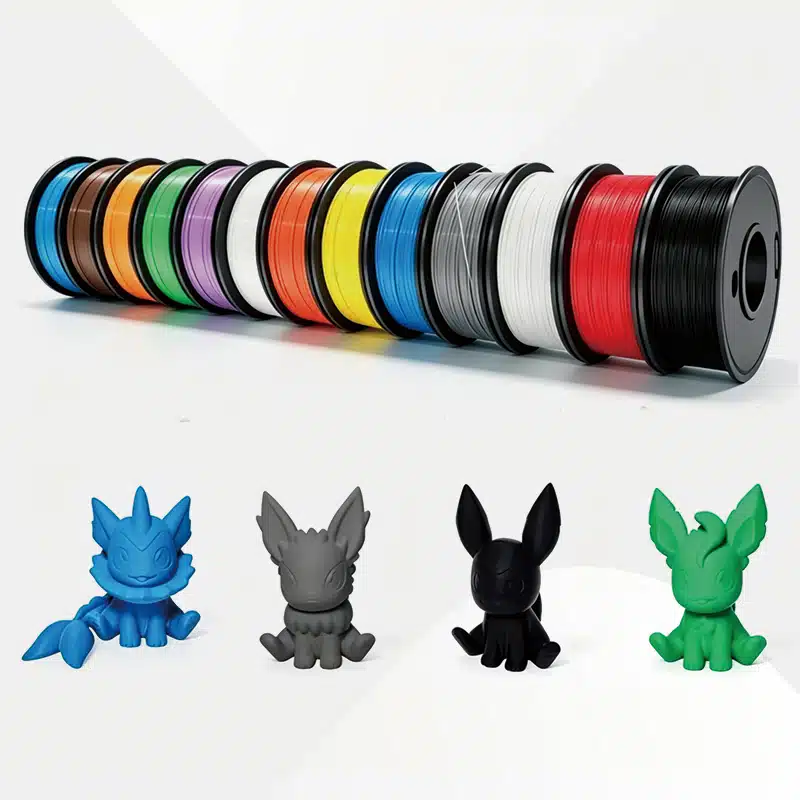
PLA+ (Tough PLA): Modified with additives to reduce brittleness, making it suitable for functional prototypes.
-
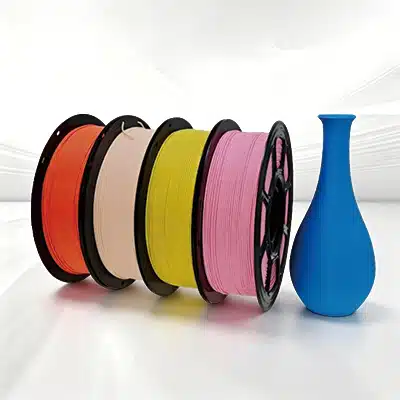
Matte PLA: Offers a smooth, chalk-like finish that hides layer lines, perfect for miniatures and architectural models.
-
Silk PLA: Provides a shiny, pearlescent finish for decorative items and cosplay props.
-
High-Speed PLA: Engineered for low viscosity, allowing print speeds up to 300mm/s without losing detail.
-
Wood/Fiber Filled: Contains organic fibers for a wooden texture, which can increase nozzle wear.
How to Choose the Best PLA Filament for Business & Education
When sourcing PLA for a school, print farm, or distribution, “best” is defined by consistency and supply chain reliability, not just color. Look for these four factors:
-
Dimensional Accuracy: A tolerance of ±0.02mm ensures smooth feeding and prevents clogs in high-volume printing.
-
Batch Consistency: Professional users need identical color and diameter across hundreds of spools.
-
Packaging: Vacuum sealing with desiccant is non-negotiable for long-term storage.
-
Manufacturer Support: Access to technical data sheets (TDS) and certificates of analysis (CoA).
How to Choose the Best PLA Filament for Bulk Orders?
When sourcing the best PLA filament for a business or institution, prioritize dimensional accuracy, batch consistency, and supply chain reliability over retail price.
-
Dimensional Tolerance: Look for ±0.02mm tolerance. Inconsistent diameters cause clogs and failed prints across hundreds of machines.
-
Cardboard Spools: Ensure spools are sturdy and compatible with AMS systems (like Bambu Lab) to avoid tangles.
-
Manufacturer Certifications: Verify compliance with RoHS, REACH, and FDA (food contact raw material) standards.
-
Bulk Pricing & MOQ: Direct manufacturer relationships eliminate middleman markups.
Troubleshooting: Why Is My PLA Filament Brittle?
PLA filament becomes brittle primarily due to moisture absorption, but it can also be caused by incorrect storage or aging.
If your filament snaps easily when bent or makes a crackling sound in the extruder, it is likely “wet.” Follow the drying instructions mentioned earlier (65°C for 4–6 hours).
Another common cause is “cold creep” or stress from being tightly wound on a spool for too long. If drying doesn’t help, try “unwinding” about 10 meters of filament and rewinding it loosely, or simply printing slightly hotter to increase layer adhesion.
Frequently Asked Questions (FAQ)
While the raw PLA resin is generally recognized as safe by the FDA, the final printed product is not considered food safe. The layered structure of 3D prints creates microscopic crevices where bacteria can grow. Additionally, dyes and additives in colored filaments may not be food-grade.
Yes. PLA sands easily due to its lower melting point. Use fine-grit sandpaper (220+ grit) and avoid excessive friction that generates heat. For painting, use a primer designed for plastics to ensure adhesion.
PLA has a relatively low glass transition temperature (Tg) of around 60°C. This means it will begin to soften and deform if left in a hot car or near a heating vent, making it unsuitable for high-temperature applications.
Conclusion: Partnering for Quality 3D Printing
Choosing the right PLA filament goes beyond the spool. Whether you are printing decorative pieces at home or scaling production in a print farm, quality and consistency are paramount. As a leading manufacturer serving North America and Europe, ShinHigh is committed to providing high-precision, eco-friendly PLA solutions tailored to your needs.
Ready to scale your printing operations? Contact us today for a free quote on bulk PLA filament orders and discover how our OEM services can elevate your brand.