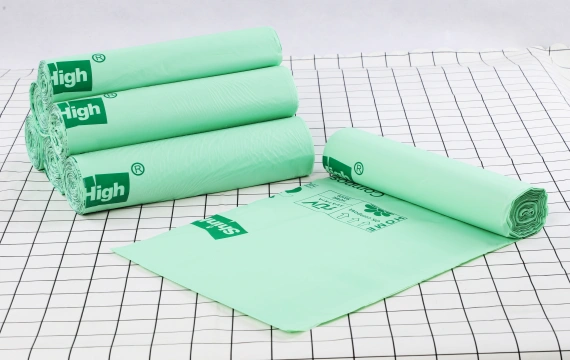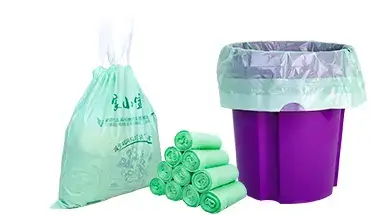




Picking up after your dog is non-negotiable. The bag you use to do it, however, is a more interesting question than most “eco-friendly” marketing lets on. The short version: biodegradable and compostable poop bags are a genuinely better choice than conventional plastic—but only when matched with the right disposal path. A bag that ends up in a standard landfill, regardless of how “green” its label looks, won’t deliver the environmental benefit you’re paying for.
This guide cuts through the marketing to give you what 2026 actually demands: clarity on what the labels mean, what happens to these bags in real-world disposal, and how to choose one that matches your situation.

The Uncomfortable Truth: “Biodegradable” Doesn’t Mean What You Think
Landfills are engineered for containment, not decomposition. They’re dense, oxygen-starved (anaerobic), and lack the active microbial communities needed for breakdown. A 2022 peer-reviewed study confirmed that certified compostable bags do break down fully, but within 90 days under laboratory composting conditions, not in a landfill. The same study didn’t even test landfill conditions because the outcome is already established: the bags persist.
Worse, if an anaerobic landfill does slowly break down a “biodegradable” bag, it releases methane — a greenhouse gas ~28× more potent than CO₂.
This is why the FTC Green Guides (16 CFR Part 260.8) state that an unqualified “biodegradable” claim is misleading if the product doesn’t fully decompose within one year under customary disposal. For dog waste bags, “customary disposal” = your household bin → municipal solid waste → landfill. And no currently available bag material meets that 12-month threshold in a landfill.
So Which Bag Should You Actually Buy?
The Reddit communities r/ZeroWaste and r/dogs have debated this extensively. The consensus splits into two camps, and both agree that buying uncertified “biodegradable” bags is the worst option :
Camp 1 — “Skip biodegradable bags entirely.” If all your dog waste goes to a regular landfill anyway, this camp argues you should reuse plastic bags you already have (grocery bags, bread bags) rather than manufacturing new plant-based plastic. The logic: reusing existing plastic waste beats producing new bioplastic that won’t decompose in a landfill.
Camp 2 — “Use certified compostable bags with proper disposal.” If you have access to a municipal organics collection that accepts pet waste, or you run a backyard pet waste composter, then a certified compostable bag is meaningfully better. Without the proper disposal route, the certification is worthless.
-
Waste goes to regular trash + no composting access → Reuse existing plastic bags first. If you must buy new, choose a certified compostable bag anyway (it reduces fossil resource use during manufacturing), but be honest that you won’t see the decomposition benefit.
-
Access to municipal/organics composting that accepts pet waste → Buy a bag certified to ASTM D6400 (US) or EN 13432 (EU). These bags decompose within 90–180 days under industrial composting conditions.
-
You want to compost at home → Look specifically for OK Compost HOME or AS 5810 certification. Standard “compostable” bags require industrial temperatures (55–60°C) that a backyard bin can’t reach; only HOME-certified bags break down in low-temperature home compost. Note: the US EPA explicitly advises against putting pet waste or compostable bags in backyard compost piles, because residential systems don’t reach pathogen-killing temperatures.
-
Flushable option → Some owners flush dog waste (never the bag) where municipal sewage permits. Even compostable bags can clog pipes, so never flush the bag itself.
How to Read the Label (2026 Edition)
With mainstream platforms now requiring merchants to display degradation test report numbers on product pages, here’s what to look for:
|
Label / Certification
|
What it actually means
|
Where it works
|
|---|---|---|
|
ASTM D6400
|
Industrial compostable (North America standard)
|
Municipal/industrial composting facilities
|
|
EN 13432
|
Industrial compostable (EU standard)
|
Industrial composting facilities
|
|
OK Compost HOME / AS 5810
|
Home compostable at 20–30°C
|
Backyard compost bins (pet waste is still not recommended by the EPA)
|
|
GB/T 38082-2019
|
Chinese national standard for biodegradable plastic bags
|
Industrial composting conditions
|
|
“Biodegradable” (unqualified)
|
Legally meaningless in the US without specifics
|
⚠️ Avoid unless accompanied by a real certification
|
|
“Bio-based” / “Made from plants”
|
Partially renewable feedstock, but says nothing about end-of-life
|
Doesn’t guarantee decomposition
|
-
“Corn starch smell” is not proof of degradability—PBAT is odorless, and PLA’s mild scent volatilizes in storage.
-
“Bury it in soil, and it rots” is misleading—natural soil degradation takes 2–5 years, far outside the 90-day industrial composting window.
-
“Extra thick” alone doesn’t guarantee strength—single-layer ultra-thick film (>55μm) can actually become brittle in cold weather; structural design matters more.
Durability: What Real Users Complain About
Reddit threads and retail reviews converge on one practical anxiety: “Will the bag hold up when I actually pick up the poop?” Zooplus reviews for biodegradable bags are mixed—some users praise the thickness for medium dogs, while others report “frequent tearing, especially when unrolling” and suspect batch inconsistency. On Chewy, a long-time buyer of beyondGREEN bags reported that a recent batch “gotten weaker,” with bags ripping while trying to open them—a known risk when manufacturers quietly adjust the PLA/PBAT formulation.
-
Thickness matched to dog size — small dogs ~1.2–1.3 mil, medium ~1.5 mil, large/loose stools 1.5+ mil
-
Double-rolled edges and reinforced seam seals — single-layer flat bags are the ones that fail
-
Batch freshness — PLA-based bags have ~12-month shelf life; formulations degrade after that
-
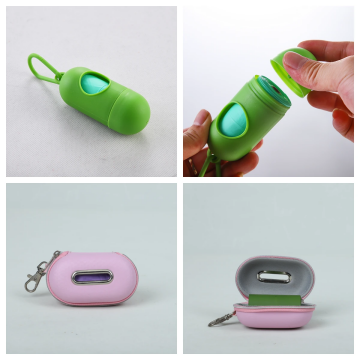
Dispenser compatibility — a cheap plastic clip that tears the bag while dispensing causes more failures than the bag material itself
Convenience Still Matters
None of the above changes the fact that biodegradable bags—including ours at ShinHigh Bio—are designed for everyday convenience. Perforated rolls, leash-clip dispensers, and pocket-sized formats mean going green doesn’t make your life harder. You can stash a roll in your pocket, purse, or backpack, or clip a dispenser to your dog’s leash. Being a responsible pet owner shouldn’t require a sacrifice in usability.
Responsible Pet Ownership Goes Beyond the Bag
A frustrating trend that surfaced on Reddit: dog owners who bag the waste but then leave the bagged poop on the trail. As one Redditor put it: “Bagging it and leaving it in the bush is even worse than just leaving it. At least the waste would decompose eventually.” Another added: “Those bags don’t even decompose that well.”
The bag is only half the equation. The other half is carrying it to an appropriate bin. If you can’t commit to that, the environmental calculus of your bag choice becomes irrelevant.
ShinHigh Bio’s Commitment
We offer a range of certified compostable and biodegradable pet poop bags made from plant-based materials (PBAT + PLA + corn starch formulations), designed for durability and ease of use. Our bags are available in various sizes and come with dispensers that clip onto leashes, collars, and pooper scoopers.
When you choose ShinHigh, you’re choosing:
-
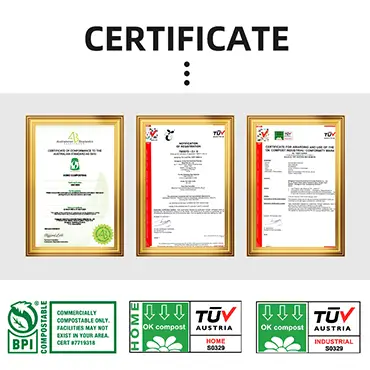
Certified materials — meeting EN 13432 / ASTM D6400 standards
-
Real durability — thickness and seam construction matched to dog size
-
Transparent labeling — clear certification marks, not vague “eco-friendly” language
-
Convenient formats — rolls, dispensers, and refill options
Frequently Asked Questions
Not automatically. They reduce fossil resource use during manufacturing and can fully decompose under proper composting conditions, but in a standard landfill, they behave similarly to regular plastic. The better choice depends on your disposal path.
No. The EPA lists pet waste AND compostable bags among items to avoid in backyard piles—residential systems don’t reach the temperatures needed to kill pathogens or fully decompose the bag. Only OK Compost HOME–certified bags are designed for low-temperature home composting, but pet waste itself is still not recommended for home compost.
Not necessarily. Many municipal programs accept food scraps but explicitly reject pet waste. Check your local program’s rules before assuming all organics are treated equally.
“Biodegradable” is an unregulated, unqualified claim. “Compostable” typically refers to a certified ability to break down in a specific composting environment (industrial or home) within a defined timeframe—look for ASTM D6400, EN 13432, or OK Compost HOME.
Quality compostable bags made with proper PBAT/PLA blends are engineered to match conventional plastic in strength. However, batch inconsistencies exist—always test a new batch by filling with warm water and lifting for 30 seconds.
If your waste goes to a regular landfill and you have no composting access, yes—reusing existing plastic avoids manufacturing new material. But if you have composting access, a certified compostable bag delivers a genuine end-of-life benefit.