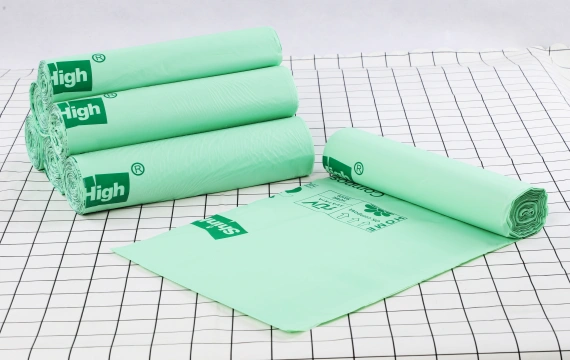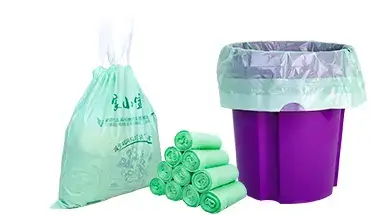




Your company has decided to launch the business of biodegradable trash bags — a responsible step toward sustainability. But when you start comparing options, the price differences are staggering. Some bags cost 2–5X more than others, even with similar “eco-friendly” labels. You sourced biodegradable trash bags at half the price. Then the fines hit.
As a BPI/DIN CERTCO-certified manufacturer, we’ve seen bulk buyers lose over $ 50,000 on “eco-friendly” bags that failed compliance tests.
Here’s why quotes vary wildly—and how to avoid costly greenwashing traps.
What justifies such a gap? As a certified manufacturer of industrial & home compostable bags (BPI, DIN CERTCO), we’ll unpack the hidden factors driving these price differences — and why cheaper options often cost more.
1. Certification: The Ultimate Differentiator
Not all certifications are equal. Reputable third-party certifications like BPI (USA), DIN CERTCO (EU), or ABA (Australia) require rigorous lab testing, facility audits, and annual fees. Bags must prove they:
- Fully biodegrades within 180 days in industrial composting facilities
- Leave no toxic residues or microplastics
- Disintegrate under strict temperature/microbial conditions
Cheaper trash bags often use self-declared labels like “degradable,” “oxo-degradable,” or uncertified “compostable” — terms with no legal enforcement. These may fragment into microplastics or fail in real composting streams. What’s worse, using these garbage bags will also result in policy penalties! The United States, the European Union, Australia, Canada, New Zealand, and other regions all have rigorous requirements for environmentally friendly materials. These compost certifications are also important passes in the local market.
International certifications cost tens of thousands of euros and need to be renewed regularly. BPI and DIN CERTCO are the most rigorous and recognised industrial composting certification bodies in the world. They are not just labels you can buy, they are the result of independent, scientific, rigorous testing and continuous monitoring of our raw materials, formulations, production processes and the degradation properties of our end products.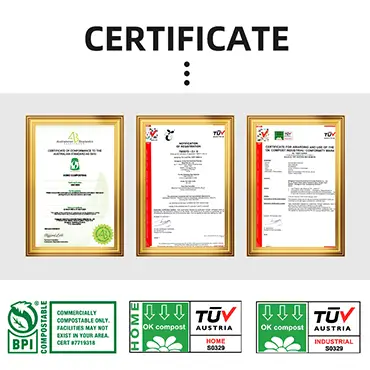
2. Material Costs: PLA/PBAT vs. “Greenwashed” Fillers
High-performance compostable bags (like ours) use premium raw materials:
- PLA (Corn Starch-Based): Renewable but sensitive to processing
- PBAT (Biodegradable Polyester): Ensures flexibility & strength
- Non-GMO Corn Starch: Accelerates biodegradation
Low-cost alternatives often blend petroleum-based plastics (PE/PP) with starch or fillers like CaCO3 (chalk). These might be marketed as “biodegradable” but only fragment — not biodegrade. Material costs here can be 40–60% lower, but they contaminate compost and defeat your sustainability goals. This is very important. You should introduce the advantages of your product to your consumers. Only truly environmentally friendly products are what consumers want to purchase.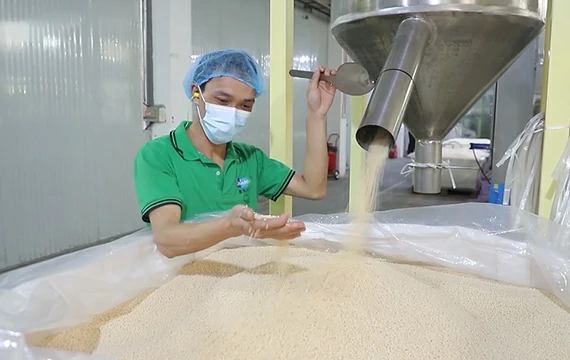
3. Performance & Durability: Reasons for Customer Complaints
Compostable trash bags must balance:
- Tear resistance (to hold wet waste)
- Shelf stability (won’t degrade prematurely)
- Certified disintegration (breaks down in compost)
Budget trash bags often compromise performance: they tear easily, feel “crunchy,” or disintegrate in storage. The use of biodegradable materials for film blowing, printing and bag making places higher demands on equipment and process control to ensure product consistency and quality. These refined production process investments are also reflected in the cost, but they have brought about more reliable and higher-quality products.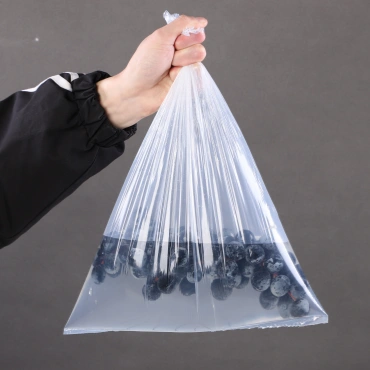
4. The Hidden Cost of “Fake Biodegradables”
Choosing uncertified/low-cost trash bags risks:
- Contaminating compost facilities → Trash bags that don’t break down must be landfilled
- Greenwashing backlash → If customers discover your “eco” bags contain plastics…
- Compliance fines → Regions like the EU, Canada, and California enforce strict standards
- Certified compostable trash bags protect your brand’s integrity and ensure genuine circularity.
How to Spot Truly Compostable Bags:
- Demand certifications: Look for BPI/DIN CERTCO/ABA logos with certification IDs (verify them online!).
- Check materials: Ask for a Technical Data Sheet (TDS). Avoid “PE-blend,” “oxo-degradable,” or vague claims.
- Test thickness: Quality compostable bags are typically 15–25 microns thick. Ultra-thin bags often sacrifice integrity.
Keep in mind: Price differences reflect authentic sustainability vs. green illusion. Certified compostable bags cost more because:
- Materials are premium (PLA/PBAT > chalk-filled PE)
- Certification is rigorous (testing + audits)
- Performance is engineered (no leaks, no early degradation)
- They protect the circular economy (no compost contamination)
Investing in certified compostable trash bags isn’t an expense — it’s insurance for your brand’s reputation and the planet. For enterprises that attach great importance to their environmental image (such as organic supermarkets, high-end hotels, and environmental event organizers), using truly certified biodegradable products is a strong proof of their environmental commitment. If the use of pseudo-degradable products is exposed (for instance, they are found to be non-degradable in composting sites), the blow to the brand’s reputation is huge, and the loss far exceeds the price difference of the bags.
Ready to Switch to Truly Certified Biodegradable Trash Bags?
As a BPI & DIN CERTCO-certified manufacturer using premium PLA/PBAT/corn starch blends, we guarantee:
- Industrial &home compostable performance
- No greenwashing, no microplastics
- Customizable sizes/prints (using compostable inks)