



Choosing a kitchen trash can seems simple—until you realize your new bin doesn’t fit under the sink, or your garbage bags are constantly slipping off. The right size isn’t just about holding waste; it’s about optimizing your kitchen workflow and hygiene.
In this guide, we’ll break down exactly what size trash can you need based on your household, kitchen layout, and lifestyle.
What is the Standard Kitchen Trash Can Size?
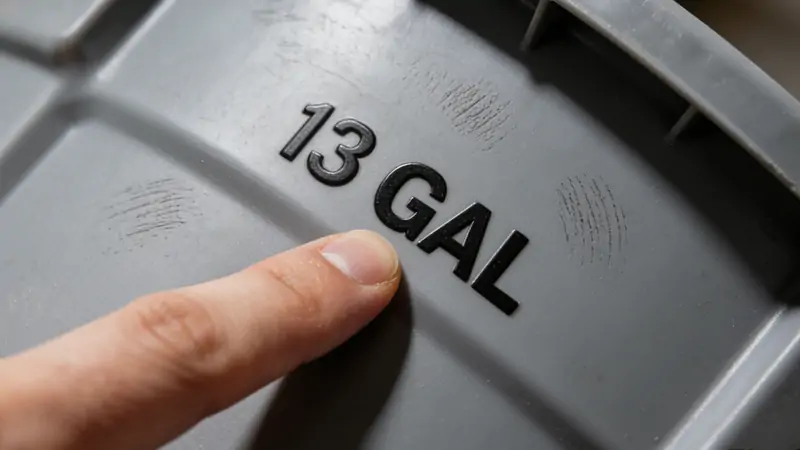
If you’re looking for a replacement for a typical family kitchen, 13 gallons (approximately 50 liters) is the magic number. This is the standard kitchen trash can size for most American homes.
-
Why 13 Gallons? It strikes the perfect balance. It holds about 3–4 days of waste for a family of four without becoming too heavy to lift.
-
Dimensions: Typically measures 24–26 inches in height and 13–16 inches in width.
-
Bag Compatibility: It fits standard “Kitchen Drawstring Bags,” which are the most affordable and widely available.
Trash Can Size Recommendations by Household
|
Household Size
|
Recommended Capacity
|
Best For
|
|---|---|---|
|
Singles / Couples
|
8 – 10 Gallons
|
Apartment dwellers or minimalists who take out trash frequently.
|
|
Average Family (3-4)
|
13 Gallons
|
The gold standard. Handles 3-4 days of typical waste without issue.
|
|
Large Family (5+)
|
18 – 23 Gallons
|
Reducing the frequency of taking out the trash. ideal for those who cook at home often.
|
|
Composters
|
7 – 10 Gallons
|
If you divert food scraps to compost, your general waste shrinks significantly.
|
It’s Not Just About Gallons: Shape Matters
Two cans with the same gallon capacity can look completely different. Before you make a purchase, consider the footprint.
1. Rectangular (The Most Popular)
-
Best for: Placing against a wall, in a pantry, or in a tight corner.
-
Pro: Maximizes capacity while minimizing floor space. Often features a flat back to sit flush against cabinets.
2. Slim / Narrow
-
Best for: Apartments or the gap between your fridge and counter.
-
Pro: Saves precious floor space. A 12-gallon slim can often fit in the same width as an 8-gallon round can.
3. Round
-
Best for: Open floor plans where the can might be accessed from multiple angles.
-
Con: Takes up more floor space relative to its capacity.
4. Dual-Compartment
-
Best for: Households that separate recycling and trash.
-
Note: These require more width (often 18–20 inches wide) to accommodate two bins.
Measuring Your Space (Don’t Skip This!)
Nothing is worse than a trash can that won’t fit. Follow these steps:
-
Measure Height: Account for the lid clearance. Sensor or swing lids need extra room to open fully.
-
Measure Width/Depth: Ensure you have enough room to pull the bag out without snagging on cabinets.
-
Check Under-Sink: Measure the height between the floor and the bottom of the sink bowl/pipes. Most under-sink cans are 7–10 gallons.
Matching Trash Bags to Your Can
One of the most common frustrations is bags that are too small or too loose. Here is a quick cheat sheet:
-
7 – 10 Gallon Can: Use Bathroom or Small Kitchen Bags.
-
13 Gallon Can: Use Standard Kitchen Bags (13 Gal).
-
16 – 20 Gallon Can: Use Large Kitchen or Contractor Bags (labeled 20-30 Gal).
-
Pro Tip: Always buy bags labeled for a size slightly larger than your can. A 13-gallon bag in a 13-gallon can is a tight squeeze; a 13-gallon bag in a 12-gallon can is much easier to tie off.
 FAQs
FAQs
Q: What size trash can fits under the sink?
Most under-sink cabinets fit cans between 7 and 10 gallons. However, you must measure the height clearance, especially if you have plumbing pipes taking up space.
Q: Is a 20-gallon trash can too big?
It depends. For a family of 2, yes, it will take weeks to fill, and the bag will be extremely heavy (over 40 lbs) to lift. For a family of 6, it is essential to avoid daily trips to the dumpster.
Q: Should I get a step can or a sensor can?
This is a matter of hygiene and convenience. Step cans are reliable and cheaper, while sensor cans keep germs off the lid but require batteries or charging. Both come in standard 13-gallon sizes.
Conclusion
If you are still unsure, 13 gallons is the safest choice for 90% of kitchens. It is the standard for a reason: it fits standard bags, holds several days of waste, and fits in most kitchens without being obtrusive.
However, if you live alone or have a tiny kitchen, downsizing to a 10-gallon slim can will save you space and money on bags. Measure twice, buy once, and enjoy a cleaner kitchen!