



What is the PPWR?
The Packaging and Packaging Waste Regulation — PPWR, formally Regulation (EU) 2025/40 — is the EU’s new legal framework for all packaging and packaging waste. It replaces the Packaging and Packaging Waste Directive (94/62/EC), which had governed packaging in the EU for roughly three decades.
Two structural changes set the PPWR apart from the old directive:
- It is a Regulation, not a Directive. A directive tells Member States what result to reach and leaves them to transpose it into national law. A regulation is directly applicable and binding in every Member State on the same date, with no national implementation step. This removes the fragmented, divergent national rules that made cross-border packaging compliance difficult.
- It covers the whole life cycle. The PPWR spans design, material composition, labelling, reuse, collection, recycling and end-of-life — not just recycling rates.
The PPWR applies to all packaging placed on the EU market and the waste it generates, whether the packaging is used in industry, retail, distribution, offices, services or households, and whether the transaction is B2B or B2C. The full text is published on EUR-Lex.
Key dates
| Milestone | Date |
| Adopted by the EU Council | 16 December 2024 |
| Published in the Official Journal | 22 January 2025 |
| Entered into force | 11 February 2025 |
| Application begins (phased) | 12 August 2026 |
Why the PPWR matters
Packaging waste in the EU has been growing faster than the economy and the population. Around 180 kg of packaging waste is generated per person per year, and packaging accounts for about one third of municipal waste. The European Commission projects that, without action, packaging waste would grow by 19% and plastic packaging waste by up to 46% by 2030.
The PPWR is designed to reverse that trend through one harmonised rulebook. Its core goals are:
- Reduce packaging waste through binding per-capita reduction targets
- Make all packaging recyclable by design
- Increase the share of recycled content in plastic packaging
- Promote reuse and refill systems
- Restrict hazardous substances (PFAS, heavy metals) in packaging
- Harmonise sorting labels so consumers recycle correctly
As a result, sustainability moves from a voluntary differentiator to a market-entry requirement for businesses placing packaging on the EU market. The European Commission’s overview of the regulation explains the rationale in more detail (Packaging and Packaging Waste Regulation).
Who does the PPWR apply to?
The PPWR reaches every economic operator that places packaging on the EU market, including companies based outside the EU that export packaged goods into the Union. The main roles:
| Role | Responsibility |
| Manufacturer | Not necessarily the company that physically makes the packaging — generally the company placing packaging on the market under its own name or trademark. Responsible for technical documentation, the Declaration of Conformity and required markings. |
| Importer | An EU-established importer must verify the non-EU manufacturer has met its obligations: technical documentation exists, the Declaration of Conformity is available, markings are present. |
| Distributor/retailer | Must ensure packaging they make available complies; must not place non-conforming packaging on the market. |
| Producer (EPR) | Bears Extended Producer Responsibility — registers with national EPR schemes, reports volumes, pays modulated fees. |
| Online marketplace/fulfilment provider | Covered in defined cases, particularly where they act as the placing-on-the-market party. |
Micro-enterprises (fewer than 10 employees and turnover under €2 million) benefit from lighter rules, but are not exempt from registration and core obligations.
For example, packaging in scope includes consumer packaging, transport and industrial packaging, shipping cartons, plastic bags, protective films, shrink wrap, pallets, and cushioning or filling material. If it is intended to contain, protect, handle, deliver or present a product, it is packaging — including empty packaging.
Key PPWR requirements
1. PFAS and heavy metal restrictions (from 12 August 2026)
The first obligations to bite are substance restrictions.
PFAS in food-contact packaging. From the application date, food-contact packaging containing PFAS above strict limits can no longer be placed on the EU market:
| PFAS limit | Threshold |
| Any single non-polymeric PFAS | 25 ppb |
| Sum of all non-polymeric PFAS (targeted analysis) | 250 ppb |
| Total fluorine (including polymeric PFAS) | 50 ppm |
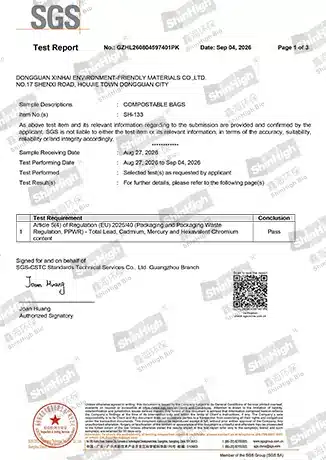
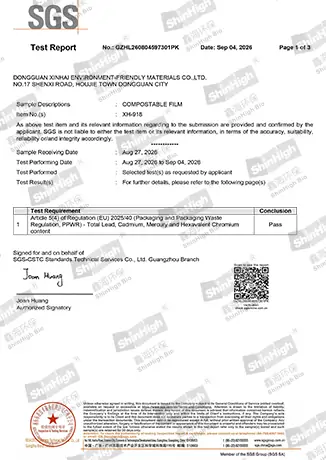
Heavy metals. The combined concentration of lead, cadmium, mercury and hexavalent chromium in packaging must not exceed 100 mg/kg.
2. Recyclability by design (from 2030)
From 1 January 2030, all packaging placed on the EU market must be recyclable and meet Design for Recycling (DfR) criteria. Packaging is graded into performance classes based on how much of it can be recycled by weight:
| Date | Requirement |
| 2030 | All packaging must be recyclable, meeting grades A, B, or C (at least 70% by weight). Packaging below 70% (grade D or worse) is treated as technically non-recyclable and cannot be placed on the market. |
| 2035 | Packaging must be recycled at scale — actually collected, sorted and recycled across the EU, not just recyclable in theory. |
| 2038 | Only grades A or B (at least 80% by weight) may be placed on the market. |
Therefore, the detailed calculation methods will be set out in delegated and implementing acts, expected by 2028.
3. Recycled content targets for plastic packaging (from 2030)
From 1 January 2030, every plastic part of packaging representing more than 5% of the packaging unit’s total weight must contain a minimum share of post-consumer recycled (PCR) content. Targets rise again in 2040:
| Packaging category | 2030 | 2040 |
| Contact-sensitive packaging, PET as major component (excl. single-use plastic beverage bottles) | 30% | 50% |
| Contact-sensitive packaging, plastics other than PET (excl. single-use plastic beverage bottles) | 10% | 25% |
| Single-use plastic beverage bottles | 30% | 65% |
| All other plastic packaging | 35% | 65% |
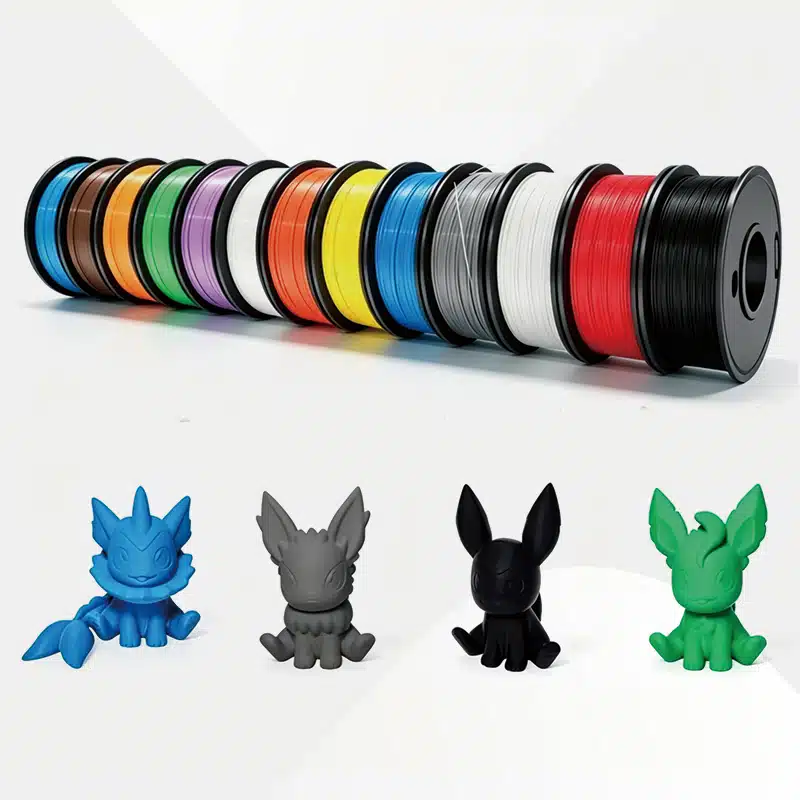
Exemptions include plastic parts under 5% of packaging weight, medical and pharmaceutical packaging, compostable plastic packaging, packaging for dangerous goods transport, and food-contact packaging where recycled content would threaten human health. For the compostable route, the grade choice matters as much as the certification. ShinHigh’s XH-918 and SH-133 resin grades differ in exactly this way: XH-918 (PBAT + PLA + cornstarch) carries a home-compostable statement, while SH-133 (PBAT + PLA) is certified for industrial composting only.
4. Packaging minimisation and empty-space limits
By 2030, packaging weight and volume must be reduced to the minimum necessary for its function. At the same time, empty space in grouped, transport and e-commerce packaging must not exceed 50% — targeting oversized boxes and excessive void fill.
5. Reuse and refill targets (from 1 January 2030)
Binding reuse targets apply to specific sectors:
| Sector | 2030 target | 2040 target |
| Transport packaging (pallets, crates, containers) | 40% reusable | 60% (non-mandatory) |
| Grouped packaging | 10% reusable | 25% |
| Beverage packaging | 10% reusable | 40% (non-mandatory) |
Final distributors of takeaway food and drinks must offer a reusable packaging option and allow consumers to use their own containers at no extra charge. Meanwhile, larger retailers must provide refill facilities.
6. Single-use plastic bans (from 1 January 2030)
Certain single-use plastic packaging formats will be banned outright:
- Single-use plastic grouping packaging (e.g. shrink wrap around multipacks)
- Single-use plastic packaging for fresh fruit and vegetables under 1.5 kg
- Single-use plastic packaging for food and beverages filled and consumed on premises (HORECA)
- Single-use miniature toiletry and cosmetic packaging in hotels
- Very lightweight plastic carrier bags
- Single-use condiment sachets (sauces, sugar, creamer)
- Shrink wrap for luggage at airports
7. Harmonised labelling (from 2028)
A harmonised labelling system will apply across the EU from 2028, using standardised pictograms so consumers can identify material composition and the correct disposal or sorting stream. Sticky labels on fruit and vegetables must be industrially compostable.
8. Extended Producer Responsibility and eco-modulated fees
Producers cover the net costs of collection, sorting and recycling through EPR schemes. As a result, fees are eco-modulated: packaging with a better recyclability grade (A vs C) and higher recycled content pays less. This makes non-recyclable or low-recycled-content packaging financially unviable over time.
9. Deposit return systems (DRS) (by 2029)
Member States must establish deposit return systems for single-use plastic bottles and metal beverage cans, targeting 90% separate collection by 2029, unless they already achieve an equivalent rate through other means.
10. Compostable packaging requirements
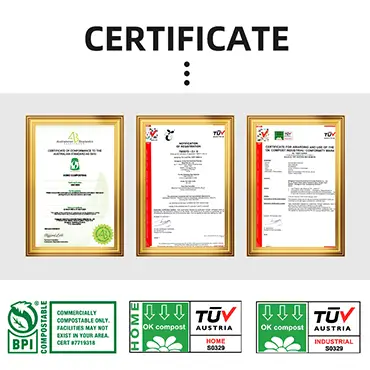
A small set of formats must be industrially compostable rather than merely recyclable: tea bags, filter coffee pods, coffee capsules, sticky labels on fruit and vegetables, and very lightweight plastic carrier bags. Under the PPWR, “industrially compostable” means compliance with EN 13432 or an equivalent recognised standard.
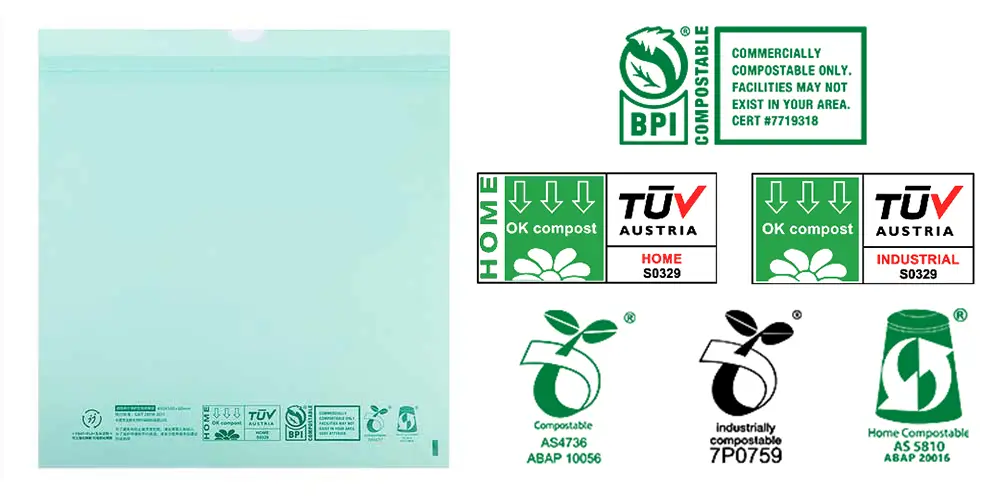
The distinction between industrial and home composting matters here. Industrial-composting standards include EN 13432, ASTM D6400 and AS 4736; home-composting standards are AS 5810 and OK Compost Home. Where a line falls under the compostability requirement — very lightweight carrier bags, for example — the certificate, not the logo, is what counts. ShinHigh’s bags and films are certified to EN 13432 (DIN CERTCO), OK Compost (TÜV Austria) and BPI (ASTM D6400), with per-material certificates for both resin grades and a catalogue that includes produce bags, shopping bags and trash bags.
PPWR compliance timeline at a glance
| Date | What happens |
| 11 Feb 2025 | Regulation enters into force |
| 12 Aug 2026 | Application begins; PFAS and heavy metal restrictions apply |
| 2028 | Harmonised labelling; Design for Recycling criteria published |
| 2029 | Deposit return systems target 90% collection of plastic bottles and metal cans |
| 1 Jan 2030 | Recyclability grades A/B/C; recycled content targets; reuse targets; minimisation and empty-space limits; single-use plastic bans |
| 2035 | Packaging must be recycled at scale |
| 2038 | Only grades A/B (≥80%) permitted |
PPWR vs EPR vs the Single-Use Plastics Directive
These are related but distinct, and they overlap in practice:
- PPWR sets the technical and product requirements: what packaging may be placed on the market, its design, recycled content, and labelling. Compliance means proving the packaging itself is lawful.
- EPR (Extended Producer Responsibility) governs what happens after the packaging is placed on the market: registration with national schemes, volume reporting and fee payment. EPR systems remain national even as the PPWR harmonises parts of them.
- The Single-Use Plastics Directive (SUPD) already sets separate measures — such as recycled content in PET beverage bottles and consumption-reduction targets for cups and food containers — and continues to apply alongside the PPWR.
For example, other adjacent rules include the Ecodesign for Sustainable Products Regulation (ESPR) and the upcoming Green Claims Directive, which constrains environmental claims on packaging.
What to do now
- Start by building a packaging inventory. Map every packaging format, material, and supplier across your portfolio, including transport and e-commerce packaging.
- Next, clarify your role. Determine whether you are a manufacturer, importer, distributor, or producer for EPR purposes — the obligations differ.
- Then collect supplier data. PFAS declarations, heavy metal content, and material composition usually sit several tiers upstream. Start structured supplier engagement now.
- Also review recyclability. Assess packaging against Design for Recycling criteria and the 70% (Grade C) threshold that becomes binding in 2030.
- At the same time, plan recycled content. Secure PCR supply for plastic packaging ahead of the 2030 and 2040 targets.
- Prepare documentation. Technical documentation and Declarations of Conformity must be ready before the phased deadlines.
- Finally, monitor secondary legislation. Recyclability methodology, recycled-content calculation and labelling rules are still being finalised in delegated and implementing acts.
Conclusion
The PPWR is the most comprehensive reform of EU packaging law in decades, replacing fragmented national rules with a single, directly applicable framework. It moves packaging from a recycling-focused regime to a full life-cycle system built on prevention, reuse, recyclability and recycled content.
The deadlines are phased, but the work is front-loaded: packaging portfolios, supplier data and documentation take time to align. Businesses that map their packaging and secure recyclable design and PCR supply early will not only stay ahead of enforcement but avoid the cost escalation built into eco-modulated EPR fees.
For lines the PPWR steers toward compostable material — produce bags, shopping bags, trash bags — confirm the certificate number against the format. Sourcing EN 13432- and OK Compost-certified bags for those SKUs? Request the certificate pack and free samples to verify the claims.
FAQ
The regulation entered into force on 11 February 2025. As a result, most businesses began tracking the 18-month transition from that date, with the first obligations applying from 12 August 2026. Substance restrictions (PFAS, heavy metals) apply first; recyclability, recycled content, reuse and ban measures follow from 2030.
The Directive (94/62/EC) required Member States to transpose national rules, producing divergent standards. By contrast, the PPWR is a directly applicable Regulation, harmonising rules across all Member States on the same date and extending coverage across the whole packaging life cycle.
Generally, the company placing packaging on the market under its own name or trademark — not necessarily the company that physically produces it. For example, a brand applying its logo to blank packaging can become the manufacturer for compliance purposes.
Yes. Packaging imported into the EU must meet the same requirements as packaging manufactured in the Union. Consequently, an EU-established importer must verify that the non-EU manufacturer has fulfilled its obligations.
From 2030: 30% for PET contact-sensitive packaging (50% by 2040), 10% for non-PET contact-sensitive packaging (25% by 2040), 30% for single-use plastic beverage bottles (65% by 2040), and 35% for other plastic packaging (65% by 2040). Plastic parts under 5% of packaging weight are exempt.
Yes. From 1 January 2030, specific formats are banned outright. These include single-use plastic grouping packaging, fresh fruit and vegetable packaging under 1.5 kg, food and beverage packaging consumed on premises, miniature hotel toiletries, very lightweight plastic bags and condiment sachets.
From 12 August 2026: 25 ppb for any single non-polymeric PFAS, 250 ppb for the sum of non-polymeric PFAS, and 50 ppm total fluorine. Packaging exceeding these limits cannot be placed on the EU market.
Yes, if you place packaged products on the EU market — including via online sales or cross-border delivery — your packaging is in scope. Therefore, you generally need an EU-established importer or authorised representative to carry the compliance obligations.
Tea bags, filter coffee pods, coffee capsules, sticky labels on fruit and vegetables, and very lightweight plastic carrier bags must be industrially compostable to EN 13432 or an equivalent standard. In addition, compostable plastic packaging is exempt from the recycled-content targets that apply to conventional plastic packaging.