



More and more manufacturers are increasingly favoring heat shrink packaging because it provides complete protection against damage, theft, and exquisite packaging effects by fully covering the goods. To help you choose the right packaging, this blog will provide a detailed introduction to heat shrink film.
What is Heat Shrink Film?
Heat shrink film is a polymer-based material that tightens around products when heated. It is widely used for packaging goods, providing protection, stability, and an attractive finish. Its ability to conform to product shapes makes it ideal for bundling, labeling, and tamper-evident seals.
However, heat shrink films are often made from non-biodegradable materials like polyethylene (PE) and polyvinyl chloride (PVC), which contribute to plastic pollution. This has led to the development of biodegradable shrink film, a sustainable alternative that addresses environmental concerns without compromising on performance.
Key Characteristics of Heat Shrink Film
Before discussing biodegradable options, understand these core properties:
- Thickness Range: 10–50 microns (application-dependent)
- Shrinkage Temperature: 90°C–150°C (material-dependent)
- Puncture Resistance: Ensures the film can withstand external pressure and impact.
- Shrink Rate & Tension: Determine how tightly the film wraps around the product.
- UV Resistance: Essential for outdoor applications to prevent degradation from sunlight.
Types of Heat Shrink Films
- PE (Polyethylene) Heat Shrink Film
– Characteristics: Good toughness, moisture resistance, and strong impact resistance.
– Applications: Widely used for packaging beverages, alcohol, and textiles. - PVC (Polyvinyl Chloride) Heat Shrink Film
– Characteristics: High shrinkage rate, low cost, and wide temperature range. Contain toxic plasticizers and is banned in many regions due to environmental concerns.
– Applications: Commonly used for packaging bottles and containers. - PET (Polyester) Heat Shrink Film
– Characteristics: High strength, heat resistance, and chemical resistance.
– Applications: Ideal for replacing PVC in various industries. - PETG (Modified Polyester) Heat Shrink Film
– Characteristics: High transparency, gloss, and excellent printing performance. FDA-approved, BPA-free, a new generation of environmentally friendly plastics.
– Applications: Suitable for high-end product packaging. - OPS (Oriented Polystyrene) Heat Shrink Film
– Characteristics: High strength, rigidity, and excellent transparency. Deformation occurs around 40°C.
– Applications: Ideal for packaging cosmetics and pharmaceuticals. - POF (Multilayer Co-extruded Polyolefin) Heat Shrink Film
– Characteristics: High gloss, toughness, and uniform shrinkage.
– Applications: Used for automated high-speed packaging.
Most of the above common shrink film materials are not biodegradable, which can cause damage to the environment and exacerbate plastic pollution.
The Rise of Biodegradable Shrink Film
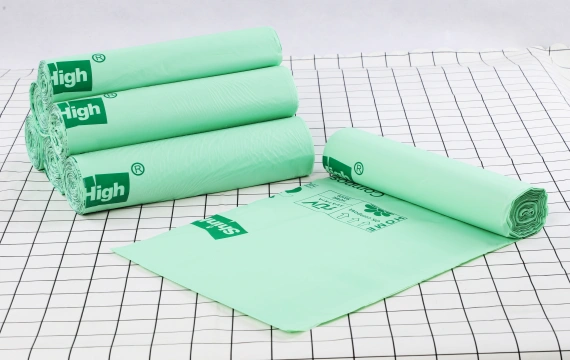
As the world grapples with plastic pollution, compostable shrink film has emerged as a game-changer in the packaging industry. Made from bio-based or biodegradable materials like PLA (Polylactic Acid) and PBAT (Polybutylene Adipate Terephthalate), compostable shrink films offer a sustainable solution without compromising performance.
Key Benefits of Compostable Shrink Wrap
- Eco-Friendly: Decomposes within months under composting conditions, leaving no harmful residues.
- Anti-Static Properties: Natural materials reduce static electricity, preventing dust adsorption.
- High-Temperature Resistance: Additives can enhance the film’s stability in high-temperature environments.
- Versatility: Suitable for a wide range of applications, from food packaging to cosmetics.
Production Process of Compostable Shrink Wrap
The production of compostable shrink film involves several steps:
- Raw Material Preparation: Bio-based materials like PLA and PBAT are mixed in a certain proportion in advance, while adding appropriate amounts of additives, such as antistatic agents, lubricants and stabilizers.
- Melting and Blending: The required resins are added to the melter for melting. During the melting process, pigments or other additives can be added in appropriate amounts as required to produce shrink films with different colors or special functions.
- Extrusion: The softened material is extruded into a thin film.
- Cooling: The extruded film is cooled down by passing it through cooling rollers to harden it quickly. The cooling process allows further control of the degree of stretching and thickness of the film.
- Rolling and Packaging: The shrink film is rolled and labeled.
Applications of Compostable Shrink Wrap
- Compostable shrink wrap is versatile and can be used in various industries:
- Food Packaging: Ideal for wrapping baked goods, chocolates, and candies.
- Beverage Packaging: Provides tamper-evident seals and enhances brand visibility.
- Cosmetics and Pharmaceuticals: Offers protection and aesthetic appeal.
- Other Industries: Used for labeling, bundling, and packaging toys, home appliances, and more.
Advantages of Compostable Shrink Wrap
- Sustainability: Reduces plastic waste and carbon footprint.
- Performance: Comparable to polyolefin shrink wrap in terms of strength and durability.
- Brand Image: Enhances a company’s reputation as an eco-conscious brand.
Conclusion
Compostable shrink wrap represents a significant step forward in sustainable packaging. Combining the functionality of polyolefin heat shrink wrap with eco-friendly materials offers a viable solution to reduce plastic waste and protect the environment.
As businesses and consumers alike prioritize sustainability, compostable shrink wrap is poised to become the go-to choice for packaging across industries. By adopting this innovative solution, we can collectively work toward a greener, more sustainable future.
FAQs About Compostable Shrink Wrap
- Does compostable shrink wrap wrinkle during packaging?
No, compostable shrink wrap is designed to provide a smooth, wrinkle-free finish when applied correctly. - How long does it take for compostable shrink wrap to decompose?
Under proper composting conditions, compostable shrink wrap can decompose within 3 to 6 months. - Is compostable shrink wrap suitable for high-speed packaging?
Yes, advancements in material science have made compostable shrink wrap suitable for automated high-speed packaging. - Can I use compostable shrink wrap for food packaging?
Absolutely! Compostable shrink wrap is safe for food packaging and meets regulatory standards.