




Introduction: The Kitchen Nightmare We All Know
That moment of dread. You go to take out the kitchen trash, and you feel a sudden, ominous dampness on your fingers. A murky, smelly liquid is slowly seeping through the bag onto your floor. Or worse, the dreaded rip sound as the bottom gives way, creating a disgusting and unhygienic mess to clean up.
If this has happened to you, you’re not alone. The culprit is rarely the garbage itself, but the bag. Standard trash bags are simply not designed to handle the unique brutality of kitchen food waste.
Unlike dry trash, kitchen scraps are a perfect storm of bag-destroying properties: they are heavy with water, wet with liquids, greasy from cooking oils, and often contain sharp elements like bone fragments or shellfish shells.
This guide is your ultimate solution. We will move beyond generic advice and dive deep into the science and design of bags specifically for kitchen waste. By the end, you’ll be an expert at selecting a bag that won’t let you down, transforming a daily chore from a risky gamble into a simple and clean task.
Know Your Enemy – The 4 Ways Kitchen Waste Attacks Your Bags
To pick the right defender, you must first understand the attackers. Kitchen waste assaults bags in four primary ways:
-
The Weight Attack: Water-logged food scraps and peels are significantly heavier than their dry counterparts, putting immense strain on the bag’s seams and handles. -
The Liquid Attack: Soups, broths, and food juices are hydrodynamic. They will find and exploit any weak point or thin spot in the plastic, leading to leaks. -
The Grease Attack: Cooking oils and fats can gradually break down certain types of plastic, making them brittle and more prone to cracking over time. -
The Puncture Attack: Small bones, eggshells, crab shells, and even stiff pasta can act like tiny daggers, poking holes in an otherwise strong bag.
A truly reliable kitchen compost bag or food waste bag must be a fortress against all four of these threats.
The 3 Golden Rules for Choosing an Unbeatable Kitchen Bag
Forget just looking at thickness. These three factors are far more critical for preventing trash bag leaks and avoiding ripped garbage bags.
1. The Material is the Foundation – Choose “Grease-Fighting” Plastics
The polymer used is the DNA of the bag. It determines its innate strength and resistance.
-
Top Choice for Durability: HDPE or Quality LLDPE. While LLDPE is known for toughness, High-Density Polyethylene (HDPE) often offers better stiffness and superior resistance to grease and chemicals, making it a champion for kitchen grease and oil. Many premium, heavy-duty food scrap bags utilize a blend to achieve the best of both worlds: the toughness of LLDPE and the rigidity of HDPE. -
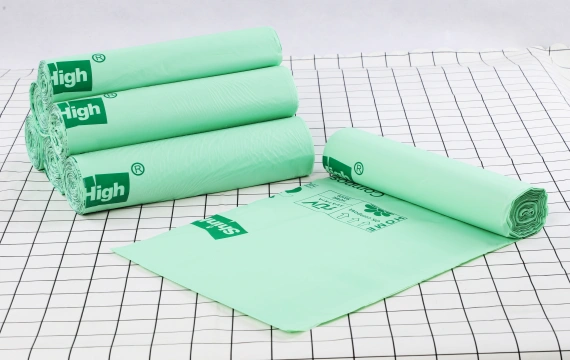
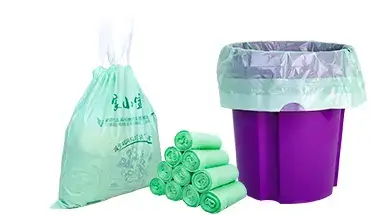
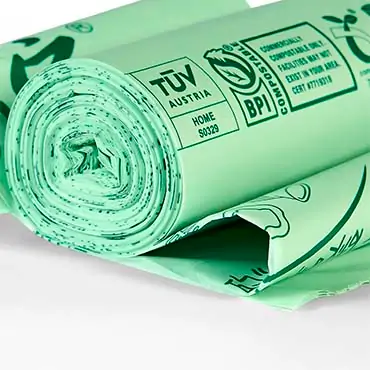
The Compostable Option: For those prioritizing sustainability, certified compostable kitchen bags (like those made from PLA) are a great choice for collecting food scraps for compost. However, it’s crucial to understand the trade-off: they generally have lower puncture resistance than plastic bags. Always look for reputable certifications like BPI or OK compost INDUSTRIAL to ensure they will actually break down in a commercial facility.
> Pro Tip: Give the bag a quick feel. A bag that feels tough and slightly rigid is often better for heavy, greasy loads than one that feels overly thin and filmy.
2. Structural Design is Your Forcefield – Reinforce Every Weak Point
Brilliant design is a force multiplier. It takes good material and makes it unbeatable.
-
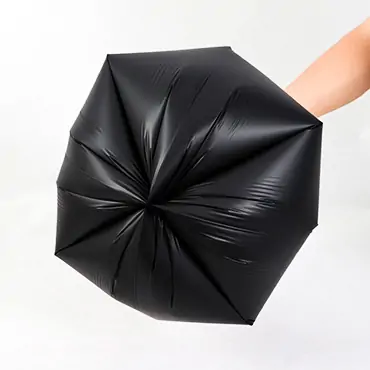
The Bottom Line: The Star-Sealed (Diamond) Bottom is Non-Negotiable. This is the single most important feature for a strong kitchen trash bag. A flat seam is a single line of failure. A star-sealed bottom, with its built-in reinforcement ribs, distributes weight across a wide surface area, increasing its load capacity for heavy waste by 30% or more. It turns a “weak line” into a “strong surface.” -
The Handles: Reinforced Loop Handles are a Must. Simple punched holes create high-stress points that act like scissors. Reinforced drawstring bags or loop handles distribute the lifting force over a much larger area, preventing the dreaded handle tear-off. -
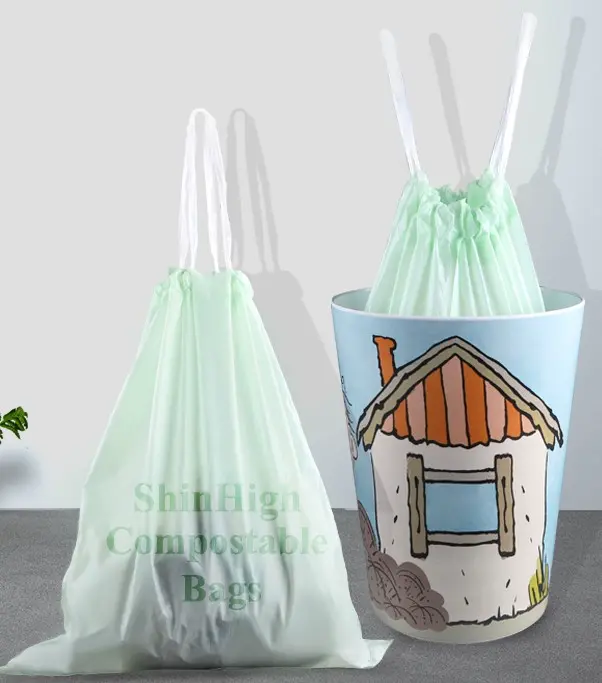
The Seal: Secure-Tie Drawstrings for Containing Mess. A good drawstring bag for the kitchen isn’t just about carrying; it’s about sealing. A tight, easy-to-tie drawstring locks in odors and, most importantly, prevents liquids from sloshing out when you transport the bag to the bin.
3. Validate with Performance Data – Trust Proof Over Promises
A reputable manufacturer confident in its product will provide performance data.
-
Look for indicators like “Static Load Capacity ≥ 25 lbs” or “Leak-Proof Guarantee.” This shows the company stands behind the bag’s real-world performance, which is far more valuable than a generic “extra strong” label. -
For compostable bags, the certification label provides key performance data, validating their eco-friendly claims.
The Ultimate At-Home Test for Any Kitchen Bag
Before you buy in bulk, grab a single roll and put it to the test! Here’s a simple kitchen trash bag test you can do at home:
-
The Load Test: Place 2-3 full water bottles (about 3-4 kgs total) into the bag. Lift it by the handles. Do the handles stretch or deform? Does the bottom seam look stressed? A good bag will hold its shape. -
The Leak Test: Pour a cup of water into the empty bag. Swirl it around the seams, especially the bottom. Let it sit for a minute. Check for any tiny droplets or seepage. A truly leak-proof bag will hold the water perfectly.
Conclusion: Your Quick-Action Cheat Sheet
Choosing the right bag is simple when you know what to look for. Use this checklist on your next shopping trip.
Your Ultimate Checklist for a Leak-Proof, Rip-Proof Kitchen Bag:
|
|
|
|
|---|---|---|
|
|
|
|
|
|
|
|
|
|
|
|
|
|
|
|
|
|
|
|
Remember the mantra: “Strong material, star-sealed bottom, reinforced handles.”