



We grab them every time we hit the grocery store, line our trash cans with them, and stuff our shopping finds into them. Plastic bags are everywhere in modern life. Yet, few of us stop to think about the transformation happening behind the scenes: how do rigid, marble-sized plastic pellets turn into the thin, flexible carriers we use every single day?
This guide breaks down the industrial process of plastic bag production, taking you from raw resin to the finished product ready for your shopping cart.
What Are Plastic Bags Made Of? (Raw Materials)
At their core, most plastic bags are made from a family of plastics called Polyethylene (PE). It is one ofselect different densities of PE based on the intended use of the bag. Polyethylene is the same. Manufacturers choose different densities of PE depending on what the bag is used for.
HDPE (High-Density Polyethylene)
This is the material you likely associate with the classic grocery store “T-shirt” bag.
-
Texture: It is thin, lightweight, and has a distinct “crinkly” sound when handled.
-
Strength: Despite being thin, it is very strong and resistant to tearing, making it perfect for carrying heavy gallons of milk or canned goods.
LDPE (Low-Density Polyethylene)
This type of plastic is used for bags that require greater thickness or flexibility.
- Texture: It is softer, smoother, and much stretchier than HDPE.
- Uses: You see LDPE in bread bags, newspaper sleeves, frozen food packaging, and the thicker reusable shopping bags.
The Starting Point: Resin Pellets
Regardless of the type, the process always begins with resin pellets. These look like tiny, colorful beads or grains (similar to salt or sand). They are easy to transport and feed into machines. They can be:
-
Virgin Pellets: Brand-new plastic made directly from natural gas or petroleum.
-
Recycled Pellets: Made from post-consumer recycled plastic (PCR), which helps reduce environmental impact by giving old plastic a new life
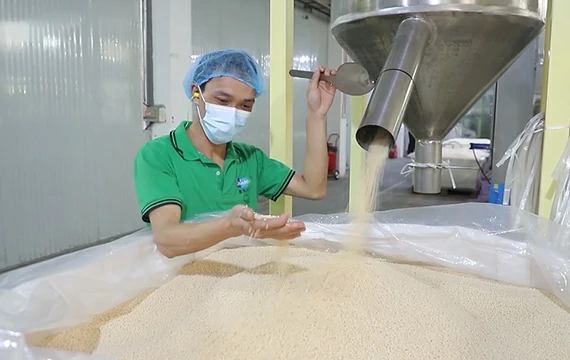
Step 1: Extrusion & Blown Film (Creating the Tube)
Once the resin pellets are ready, they enter the heart of the manufacturing process: the extruder. This is where the solid plastic becomes a usable film.
Melting the Pellets
The pellets are poured into a hopper and fed into a long, heated barrel called an extruder. Inside, a large screw rotates, pushing the pellets forward while heating them to temperatures between 200°C and 250°C (392°F–482°F). By the end of the barrel, the solid pellets have transformed into a consistent, viscous liquid plastic.
The Blown Film Process
This molten plastic is then forced through a circular die. Instead of just coming out as a sheet, it forms a continuous tube.
Here is the clever part: air is blown into the center of this tube. Much like blowing up a balloon, the air inflates the hot plastic tube into a giant, vertical bubble. This “bubble” is stretched in both directions—vertically by the pull of the machine and horizontally by the air pressure. Stretching the plastic this way aligns the polymer molecules, making the film strong and uniform.
Cooling & Flattening
As the bubble rises, it passes through “air rings” that cool the plastic rapidly so it retains its shape. Once cooled, the top of the bubble is pinched closed by nip rollers, and the tube is flattened. What comes out the other side is a continuous, flat plastic film roll, often called a “lay-flat” tube.
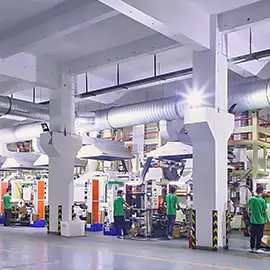
Step 2: Printing (Optional but Common)
If the bags are destined for a retail store, they likely need branding. This is where printing happens.
The flat film passes through a flexographic printing press. This works similarly to a giant stamp, using flexible rubber plates to transfer ink onto the moving film. Most grocery bags feature simple logos or slogans printed in 1 or 2 colors. Since the film is essentially a continuous tube, printers must be careful to align the design so it appears correctly on both the front and back of the bag once it is cut.
Note: If the bags are meant to be plain (like many clear trash bags or produce bags), they skip this step entirely and move straight to the bag-making machine.
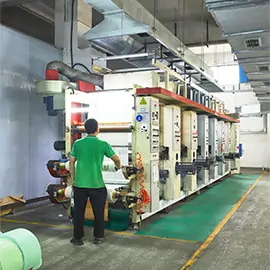
Step 3: Conversion (Cutting, Sealing & Shaping)
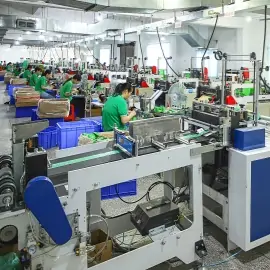
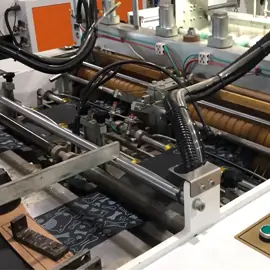
Now that we have a printed, flat roll of plastic film, it needs to be turned into individual bags. This happens on a bag-making machine.
Sealing and Cutting
The film is fed into the machine at high speed.
-
Sealing: Heated metal bars press down on the film, melting the layers together to create a strong seal. This will form the bottom (or sometimes the sides) of the bag.
-
Cutting: Immediately after sealing, a sharp blade slices the film to the desired length.
Handle Punching
Types of Bag Conversion
The way a bag is sealed and shaped depends on its intended use:
-
Flat Bags: Simple seals at the bottom. Used for newspapers or produce.
-
Gusseted Bags: The film is folded in on the sides before sealing, creating “expanding” sides. This allows the bag to hold bulky items (common for bakery bags or some trash bags).
-
T-Shirt Bags: Feature the die-cut handles and a reinforced lip at the top to support the weight of groceries.
Step 4: Packaging & Distribution
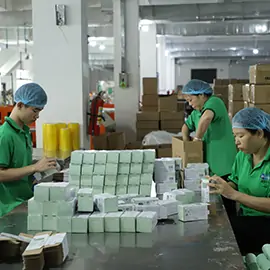
Once the bags are cut and punched, they are ready for packaging. Modern factories use automated systems to handle this volume. The bags are now fully formed, but they aren’t ready for the store shelf yet. In the final stage of production, the bags are automatically counted and grouped.
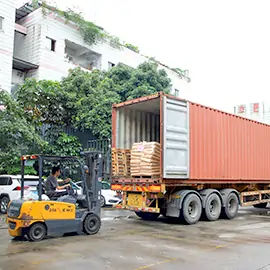
Depending on the manufacturer, they might be bundled into sleeves of 25, stacks of 100, or packed into convenient dispenser boxes. These bundles are then placed into larger shipping cartons, palletized, and wrapped, ready to be shipped to grocery stores, retail chains, and distribution centers worldwide.
Special Considerations (People Also Ask / FAQs)
Even though the process is standardized, there are always a few common questions that pop up. Here are the answers to what people ask most often:
Q: How long does it take to make a plastic bag?
A: The process is incredibly fast. While it takes about 30 minutes to heat the machinery, once running, industrial machines can produce tens of thousands to over 70,000 simple bags per hour, depending on the size and complexity. That is roughly 20 bags per second!
Q: Can plastic bags be made from recycled plastic?
A: Yes. Many facilities now use Post-Consumer Recycled (PCR) resin pellets. These are mixed with virgin pellets to produce new bags, reducing the need for 100% new petroleum. This is why you often see bags labeled “Made with 20% Recycled Content.”
Q: What is the difference between HDPE and LDPE bags?
A: While both are polyethylenes, they serve different purposes:
-
HDPE (High-Density): This is the thin, crinkly material used for grocery T-shirt bags. It is incredibly strong in tension, meaning it won’t stretch out of shape when holding heavy items like canned goods.
-
LDPE (Low-Density): This is thicker, softer, and much stretchier. It is used for bread bags, produce bags, and soft retail bags where flexibility is more important than rigid strength.
Conclusion
From the moment a tiny resin pellet enters the hopper to the second a finished bag is boxed for shipping, the process is a marvel of modern automation and chemical engineering.
We’ve seen the journey: Tiny resin pellets are heated and melted, pushed through a die to form a giant inflated bubble, cooled into a flat film, and finally sealed, cut, and punched into the familiar shapes we use every day. It is a highly efficient system that produces a low-cost, waterproof, and incredibly versatile product that has become indispensable in global commerce.