



You just received a stunning bouquet. It’s wrapped in a protective sleeve, stems bound together, petals peeking out. Your first instinct? Rip off the wrapping, put it in a vase, and admire it.
Stop.
That instinct might be killing your flowers before they even get a chance.
In fact, what you do in the first hour after receiving a bouquet determines how long it will last — whether you want it to stay fresh for two weeks or eventually preserve it forever. And the very first decision is about that wrapper.
Why the Wrapping Matters More Than You Think
-
Protection during transport – preventing petals from bruising or snapping.
-
Humidity control – a breathable sleeve maintains a microclimate around the flowers, reducing water loss.
-
Temperature buffer – slowing down the shock when moving from a cold delivery truck into a warm room.
|
Type
|
Material
|
Effect on flowers
|
|---|---|---|
|
Sealed plastic/cellophane
|
Non‑porous
|
Traps moisture, causes condensation, and promotes rot if left too long
|
|
Breathable flower sleeve
|
Perforated or woven fabric
|
Allows air exchange, reduces ethylene buildup, and keeps flowers hydrated without suffocating
|
If your bouquet arrived in a breathable flower sleeve (like the ones many professional florists use), leaving it on for a few hours — even half a day — can actually help the flowers recover from the stress of transit. The gentle humidity inside the sleeve prevents wilting while the stems adjust.
On the other hand, if it’s a fully sealed plastic bag, you should open it immediately to let the flowers breathe.
So the golden rule is: Don’t rush to remove the wrapping until you know what kind it is.
The First 24 Hours: What to Do (and Not Do)
1. Inspect the Sleeve
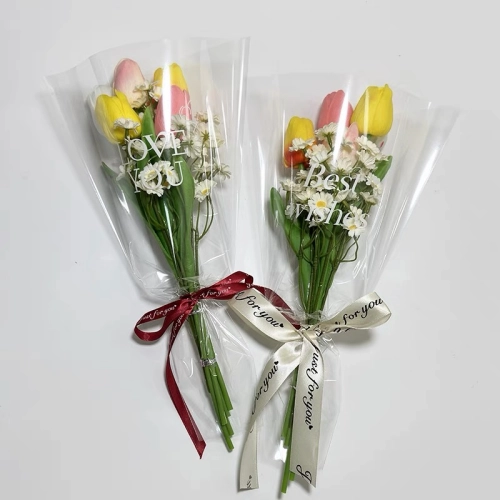
Look at the material. Can you see tiny holes or mesh? Is it a paper‑like wrap with perforations? If yes, your flowers are likely in a breathable flower sleeve designed to keep them fresh longer. Leave it on for now.
If it’s glossy cellophane with no air holes, unwrap it within 15–20 minutes.
2. Keep the Bouquet Cool
Place the still-wrapped bouquet in a cool, shaded spot away from direct sunlight, heaters, and air conditioning vents. The ideal temperature is 15–20°C. If the room is hot, the sleeve helps slow dehydration.
3. Hydrate Through the Sleeve (Yes, You Can)
Some breathable sleeves allow you to place the entire wrapped bouquet into a shallow tray of water for 10–15 minutes — the stems soak up moisture through the open bottom. This rehydrates the flowers without disturbing the arrangement.
4. When to Finally Remove the Sleeve
After 2–4 hours (or up to 8 hours if the bouquet was shipped long distance), it’s time to take off the wrapping. By now, the flowers have stabilized. Proceed to cut stems, remove lower leaves, and place in a clean vase with flower food.
5. Don’t Forget the Label
Common Mistakes That Kill Your Bouquet Early
The sudden change from humid sleeve to dry AC air shocks the petals. They wilt faster.
You can’t cut properly through the sleeve. Always unwrap first, then trim.
Condensation builds up, leading to mold and bacterial growth. Open sealed bags ASAP.
Apples, bananas, and tomatoes release ethylene gas, which accelerates aging. Keep flowers at least 1 meter away from fruit bowls.
How to Transition from Wrapping to Vase
-
Remove the sleeve gently – pull downward to avoid bending petals.
-
Trim stems at a 45° angle – cut about 1–2 cm above the bottom.
-
Strip all leaves that would sit below the water line.
-
Fill a clean vase with lukewarm water (not cold) and add flower food.
-
Arrange the bouquet loosely – don’t cram stems together.
-
Change water every 2 days and recut stems every 3 days.
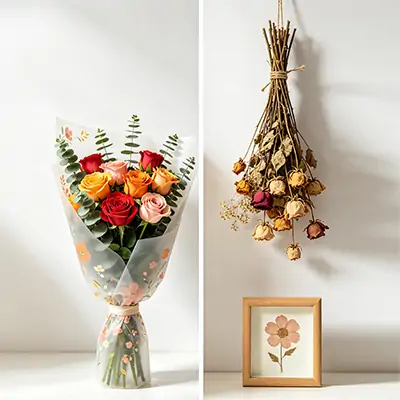
Beyond Freshness: Preserving Your Bouquet Later
-
Air‑dry them upside down (2–4 weeks)
-
Press them in a book (1–3 weeks)
-
Use silica gel for vibrant colors (3–7 days)
Conclusion
Next time you receive a bouquet, pause before tearing off the sleeve. Look at it. Feel the material. Ask yourself: Is this helping my flowers or hurting them?
A quality breathable flower sleeve is not just packaging — it’s the first line of defense for freshness. Choosing the right sleeve (and knowing when to remove it) can double the life of your bouquet.
Your flowers deserve a smart start. Give them one.