



In recent years, a quiet revolution has been happening in the world of waste management: the rise of the coreless trash bag. If you’ve seen these popping up on Amazon or in your local supermarket and wondered what the fuss is about, you’re in the right place. As a brand focused on sustainable, high-performance waste solutions, we’re breaking down the coreless trash bags vs. traditional trash bags debate once and for all.
In this 2026 guide, we’ll compare storage efficiency, environmental impact, cost, and durability to help you decide which bag deserves a spot in your home.
What Are Coreless Trash Bags?
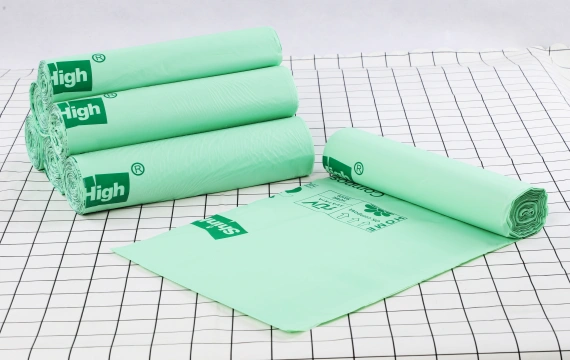
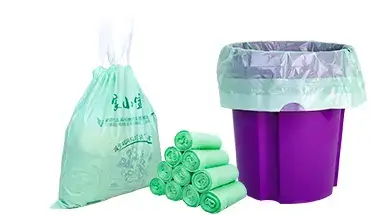
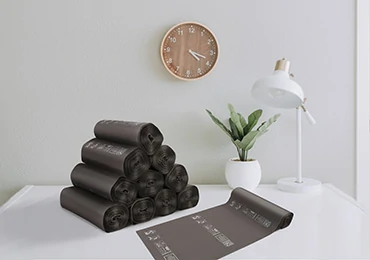
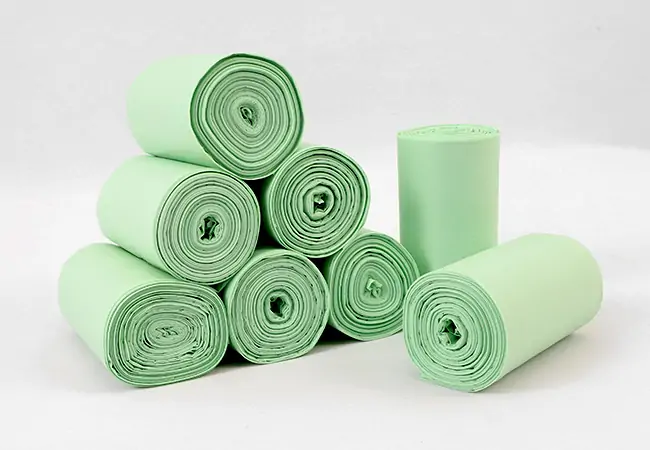
Let’s start with the basics. Coreless trash bags are exactly what they sound like: garbage bags manufactured and packaged without the cardboard or plastic tube (the “core”) found in standard rolls. Instead of wrapping around a tube, the bags are either interleaved (stacked like tissues) or wound into a tight, compact roll using only the film itself.
According to industry leaders like AAA Polymer, the shift toward coreless technology is driven by efficiency. By eliminating the core, manufacturers can fit significantly more bags into the same-sized box. For you, the homeowner, this means less packaging waste and a more organized utility closet.
-
No Central Tube: Just a tight roll of high-density or low-density film.
-
Compact Design: Typically narrower in diameter than traditional rolls.
-
Easy Dispensing: Bags are perforated for easy tearing, just like a standard roll.
What Are Traditional Trash Bags?
Traditional trash bags are the standard-bearers of the industry. Since the invention of the plastic garbage bag, the design has remained largely unchanged. Bags are wound around a cardboard tube to maintain structural integrity during shipping and handling.
While familiar, that cardboard tube comes at a cost. It adds weight to shipments, takes up volume in your home, and ultimately ends up in a recycling bin (if you’re lucky) or a landfill. Most commercial janitorial closets and household kitchens are stocked with these rolls.
-
Cardboard Core: Provides rigidity to the roll.
-
Familiarity: Universally compatible with standard dispensers.
-
Packaging Waste: Each roll includes a non-functional cardboard component.
Coreless vs. Traditional: The 5 Key Differences
This is where the decision-making happens. We’ve compared the two types across five critical categories to see how they stack up for a modern household.
1. Space Efficiency & Storage
Traditional bags lose every time in the storage department. That cardboard tube is essentially “dead space.” According to data from manufacturers like Chongjia, coreless rolls can reduce the overall length of the roll, making them significantly more compact.
-
In the Cabinet: A coreless roll fits into tighter spaces. You can store more bags in the same drawer or shelf.
-
Shipping Footprint: Because coreless boxes hold more bags per cubic foot, fewer trucks are needed to transport them, reducing carbon emissions associated with freight.
2. Environmental Impact
If you are trying to reduce your household’s environmental footprint, Coreless is the obvious choice.
-
Less Waste: The average American family uses dozens of trash bag rolls per year. Switching to coreless eliminates the need for dozens of cardboard tubes annually.
-
Material Reduction: Beyond the core, coreless packaging often utilizes less secondary packaging (like the outer plastic wrap).
-
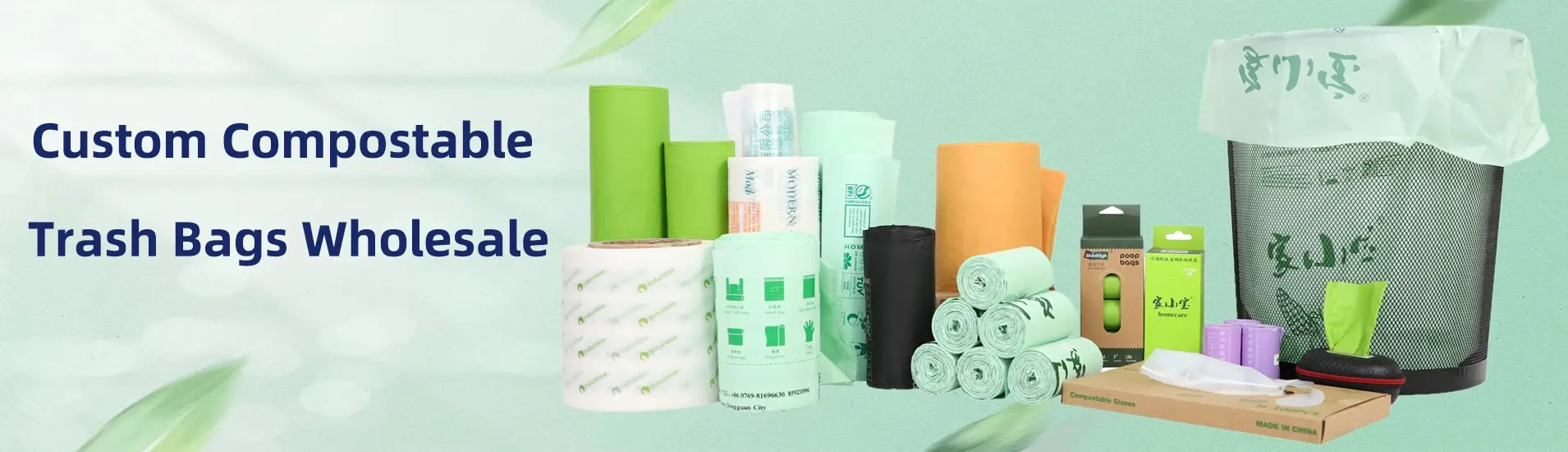
The Compostable Connection: This is a major point for eco-conscious buyers. Brands like OhSo Co. specifically pair compostable trash bags with coreless rolls. Since the goal is to reduce plastic waste, adding a non-compostable plastic or cardboard core would be counterintuitive. By choosing coreless compostable bags, you ensure that every component of the product aligns with a zero-waste lifestyle.
3. Strength & Durability
A common myth is that coreless bags are weaker because they lack the internal support of a tube. This is false. The strength of a trash bag comes from its thickness (measured in Mils) and its resin composition, not its core.
-
Heavy-Duty Options: Brands like Berry Global offer lines such as Steel-Flex in coreless formats. These bags feature star-seal bottoms and high-performance resins that provide excellent puncture and tear resistance.
-
The Perforation Factor: The only potential weakness in a coreless bag is the perforation (the line you tear to separate bags). High-quality brands ensure these perforations are clean and easy to tear without ripping the bag itself.
4. Cost Effectiveness
Upfront pricing can sometimes favor traditional bags, especially generic bulk brands. However, when you look at the total value, coreless often wins.
-
Bags Per Box: Because coreless boxes pack more bags, your “cost per bag” often decreases.
-
Operational Savings: While more relevant for businesses, the reduced weight and volume of coreless bags lower shipping costs, savings which are often passed down to the consumer.
-
Reduced Waste Costs: Less packaging means less volume in your own trash, potentially lowering your residential waste output.
5. Convenience & Dispensing
Anyone who has struggled to pull a bag off a stuck cardboard tube knows the pain of traditional rolls. Coreless bags eliminate this friction.
-
Smooth Tearing: Without a rigid tube creating drag, bags typically dispense more smoothly.
-
No “Core Collapse”: Ever had the cardboard tube collapse inward, making it impossible to pull the next bag? That never happens with coreless.
-
Dispenser Compatibility: Modern coreless rolls are designed to fit standard 6cm dispensers, so you don’t need to buy new hardware.
Comparison Table: Coreless vs. Traditional
|
Feature
|
Coreless Trash Bags
|
Traditional Trash Bags
|
|---|---|---|
|
Packaging Waste
|
Minimal (No core)
|
Higher (Cardboard core)
|
|
Storage Footprint
|
Compact, space-saving
|
Bulkier due to hollow core
|
|
Dispensing
|
Quick, easy tear-off
|
Can stick to the core
|
|
Strength
|
Identical (depends on mil)
|
Identical (depends on mil)
|
|
Eco-Friendliness
|
High (Ideal for compostable bags)
|
Moderate
|
|
Best For
|
Eco-conscious homes, small spaces
|
Users with standard dispensers
|
Which Should You Choose? A Scenario-Based Guide
Not sure which bag belongs in your bin? Here’s how to choose based on your specific needs.
For the Eco-Conscious Kitchen: Compostable Coreless Bags
If you are using a kitchen caddy for food scraps (mandatory in many parts of the UK, US, and EU), compostable coreless bags are the gold standard.
-
Why: Traditional bags with cores introduce non-compostable materials into the organic waste stream.
-
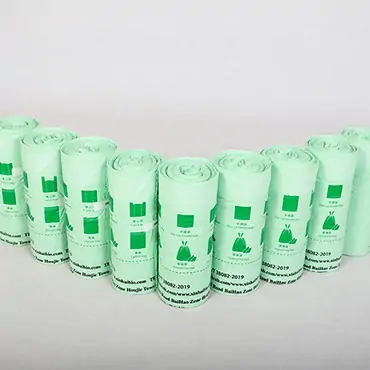
The Benefit: By choosing coreless, you ensure that every component of the bag—from the film to the packaging—is designed to break down in an industrial composting facility. Look for certifications like ASTM D6400 (USA) or EN 13432 (Europe). Our Compostable Collection uses only coreless rolls to support your sustainable lifestyle.
For Heavy-Duty Outdoor Bins: Heavy-Duty Coreless Bags
Managing yard waste, kitty litter, or garage clutter requires strength.
-
Why: You need a bag that won’t puncture or leak.
-
The Benefit: Coreless technology doesn’t compromise on thickness. Our Heavy Duty Trash Bags feature a star-seal bottom and high-density resins. They are tough enough for thorns and sharp branches, yet they come in a compact, coreless roll that stores easily in your garage.
For Bathrooms & Bedrooms: Scented Coreless Bags
Small bins need small rolls.
-
Why: A bulky traditional roll won’t fit in the narrow space next to your toilet or vanity.
-
The Benefit: The reduced diameter of a coreless roll is perfect for 4-gallon or 8-gallon bins. Pair this with a fresh linen or lavender scent to neutralize odors, and you have the ideal solution for discreet, efficient waste management.
For High-Traffic Commercial Use
Common Myths About Coreless Bags
Let’s debunk some misconceptions that might be holding you back:
-
Myth 1: “Coreless bags are flimsy.”
-
The core has zero impact on the tensile strength of the plastic. A coreless bag made with 1.2 mil Low-Density Polyethylene (LDPE) is significantly stronger than a traditional bag made with 0.7 mil Linear Low-Density Polyethylene (LLDPE). Judge the bag by its thickness (mil), not its core.
-
-
Myth 2: “They won’t fit my dispenser.”
-
Fact: Most standard coreless rolls are designed to fit standard dispensers. While the roll is slightly smaller in diameter, the length is typically identical to traditional rolls. If you have a specific wall-mounted dispenser that clamps onto the core, you may need a simple adapter, but for free-standing boxes or drawers, compatibility is universal.
-
-
Myth 3: “They are just a marketing gimmick.”
-
Fact: This isn’t just about selling bags; it’s about logistics. Reducing the volume of air and non-product materials in shipping reduces fuel consumption and carbon emissions. It’s a structural optimization that benefits everyone in the supply chain, from the factory floor to your kitchen floor.
-
The Sustainable Math: A Quick Calculation
Let’s put this into perspective.
-
An average household uses roughly 2–3 boxes of trash bags per year.
-
Each box contains 5–10 rolls.
-
Each roll contains 1 cardboard core.
-
Total: 10–30 cardboard tubes per year, per household.
Frequently Asked Questions (FAQs)
Are coreless trash bags as strong as traditional ones?
Absolutely. The strength of a trash bag is determined by the thickness (Mil) of the plastic and the quality of the seals. A 1.5 Mil coreless bag is just as strong as a 1.5 Mil traditional bag. Many industrial-grade coreless bags are engineered for extreme durability.
Do coreless bags fit standard dispensers?
Yes, in the vast majority of cases. Standard coreless rolls are designed to be 6cm in length, which is the industry standard for most in-cabinet and janitorial dispensers. Always check the product dimensions if you have a custom-fit dispenser.
Are coreless compostable bags really better for the environment?
Yes. They offer a double-win for the planet: 1) They remove the non-compostable cardboard/plastic core, and 2) The bags themselves are made from plant-based materials (like PLA and PBAT) that break down in commercial composting facilities. Brands like OhSo Co. highlight that their coreless compostable bags meet stringent BPI and USCC standards.
Why are coreless bags sometimes more expensive?
While the “cost per bag” is often lower, the initial shelf price might occasionally be higher for premium brands. You are paying for higher-quality resin, better environmental practices, and the engineering required to create a stable coreless roll. However, the long-term savings in storage and waste reduction usually offset this.
Where can I buy quality coreless trash bags?
Many major retailers and online stores now stock coreless options. For the highest quality, look for specialized suppliers who offer transparency regarding their material sourcing and environmental certifications. ShinHigh store offers a full range of Heavy Duty, Scented, and Compostable Coreless Trash Bags designed specifically for the modern home.
Conclusion: Making the Switch
When comparing coreless trash bags vs. traditional trash bags, the winner is clear: Coreless.
While traditional bags have served us for decades, they are an outdated design burdened by unnecessary packaging waste. Coreless bags represent a smarter, leaner, and significantly more sustainable approach to waste management. They save space, reduce environmental impact, and perform just as well—if not better—than their tubed counterparts.
For the modern homeowner looking to optimize their kitchen, reduce their carbon footprint, and simplify their life, the choice is simple. Make the switch to coreless. Whether you need the rugged reliability of a heavy-duty bag for your outdoor bin, the fresh scent of a bathroom liner, or the eco-friendly power of a compostable kitchen bag, going coreless is a small change that makes a big difference.
Ready to declutter your cabinets and help the planet? Explore our full range of Coreless Trash Bags today and experience the future of clean.