



Introduction
You’re rushing to the airport after a long day, and you toss a yogurt and a bag of almonds into your carry-on. You know the TSA has rules, but you think, “It’s just food, and I’ll eat it on the plane. It should be fine, right?” This common assumption is where many travelers, even frequent flyers, run into trouble.
The truth is, the TSA doesn’t care if your peanut butter is a snack or a sandwich spread; they care about its physical consistency. This article will cut through the confusion. Using official TSA guidelines, we’ll provide a clear, actionable guide on what packaged food you can bring, ensuring your journey through security is as smooth as possible.

It’s Not “Food,” It’s “Solid vs. Liquid”
-
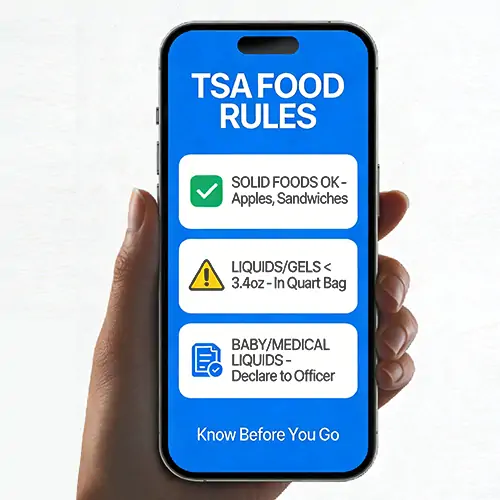
The Official “Liquid” Definition: The TSA’s 3-1-1 rule applies to a broad category of items: liquids, gels, aerosols, creams, and pastes. The practical rule of thumb is: if you can pour it, spray it, spread it, smear it, or pump it at room temperature, it is subject to the 3.4-ounce (100ml) limit and must fit comfortably within your single quart-sized, resealable bag.
-
The Solid Food Exemption: The TSA explicitly states that “solid food items” are generally permitted in carry-on bags without any quantity restrictions. These items do not need to be placed in your quart-sized bag.
The official definition is based on physical consistency at room temperature. A simple test: If you can pour it, spread it, smear it, or pump it, it is subject to the 3-1-1 rule. This practical definition is why seemingly solid foods like peanut butter and yogurt are treated as liquids.
Your Packaged Food Guide: A Traffic Light System
Use this simple guide to classify your food. When in doubt, lean toward the more restrictive category to avoid issues at the checkpoint.
🟢Green Light: Full Speed Ahead (Solid Foods)
-
Examples: Whole fruits (apples, bananas), raw vegetables, solid chocolate, baked goods (bread, cookies, muffins), hard cheeses, granola bars, nuts, crackers, and candy.
-
Pro Tip: While allowed, be mindful of strong-smelling foods out of courtesy for fellow passengers.
🟡Yellow Light: Proceed with Caution (The “Liquid” Foods)
-
Why? They meet the “spreadable/pourable” criteria.
-
Examples & Rules:
-
Peanut Butter, Jams, and Hummus: These are classic “pastes.” They must comply with the 3-1-1 rule.
-
Yogurt, Pudding, and Jell-O: These are “gels.” They must comply with the 3-1-1 rule.
-
Cheese Spreads & Cream Cheese: Unlike a block of cheddar, these are spreadable and fall under the rule. Stick to hard cheeses for ease.
-
Gravy, Oils, and Sauces: Clearly liquid and subject to the rule.
- Canned Items: Fruits in syrup, pudding packs.
-
Pro Tip: If you must bring these, ensure they are in a container 3.4 oz or smaller and placed in your quart-sized liquids bag.
🔴Red Light: Special Rules Apply (Exemptions & Absolute Bans)
-
Baby Food & Formula: These are exempt from the 3-1-1 rule in reasonable quantities. You must declare these items to the TSA officer at the checkpoint for separate screening. This includes breast milk, toddler formula, and puree pouches.
-
Medically Necessary Liquids: This includes liquid nutrition shakes, insulin, etc. They are also exempt in reasonable quantities. Declare them to the security officer. They do not need to be in your quart-sized bag but will be screened separately.
-
Alcohol: Rules for carrying on alcohol are strict and different; generally, mini bottles (under 3.4 oz) are allowed in your quart bag, but larger amounts have specific limitations.
- Agricultural Items (for International Arrivals): Remember, TSA handles security, but Customs and Border Protection (CBP) handles agriculture. Many fruits, vegetables, and meats are prohibited from entering the country. Consume or discard these items before you reach customs.
Pro Tips for a Smooth Experience
- When in Doubt, Pack It Out: If you’re unsure about a spread or sauce, the safest bet is to pack it in your checked luggage.
-
Use Travel-Sized Containers: For condiments or spreads you need in your carry-on, transfer them into small, TSA-compliant containers.
-
Declare Special Items: Never try to sneak through oversized baby formula or medical nutrition. Proactively tell the officer, and the process is usually swift.
-
Pack Your Quart Bag Smartly: Place your food-related liquids (yogurt, peanut butter) with your other liquids (toiletries) in the quart bag for easy removal.
-
The Ultimate Authority: A final, crucial disclaimer straight from TSA: “The final decision rests with the TSA officer on whether an item is allowed through the security checkpoint.” Even if something is permitted, the officer has the final say.

Frequently Asked Questions (FAQ)
Conclusion
Navigating TSA food rules is simple once you apply the “spreadable” test. When packing your carry-on, focus on dry, solid snacks for the easiest experience. For spreadable and creamy foods, remember the 3-1-1 rule or save them for your checked bag.
By understanding and respecting these guidelines, you can ensure your journey through airport security is as smooth as your flight. Safe travels!