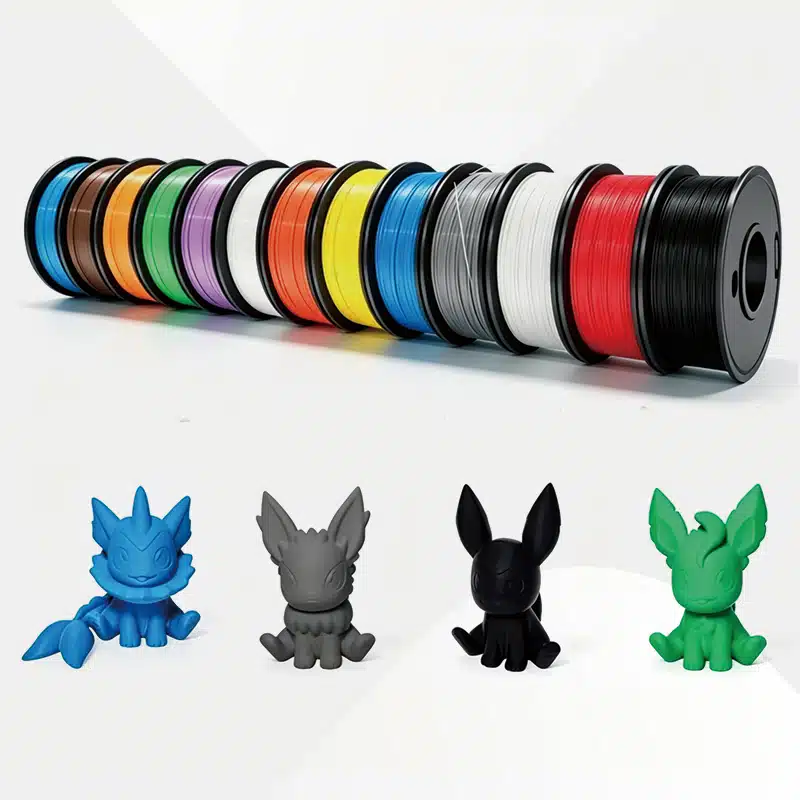




For 3D printing enthusiasts moving beyond casual use, the choice between 1kg, 5kg, and 10kg filament spools has nothing to do with budgets—and everything to do with workflow, equipment compatibility, and material longevity.
In 2026, as multi-material systems, large-format printers, and smart dry-storage solutions become standard, the differences between these three spool sizes shape far more than just how much plastic sits on your shelf. This guide breaks down their real-world performance, use cases, and operational tradeoffs, with zero focus on pricing.
1kg Spool: The Universal Standard
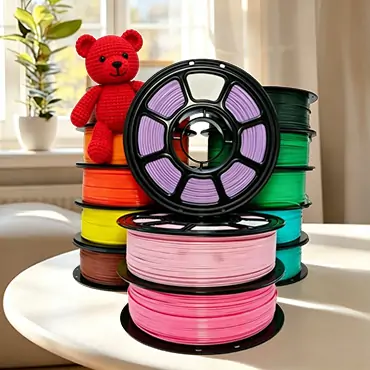
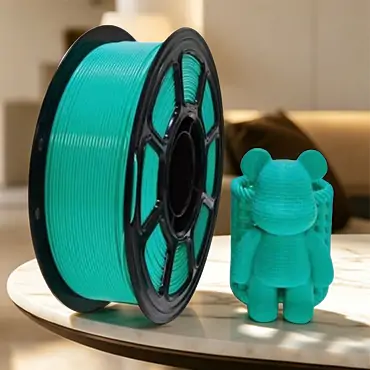
The 1kg spool remains the default for nearly all desktop 3D printing in 2026, and for good reason: it is engineered to fit every mainstream ecosystem. Standardized cardboard or plastic cores match the dimensions of OEM spool holders for Bambu Lab, Prusa, Creality, and Anycubic machines, and slide seamlessly into AMS units, multi-material feeders, and compact filament dryers.
Its biggest advantage is flexibility. For users testing a new brand, experimenting with specialty filaments (glow-in-the-dark, wood-filled, high-temp blends) or running small creative projects, a 1kg spool limits waste if the material proves incompatible with your printer’s calibration. It also aligns with how most hobbyists print: small batches of varied designs, where color variety matters more than uninterrupted runtime.
Operational pros: Low moisture exposure risk (most users finish a 1kg spool within 4–8 weeks in moderate humidity, minimizing degradation), easy storage in standard vacuum bags or small dry boxes, and minimal loss if a spool is damaged or tangled. Cons: Frequent changeovers for high-volume users, and excess packaging waste compared to bulk options.
5kg Coil: The Consistent Workhorse
By 2026, 5kg filament coils will have moved from niche farm supplies to mainstream maker staples—but they require intentional workflow adjustments. Unlike 1kg spools, 5kg units typically ship as loose-wound filament on a narrow cardboard or reusable plastic core, designed to minimize shipping volume rather than fit standardized holders. They are incompatible with most stock AMS trays; users need side-mounted spool brackets, external rewinders, or custom holder adapters to use them with multi-material systems.
The 5kg size shines for users with predictable, recurring print needs: weekly prototyping, regular household repairs, or consistent production of neutral-colored parts (black, gray, white). Its slower consumption rate means fewer changeovers during long print sessions, making it ideal for overnight or multi-day jobs where stopping to swap spools risks layer adhesion issues.
Operational tradeoffs: Moisture management becomes critical. A 5kg coil of PETG or TPU left unsealed in a 60% RH environment will degrade noticeably faster than a 1kg spool, since it takes 3–4 months for average users to finish. Most consumer-grade filament dryers cannot accommodate 5kg coils, so users need larger-capacity drying chambers or sealed storage tubs with active desiccant. There is also a higher risk of waste if you discover the filament has an inconsistent diameter or poor bed adhesion after starting the coil—you cannot simply set aside a partially used 5kg spool as easily as a 1kg unit.
10kg Configurations: Farm-Grade Solutions
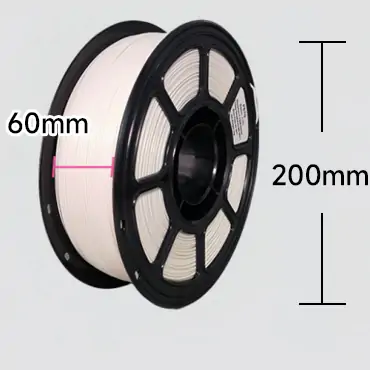
In 2026, 10kg filament options split into two distinct formats, each built for specific high-volume use cases. The first is a single continuous loose coil, typically sold unwound on a minimal core or in extra-large vacuum-sealed bags. This format is exclusive to professional print farms, industrial prototyping labs, and users running non-stop production of identical parts (jigs, enclosures, promotional merchandise). It eliminates nearly all spool change downtime, but requires dedicated infrastructure: industrial-scale filament dryers, climate-controlled storage rooms kept below 30% RH, and heavy-duty spool mounts rated for 22+ pound loads.
The second 10kg configuration—far more common for semi-professional makers—is a vacuum-sealed multipack of ten 1kg spools. This preserves the convenience of single-spool handling while delivering the supply stability of bulk purchasing. Users open one 1kg unit at a time, avoiding the moisture exposure risk of a single massive coil, while still reducing packaging waste and restocking frequency compared to buying individual 1kg spools separately.
Operational considerations: Single 10kg coils demand extreme discipline. A tangle, diameter inconsistency, or moisture issue affects 22 pounds of material, not just one. Multipack 10kg units mitigate this risk but still require organized storage to avoid losing track of opened spools. Neither format works for multi-color printing or users who switch materials frequently, as the sheer volume of filament locks you into one type and color for months.
Decision Framework (No Cost Math Required)
Choosing between these sizes comes down to five non-monetary factors:
-
Equipment compatibility: Do you use an AMS or multi-material system? If yes, stick to 1kg spools or 10kg multipacks; 5kg and single 10kg coils require aftermarket modifications.
-
Print cadence: If you finish less than 500g of filament per month, 1kg spools prevent material degradation from long storage. If you print 1–3kg monthly, 5kg coils balance stability and flexibility. If you exceed 5kg monthly, 10kg multipacks or single coils make sense.
-
Material familiarity: Never purchase a 5kg or 10kg unit of a filament you have not tested with a 1kg spool first. Inconsistent diameter, poor bridging, or warping issues multiply in scale with larger spools.
-
Storage capacity: Do you have a dry box or sealed container large enough for a 5kg coil or 10kg multipack? If not, 1kg spools are your only viable option.
-
Project variability: If you switch colors or materials weekly, bulk sizes will leave you with unused inventory. Reserve 5kg and 10kg purchases for your most frequently used neutral tones.
In 2026, the best spool size is not the one that promises the lowest per-kilo rate—it is the one that fits your printer, your workflow, and your ability to keep filament dry. For most users, that means keeping 1kg spools for experimentation and color variety, reserving 5kg coils for trusted everyday materials, and leaving 10kg configurations to high-volume operations with purpose-built storage.