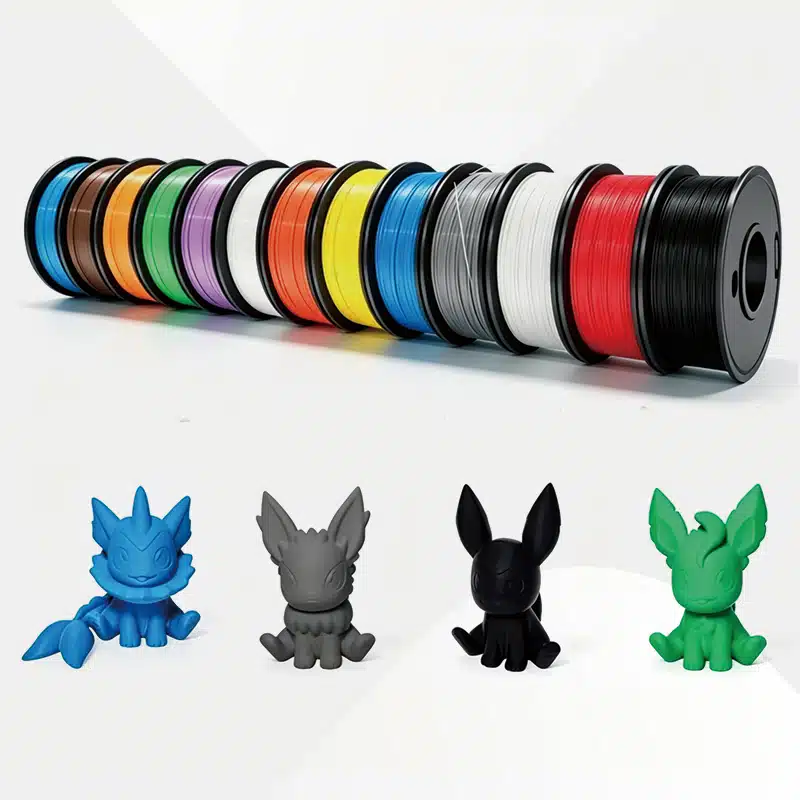




If you’ve just unboxed a fresh spool and stared at that flimsy Ziploc drawer in your kitchen, you’ve asked the right question. The short answer: Ziploc bags are better than nothing and worse than they look. They’ll buy you a few weeks of decent protection with a desiccant pack inside, but they are not a true long-term solution—especially for hungry, moisture-loving filaments like Nylon, TPU, and PETG.
Why Filament Storage Is Even a Problem
- Rough, inconsistent surface finish
- Excessive stringing and ooze
- Popping, crackling, or hissing at the nozzle
- Weak layer adhesion and reduced part strength
- In severe cases, visible steam or smoke
Nylon is the worst offender—it can go from “factory fresh” to “unprintable” in under 24 hours in a humid garage. PLA is more forgiving, but even it turns brittle after a few weeks exposed to 40%+ relative humidity (RH).
The target environment for safe storage: Below 20% RH for most filaments, and below 10% for Nylon, TPU, and Polycarbonate.
So, Are Ziploc Bags Actually Good?
The Case For Ziploc (It’s Nothing)
- Gallon Ziploc freezer bags fit most 1kg spools
- Inexpensive and available at any grocery store
- Easiest zipper mechanism to operate securely
- A known “hack” among Reddit makers for occasional-use spools when paired with silica beads
The Case Against Ziploc (Read This Before You Commit)
💡 The problem: Consumer-grade polyethylene Ziploc bags are permeable to water vapor over time. The zip-seal itself is also a point of weakness. They slow down moisture ingress, but they do not stop it.
- Not truly airtight – moisture can and will pass through the plastic itself over months
- The sacrificial desiccant trap – the tiny packet that ships with your filament has very limited capacity. Once you break the vacuum seal, it starts absorbing the air you just let in, and it can saturate within a day or two in a humid environment. Tossing that same “spent” packet back into a Ziploc does almost nothing
- Opening and closing admits more moisture than slow leakage – every time you check on your spool, you let humid air in
- Plastic slider bags are discouraged – the opening may not be wide enough for a full 1kg spool; opt for gallon freezer bags instead
The Verdict on Longevity
Here’s how Ziploc stacks up against other methods for PLA specifically:
|
Storage Method
|
Estimated Lifespan
|
Protection Level
|
|---|---|---|
|
Open Air (High Humidity)
|
1–3 Months
|
Minimal
|
|
Ziploc Bag + Desiccant
|
6–12 Months
|
Moderate
|
|
Vacuum Sealed Bag
|
18–24+ Months
|
High
|
|
Active Dry Box System
|
2–3 Years
|
Professional
|
we looked at what serious makers, commercial storage brands, and Reddit communities actually use. Here’s the landscape:
The “Cereal Container” Hack (The Community Favorite)
- A layer of indicating silica gel beads at the bottom (turns pink when saturated)
- A hygrometer taped to the lid to monitor RH
- A 3D-printed spool holder so the filament sits above the desiccant
Total cost: roughly $15–25 per container. This is the workhorse solution for PETG, TPU, and ASA.
Vacuum-Sealed Bags (The Long-Term Champion)
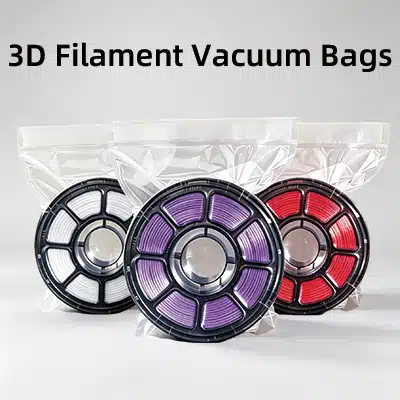
Purpose-built vacuum bags with valve seals (e.g., eSun Vacuum Bags + Hand Pump, or Fisch/Geryon vacuum kits) are the gold standard for backup spools. Squeeze the air out, add a 10g desiccant packet, label with the date, and your filament stays “factory fresh” for 2+ years. Cheap (~$20 for 10 bags) and surprisingly effective.
Active Dry Boxes (The Pro Setup)
For Nylon, PC, and PVA, an active dry box is almost non-negotiable. Units like the SUNLU Filament Dryer Box S2, PrintDry Pro, or Polymaker PolyDryer keep the spool at ~45–50°C while you print directly from the container—preventing reabsorption during long prints.
Mylar Bags (The Dark Horse)
Frequently Asked Questions
We pulled the most common questions makers ask about Ziploc and filament storage:
Q: Can I store filament in Ziploc bags?
A: In a pinch, yes—with desiccant. But standard Ziploc bags aren’t truly airtight and will slowly allow moisture through the plastic. Purpose-built vacuum bags with valve seals are significantly better for anything beyond short-term storage.
Q: How long can filament sit out before it goes bad?
A: Depends on material and humidity. In a dry climate (under 30% RH), PLA can sit out for weeks. In Florida at 70%+ humidity, Nylon can become unprintable in 24 hours. PETG and TPU start showing problems within a few days.
Q: Do I need to add desiccant to a Ziploc bag?
A: Absolutely. And not the spent packet from the original packaging. Use a fresh 10g silica gel packet with a color indicator (blue→pink or orange→yellow) so you know when it’s saturated.
Q: How do I know if my filament is wet?
A: Listen and look. If you hear popping or hissing at the nozzle, see steam, or notice bubbling/blobbing on the surface, rough finish, or weak layer adhesion—your filament is wet. For a pre-print test, bend a length off the spool: if it snaps cleanly rather than flexing, it’s moisture-compromised.
Q: Can I vacuum-seal filament that’s already been opened?
A: Yes! Just make sure it’s dry before sealing (dry it at 45–50°C for 4–6 hours if needed), toss in a silica gel packet, then vacuum-seal.
Q: How often should I replace or recharge desiccant?
A: Check it every month or two. When the indicating beads change color, regenerate them in a 120°C oven for 2–3 hours (or microwave on defrost for about 40 minutes). Allow to cool in a sealed container before re-use.
Q: Are Ziploc bags okay for Nylon or TPU?
A: Not recommended for long-term. Both have a hygroscopicity score of 4/5 or 5/5. Nylon can start degrading in mere hours of exposure to ambient air. Use vacuum-sealed Mylar bags or an active dry box instead.
Q: Is the “cereal container” method really as good as a $200 filament vault?
A: Essentially yes, if the seal is tight and the silica is fresh. A $15 Rubbermaid Samla with good desiccant beats an expensive “filament vault” that lacks active moisture control. The expensive boxes mostly save you from having to open the lid to check humidity.
Q: Where should I NOT store filament?
The Smart Maker’s Tiered Strategy
⚠️ One rule that overrides everything: Never seal a damp spool. If you’re unsure, dry it first at 45–50°C for 4–6 hours. Sealing in moisture just traps the problem.
Final Word
Ziploc bags are a perfectly respectable entry point into filament storage. They’re cheap, accessible, and—when paired with fresh desiccant—will absolutely keep your PLA alive for a year. But they are a compromise, not a solution.
If you’re printing occasionally with PLA in a dry climate, a Ziploc bag is all you need. The moment you touch PETG, TPU, Nylon, or you live somewhere humid, it’s time to graduate to the cereal-container-and-silica-gel method (20 for 10). And if you’re running Nylon or printing professionally, the active dry box isn’t optional—it’s the cost of doing business.
Your filament is an investment. Treat it like one, and it’ll reward you with bubble-free, strong, beautiful prints for years. Leave it on an open shelf or trust a Ziploc bag for too long, and you’ll be feeding your printer moisture-laden plastic that steams, pops, and fails.
The cheapest spool is the one you don’t have to replace.