



I’ll never forget the time I almost shipped a customer’s favorite vintage t-shirt in a mailer bag that was a size too small. After struggling for ten minutes, I heard a dreaded rip. I had torn the bag, wasting both time and money.
-
💰 Cost: Oversized bags trigger dimensional weight fees, inflating your shipping bill. -
📦 Safety: Undersized bags risk tearing and damaging your products. -
🏢 Efficiency: Guesswork leads to repackaging delays and frustrated customers.
The 3-Step Foolproof Sizing System
-
Measure Your Product Accurately -
Calculate the Perfect Fit with Our Simple Formula -
Choose the Right Bag Type (Flat vs. Padded)
Step 1: Measure Your Product Like a Pro
Before you even look at mailer bag sizes, you need to know your product’s dimensions inside and out. Accurate measurement is the non-negotiable foundation of choosing the right package.
Here’s how to get it right:
-
For Regular-Shaped Items (e.g., books, boxes, flat products):
Use a ruler or tape measure to determine the Length (L) – the longest side, the Width (W) – the shorter side, and the Height (H) or depth (thickness). Be sure to measure at the thickest point. Record these in inches or centimeters.
-
For Irregular or Cylindrical Items (e.g., mugs, toys, figurines):
Don’t try to measure the curves. Instead, imagine the smallest rectangular box your item could fit into. Measure the Length, Width, and Height of that imaginary box. This gives you the “girth” of your product that the mailer bag needs to accommodate.
-
For Soft Items (e.g., clothing, fabrics, plush toys):
Fold and flatten the item as much as possible. Rolling might seem like it saves space, but it can create a bulky, irregular shape that is harder to pack and more prone to being snagged. A neatly folded and flattened item is easier to measure and pack securely.
💡 Pro Tip: Always round up your measurements to the nearest half-inch or full centimeter. This small buffer prevents your measurements from being too tight and accounts for small variations.
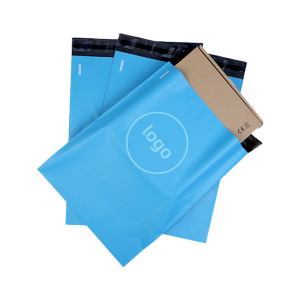
Step 2:From Product to Package: The Simple Sizing Formula
Now that you have your product’s dimensions (L, W, H), it’s time to calculate the minimum mailer bag size you need. The goal is to find a bag that fully encloses your item with just enough room for a secure seal, without excessive space.
Many businesses rely on a standard poly mailer size chart, but a one-size-fits-all chart can’t account for your product’s unique thickness. That’s why we recommend using this simple formula for a more precise fit:
The Mailer Bag Sizing Formula:
Minimum Mailer Length = Product Length + Product Height + 2 inches
Minimum Mailer Width = Product Width + Product Height + 0.5 inches
Why the extra inches?
- The extra 2 inches in length provide space to comfortably slide the product in and allow enough material at the top for a clean, secure fold-over seal.
- The extra 0.5 inches in width (on each side, totaling 1 inch) accounts for the bag’s gusset or the space needed for the product’s depth, ensuring it fits without being strained.
Let’s say you’re shipping a small, flat product that measures 8″ (L) x 6″ (W) x 1″ (H).
- Calculated Mailer Length = 8″ + 1″ + 2″ = 11 inches
- Calculated Mailer Width = 6″ + 1″ + 0.5″ = 7.5 inches
In this case, a standard 10″ x 13″ mailer bag would be an excellent choice, as it comfortably accommodates our calculated minimum size.
Beyond the Formula: From Calculation to Convenience
While the formula is reliable, manually calculating for every product can be time-consuming. This is why many sellers turn to a mailer bag size calculator for speed and accuracy. A good calculator does the math instantly and accounts for the specific internal dimensions of different bag styles (like flat vs. padded).
Alternatively, having a quick-reference poly mailer size chart is invaluable. Imagine a chart that not only lists standard sizes but also shows common items that fit into each, helping you visualize the best choice at a glance.
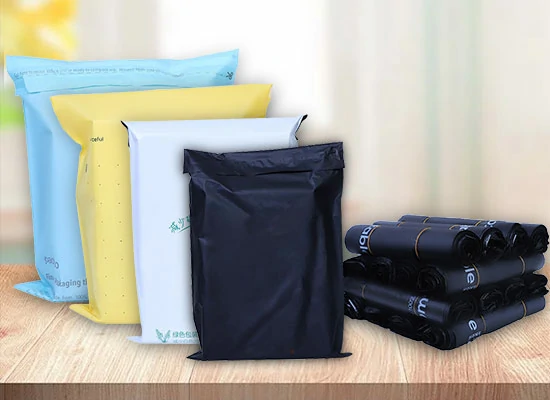
Step 3:Advanced Considerations: Cushioning, Style, and Shipping Rules
Choosing the right size isn’t just about the numbers. The type of product you’re shipping and the carrier’s rules play a crucial role. Getting these details right is what separates amateur packaging from a professional, cost-effective operation. The following table serves as your quick-reference guide to making the perfect choice.
Mailer Bag Size Chart: A Quick Guide
|
|
|
|
|
|---|---|---|---|
|
|
|
• Phone cases • Jewelry (in a small box) • Deck of cards |
|
|
|
|
• Fragile jewelry • Small cosmetics |
|
|
|
|
• A pair of jeans • Books & magazines • 1-2 kids’ toys |
|
|
|
|
• Hardcover books • Small tech accessories • Ceramic mugs |
|
|
|
|
• Hoodies or jackets • Large art prints • Multiple clothing items |
|
|
|
|
• Board games • Multiple fragile items |
|
For the most sustainable, brand-enhancing packaging, consider custom-sized compostable mailers. Perfect for unique product shapes and maximizing space efficiency.
How to Use This Chart:
-
Identify Your Product: Look at the “Ideal For” column to find items similar to yours. -
Choose the Type: Decide if your item needs the protection of a Padded Bubble Mailer or if a Flat Poly Mailer will suffice. -
Check Considerations: Review the notes to avoid common pitfalls, like ordering a padded mailer that’s too small.
FAQ: Your Top Questions Answered
Q: How do I pack irregularly shaped items, like a pair of shoes?
A: For items like shoes, the “imaginary box” method from Step 1 is key. Then, choose a padded mailer that is slightly larger than your measurements to protect the unique shape. Stuffing the shoes with tissue paper can also help them hold their shape and prevent crushing.
Q: I want to keep it simple. Can I buy one large size for everything?
A: While convenient, this is a surefire way to overpay on shipping due to DIM weight. The savings from using a perfectly sized bag for each product will quickly outweigh the minor inconvenience of stocking multiple sizes. Consider a variety pack to get started.
Q: I’m building a sustainable brand. How can I make my packaging more eco-friendly without sacrificing quality or fit?
A: This is a fantastic goal, and it’s exactly why we exist. The best step you can take is to move beyond generic plastic poly mailers. Opt for certified compostable mailers made from plant-based materials. The ultimate solution is to invest in custom-sized compostable mailers. This ensures:
-
Zero Material Waste: A bag tailored to your product uses the absolute minimum amount of material.
-
Brand Consistency: The perfect fit looks incredibly professional and protects your products better.
-
True Sustainability: Your packaging decomposes after use, completing a circular lifecycle that your customers will love.
-
Marketing Power: Custom printing on a uniquely sized, eco-friendly bag makes your unboxing experience unforgettable.
Your Next Steps to Smarter, Sustainable Shipping
You now have a complete system to master your mailer bag sizing and make smarter, more sustainable choices.
1. Audit Your Current Packaging: Measure your best-selling product right now using our 3-step system. Does your current mailer bag fit perfectly, or is it costing you extra?
2. Choose Your Path to Better Packaging:
-
For Standard Needs: Use the formula and chart above to select the right off-the-shelf compostable mailer from our range of sizes.
-
For a Competitive Advantage: If you’re ready to optimize every inch of your packaging for cost, branding, and sustainability…