




-
The 3-5-8 Rule is a proven framework for creating visually balanced and commercially viable floral arrangements.
-
This ratio is backed by principles of visual psychology, leading to faster design times and reduced waste.
-
Professional flower wrapping is not an afterthought; it’s a critical step that protects your work and significantly increases its perceived value.
-
This guide provides a step-by-step method to apply the rule and scale it for different bouquet sizes and business needs.
Introduction
For florists, both new and experienced, the challenge is universal: how to consistently create bouquets that are both aesthetically stunning and efficiently profitable. While creativity is paramount, relying on intuition alone can lead to inconsistent results and wasted materials. This is where the 3-5-8 Rule proves invaluable. More than just a numbers game, this principle is a foundational framework for building balanced, professional-looking arrangements every time.
This guide will not only teach you how to apply the 3-5-8 Rule but will also explore the data behind its effectiveness and introduce a critical, often-overlooked component that can make or break your design: the professional flower wrap.
Deconstructing the 3-5-8 Rule – What Do the Numbers Mean?
The 3-5-8 Rule provides a clear ratio for the different types of materials in a bouquet, ensuring harmony and depth. It’s a recipe for visual success.
-
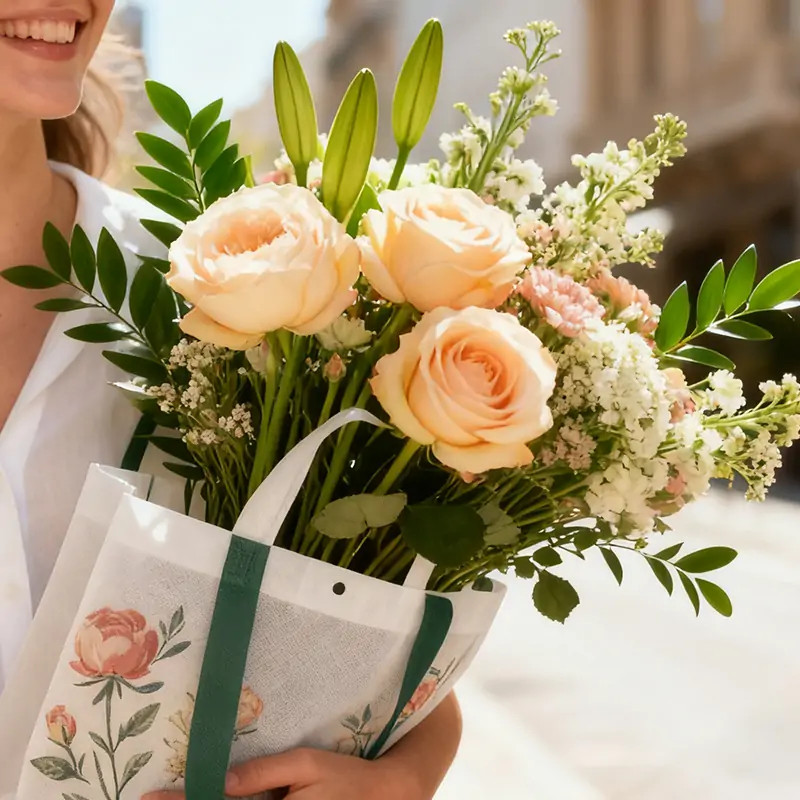
3 Focal Flowers: These are the stars of your arrangement. They are typically the largest, most eye-catching blooms that define the bouquet’s color and style (e.g., Roses, Lilies, Sunflowers, Peonies). The odd number ‘3’ creates a natural, asymmetrical triangle that is more dynamic and pleasing to the eye than an even-numbered pair.
-
5 Stems of Foliage/Greenery: This is the supporting cast. The five stems of greenery (e.g., Eucalyptus, Leather Leaf, Salal) serve to frame the focal flowers, add texture, and build the bouquet’s structure and volume. They are the “stage” on which the stars perform.
-
8 Stems of Filler Flowers: These are the connectors that bring the entire design together. Fillers are smaller, airier blooms (e.g., Baby’s Breath, Solidago, Waxflower, Spray Roses) that fill gaps, add movement, and create a seamless transition between the focal flowers and the foliage.
Why this ratio works: The numbers 3, 5, and 8 are part of the Fibonacci sequence, a mathematical pattern frequently found in nature. This is why compositions based on this ratio feel inherently balanced and organic to us.
The Science & Psychology: Why 3-5-8 Works So Well
This isn’t an arbitrary formula. Principles of visual perception and consumer psychology back it.
-
The Power of Odd Numbers: A fundamental principle in design, odd numbers are perceived as more natural, dynamic, and visually appealing than even numbers. The brain finds odd-number groupings easier to process, creating a sense of organized asymmetry. A triangle of 3 roses feels more intentional and artistic than a symmetrical pair.
-
Data & Customer Perception: While formal studies on floral arrangements are rare, the principle is well-established in visual merchandising. A study published in the Journal of Marketing found that odd-numbered product groupings in retail displays are perceived as more appealing and of higher value than even-numbered groupings. Applying this to floristry, a bouquet structured with 3 focal flowers subconsciously signals greater care and curation.
-
Efficiency for Florists: Beyond aesthetics, the rule brings operational benefits. Florists who adopt a structured approach like the 3-5-8 Rule report a significant reduction in design time and material waste. One florist noted, “Since implementing this framework, my design speed has increased by about 25%. I’m not second-guessing placements anymore, which also reduces handling damage to delicate blooms.”
A Step-by-Step Guide to Applying the 3-5-8 Rule
Let’s build a classic bouquet from scratch.
Step 1: Establish Your Foundation with the “3” Focal Flowers
Start with your largest, most dominant bloom. This is your primary focal point. Add your second and third focal flowers, positioning them at different heights to form a scalene triangle. This establishes the skeleton of your bouquet.
Step 2: Build the Framework with the “5” Stems of Greenery
Add your five greenery stems around and between the focal flowers. Let some stems extend outward to create movement and a natural silhouette. Use different types of foliage (e.g., a large-leaf filler and a wispy, linear leaf) to add complexity.
Step 3: Integrate and Connect with the “8” Filler Flowers
Finally, tuck the eight filler stems into the gaps. Their job is to seamlessly blend the larger elements, conceal mechanics (such as tape or ties), and create a lush, finished look. Place some fillers at varying heights to enhance the sense of depth and dimension.
Step 4: The Critical Final Touch – Professional Wrapping
Your beautiful 3-5-8 composition deserves a finale that protects it and elevates its perceived value. This is where the choice of packaging becomes a strategic business decision.
A high-quality flower wrap bag is not just a utility item; it’s the frame for your masterpiece. Consider this:
-
Protection: A durable, water-resistant wrap bag protects the bouquet during transport, ensuring it arrives in perfect condition. This directly reduces customer complaints and increases satisfaction.
-
Perceived Value: A cheap, flimsy plastic sleeve can undermine the premium quality of your arrangement. In contrast, a sturdy, aesthetically pleasing bag with a matte finish or elegant branding instantly signals quality. Customers associate superior packaging with a superior product, justifying a higher price point.
-
Brand Visibility: A custom-printed bag turns every bouquet delivery into a mobile advertisement for your shop. As customers carry your flowers through the streets, they are showcasing your brand.
How to Choose:
-
For a Rustic Look, Kraft paper or recycled cardboard sleeves complement natural, garden-style arrangements.
-
For a Luxury Feel: Soft-touch matte paper or elegant, translucent vellum adds instant sophistication.
-
For Practicality & Branding: Custom-printed waterproof bags, like non-woven floral bags, protect the bouquet during delivery and turn every customer into a brand ambassador as they carry it home.
Advanced Applications and Flexibility
The 3-5-8 Rule is a guide, not a straitjacket. Scale it up for a large arrangement (e.g., 6-10-16) or down for a petite posy (e.g., 1-3-5). The key takeaway is the principle: a balanced mix of dominant, supporting, and connecting elements.
You can also experiment with what constitutes a “filler” or “foliage.” Textural branches, dried elements, or even a distinctive, high-quality wrap bag that complements the color scheme can play a role in fulfilling the “filler” function by adding visual interest.
5 Flower Arrangement Mistakes Even Pros Make
1. Mixing incompatible vase lives– Never combine short-lived blooms (e.g., tulips) with long-lasting ones (e.g., chrysanthemums). They’ll die at different rates and ruin the look.
2. Ignoring scent clash – Strong perfumed flowers like lilies or gardenias can overwhelm delicate scents like lavender or freesia. Keep them separate.
3. Overcrowding the stems – The 3-5-8 rule works best when you leave breathing room. Stuffing too many stems creates a messy, unnatural shape.
4. Forgetting about leaf removal – Leaves below the waterline rot quickly and breed bacteria. Always strip lower foliage before inserting it into the vase.
5. Using the wrong focal point – Your 3 focal flowers should be the largest or most striking. Don’t let tiny fillers steal the spotlight.
FAQs
Q: What if I don’t have exactly 8 filler flowers?
A: The numbers are a guide, not a rigid law. The key is the ratio: fewer focal flowers, more fillers and greens. A “2-4-6” approach follows the same successful principle.
Q: How can I make a small bouquet look fuller?
A: Beyond using fillers, the right packaging is crucial. A sleeve with internal support or a cleverly folded paper cuff can give a smaller bouquet a more substantial and luxurious presence, justifying its price point.
Q: Why give 11 roses instead of 12?
While 12 roses symbolize “perfect love” (one for each month), 11 roses carry an even more intimate meaning: “You are my one and only.” It’s a subtle but powerful message often chosen for anniversaries or proposals. So if you’re ordering a **rose bouquet** for a special someone, 11 roses can say “I love you exclusively” louder than a dozen.
Master the Framework, Elevate Your Craft
The 3-5-8 Rule is the secret weapon that empowers florists to work with confidence and consistency. It transforms the design process from a guessing game into a streamlined, profitable operation. By understanding the data behind it and paying meticulous attention to every detail—from the first focal flower to the final, professional-grade wrap—you elevate your bouquets from simply “pretty” to unmistakably “professional.”
Quick Poll: What’s Your Biggest Bouquet Struggle?
Which problem do you face most often when arranging flowers?
☐ I never know which flowers to pick
☐ My flowers die within two days
☐ My arrangements always look amateurish