




Stuck between a sandwich bag and a quart bag for TSA? This definitive guide cuts through the confusion. We compare them head-to-head, reveal the hidden risks of using the wrong one, and give you a clear action plan for stress-free security screening.
1. What Does TSA Actually Require?
Before we compare, we must accurately understand the official requirements of the U.S. Transportation Security Administration (TSA). The so-called “3-1-1” liquids rule is very clear:
-
3.4 ounces (100 milliliters): All containers of liquids, gels, and aerosols must not exceed this volume.
-
1 Quart-sized Bag: All of the above containers must fit comfortably into a single, clear, quart-sized, resealable bag.
-
1 Bag per Passenger: Each passenger is limited to one such bag.
The TSA website explicitly states that the bag should have a capacity of approximately 1 quart (about 950 ml) and recommended dimensions of 7 x 8 inches. The purpose is to allow security officers to inspect the contents “at a glance,” thereby speeding up the screening process. The rule itself guides passengers toward using a standard quart bag, not a smaller, less stable sandwich bag.
What’s New for TSA Liquids in 2026?
While the core 3-1-1 rule (3.4 oz/100ml containers, in a 1-quart-sized bag, 1 bag per passenger) remains, 2026 brings heightened awareness and technological shifts at security checkpoints.
-
Advanced Screening Tech: More airports now use Computed Tomography (CT) scanners. While the 3-1-1 rule still officially applies, these scanners provide clearer 3D images, potentially leading to fewer bag checks for properly packed liquids. However, always pack assuming you’ll encounter a standard X-ray – the rule hasn’t changed.
-
The Sustainability Mandate: Single-use plastics are under greater scrutiny. The eco-conscious traveler’s first question in 2026 is often about durability and reusability. A flimsy sandwich bag represents waste; a dedicated, reusable TSA quart bag is the responsible, modern choice.
-
Clarifications on Exceptions: Passengers are more aware of exceptions. Items like medications, baby formula, breast milk, and diabetic gels are still allowed in reasonable quantities exceeding 3.4 oz and are not required to be in the quart bag. They should be declared to security officers separately.
2. The 5-Minute Showdown: Quart Bag vs. Sandwich Bag
Don’t just take our word for it. The data below shows why a dedicated travel quart bag is the undisputed winner for anyone who flies regularly.
|
Feature
|
Professional Quart Bag
|
Standard Sandwich Bag
|
Why It Matters to You
|
|---|---|---|---|
|
✅ Size & TSA Compliance
|
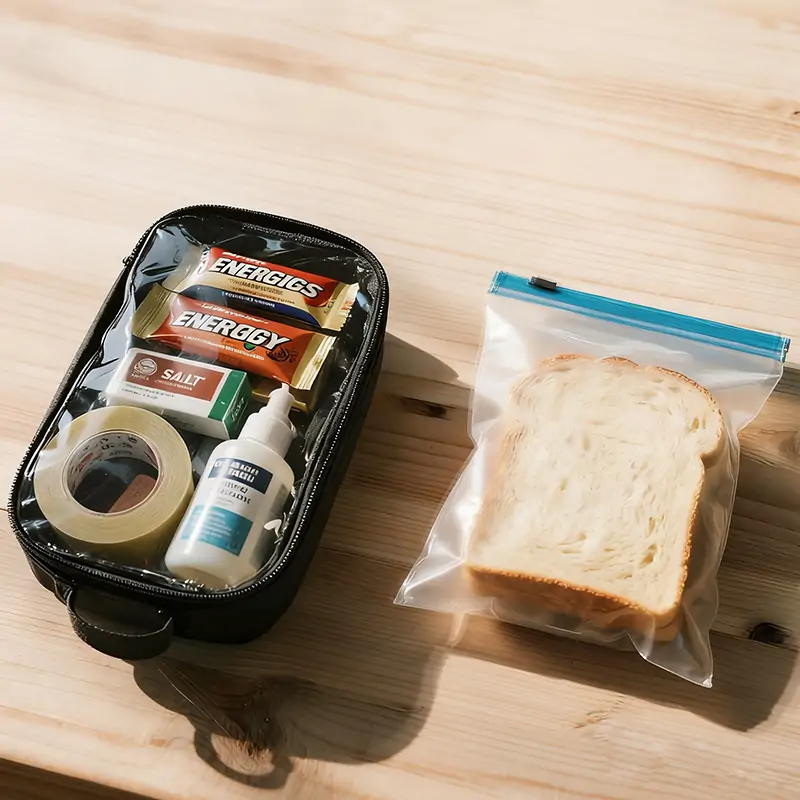
Perfectly fits the 7″x8″ standard. Holds 10+ bottles easily.
|
Too small (6.5″x5.8″). Fits ~5 bottles when crammed.
|
Avoid bag checks: A properly sized bag means a faster, smoother security experience.
|
|
🛡️ Leak Protection
|
Strong, heavy-duty waterproof zipper seal, tested to prevent leaks under pressure.
|
Weak press-to-seal strip; not recommended for liquids by manufacturers.
|
Protect your belongings: A reliable seal prevents messy spills on your clothes and electronics.
|
|
♻️ Sustainability
|
Long-term investment. Top options now use recycled (RPET) or silicone materials.
|
Typically single-use plastic. Not designed for reuse and has a larger environmental footprint.
|
Travel responsibly: Choosing durable, eco-conscious materials reduces waste over time.
|
|
🗂️ Internal Organization
|
2026’s best feature is internal panels, elastic loops, or dividers to keep items secure and upright.
|
A single, unstructured pouch. Items tumble and get jumbled.
|
Pack smarter: Organized items are easier to find, maximize space, and are quicker for TSA to inspect.
|
|
💪 Durability & Build
|
Constructed with reinforced seams and metal/ heavy-duty zippers designed for hundreds of trips.
|
Thin, flimsy plastic. The seal weakens, and the corners tear easily after minimal use.
|
Save money & reduce hassle: One reliable bag lasts for years, unlike constantly replacing flimsy ones.
|
|
⚡ Screening Speed
|
Sturdy, stands upright. Contents are neatly organized and visible at a glance.
|
Flops over, items are jumbled. Forces agents to open and sift, slowing down the line.
|
Skip the line: A neat, professional-looking bag helps security process you in seconds.
|
|
🔧 Zipper Quality
|
Full-perimeter, heavy-duty waterproof zippers that glide smoothly and won’t snag or break.
|
Relies on a plastic “grip ‘n seal” track that fails with pressure and repeated use.
|
Ensure trip-long integrity: A robust zipper is your primary defense against leaks and failures mid-trip.
|
Real-World Scenarios: Theory vs. Practice
-
Scenario 1: The “Dreaded 10 Seconds” at Security -
With a Sandwich Bag: You fumble to pull out a soft, overstuffed plastic pouch. The agent squints, trying to read labels through the clutter. “Sir/Ma’am, please open the bag.”— Your security process just got 2 minutes longer.
-
With a Quart Bag: You confidently present a rigid, transparent case with neatly arranged bottles. The agent gives a quick nod. — You’re through in seconds.
-
-
Scenario 2: The “Luggage Compartment Stress Test” -
With a Sandwich Bag: Turbulence causes bags to shift. The weak seal bursts under pressure, leaking shampoo all over your clothes. — Your trip starts with a cleanup disaster.
-
With a Quart Bag: The sturdy zip and tough material withstand the crush. Even if a bottle cap is loose, the leak is contained within the bag. — Your luggage stays dry and safe.
-
This is no contest. The professional travel quart bag achieves a landslide victory in every category that matters for travel experience, security, and efficiency. It’s not just a “bag” – it’s an essential part of your travel system and an insurance policy for a smooth journey.
3. A Practical Guide: If You Don’t Have a Quart Bag, Can a Sandwich Bag or Ziplock Be a Substitute?
The answer is: Yes, but it is a conditional, second-best compromise. The key is to understand its limitations, acknowledge the risks, and know how to use it correctly
1. Understand the Applicable Scenarios and Core Risks
-
When it might be acceptable: -
Very occasional, short trips where you are carrying very few liquid items (far below the limit).
-
Last-minute or unexpected travel where you genuinely have no access to a proper bag.
-
-
The risks you MUST accept: -
Risk of Rejection at Security: This is the biggest uncertainty. While the TSA rule specifies “approximately 1 quart,” officers have discretion. If your bag appears too small, overstuffed, or unclear, they may require you to repack or even discard items. Using a bag labeled “Quart Size” significantly reduces this risk.
-
High Risk of Leakage: The press-to-seal and thin material of standard bags are unreliable under the pressure and jostling of a carry-on compartment. A burst seal or torn bag means liquid disaster.
-
2. How to Maximize Your Chances of Success (If you must use a substitute).
If you decide to proceed, follow these steps to minimize risk:
-
Step 1: Choose the Best “Stand-in” -
Prioritize “Quart Size” Ziplock Bags: Many brands (like Ziploc, Glad) sell bags explicitly labeled “Quart Size.” This is the closest substitute to the TSA requirement.
-
Choose Heavy-Duty Versions: Look for bags marked “Heavy Duty,” “Strong,” or “Freezer” bags. These are made from thicker plastic with stronger seals, offering far better leak resistance and durability.
-
Ensure Total Clarity: Avoid bags with any prints or patterns that could obstruct the officer’s view.
-
-
Step 2: Master Safe Packing Techniques -
Do Not Overfill: Adhere strictly to the “fits comfortably” rule. Fill it only two-thirds full to leave room for a proper seal and avoid crowding.
-
Perform a Leak Test: After sealing, turn the bag upside down and gently squeeze it over a sink to check for leaks. Check for any seepage, especially at the corners and seal.
-
Double-Protect Bottles: For leak-prone items like lotions, put a small piece of plastic wrap over the bottle opening before screwing the cap on for an extra layer of security.
-
Core Conclusion: A high-quality, quart-sized, heavy-duty ziplock bag can serve as a temporary solution if used cautiously. However, it will never provide the durability, leak-proof reliability, and screening efficiency of a dedicated travel quart bag, which offers true peace of mind.
4. Your Decision: Which Bag is Right for YOU?
Now, the choice is yours. Decide based on your personal travel habits:
-
For the frequent traveler or anyone who values peace of mind and efficiency: A professional TSA-compliant quart bag is the undeniable optimal investment. It solves all potential problems at once, ensuring a smooth experience every time you travel.
-
For the very occasional traveler with minimal liquids who is willing to accept the risk: You can use a high-quality, quart-sized, heavy-duty ziplock bag as a temporary solution, provided you fully understand the risks and follow the tips above. But be prepared for potential hiccups.
5. FAQ: Your Questions, Answered
Q: Can TSA reject my quart-sized Ziploc bag?
A: It’s improbable if it’s a standard quart-sized bag and not overstuffed. The rule is designed for this specific size.
Q: Are there eco-friendly TSA quart bags?
A: Yes! Many brands now offer reusable, silicone, or recycled plastic TSA bags. This is a great way to travel sustainably.