



In today’s competitive food industry, your packaging is more than just a container—it’s a statement. With global plastic regulations tightening and a majority of consumers now preferring to support brands with strong environmental practices, the pressure to switch to sustainable solutions is immense. However, navigating the marketplace of biodegradable food packaging containers can be a minefield of confusing claims, greenwashing, and performance concerns.
This comprehensive sourcing guide is designed to cut through the noise. Whether you’re a restaurant owner, a café manager, or a food product brand, this article will serve as your definitive roadmap. We will move beyond basic definitions to provide a practical framework for selecting containers that are not only genuinely eco-friendly but also meet the rigorous demands of your business, from functionality and cost to branding and compliance. By the end, you will know exactly how to evaluate materials, verify certifications, and identify reliable food packaging container manufacturers for your custom needs.
Why the Switch to Biodegradable Food Packaging Containers is No Longer Optional
The move away from conventional plastic is no longer a niche trend but a business imperative. Understanding the “why” behind this shift is the first step in making an informed decision. The drivers are threefold:
-
The Regulatory Push: Governments worldwide are enacting strict bans on single-use plastics. From the EU’s Single-Use Plastics Directive to local ordinances in cities across North America and Asia, using non-compliant packaging can result in fines and limit your market access. Proactively adopting certified compostable packaging future-proofs your business against this rapidly evolving legislative landscape.
-
The Consumer Pull: Sustainability is a key brand differentiator. Modern consumers are increasingly educated and conscious of their purchasing impact. Using eco-friendly food packaging is a powerful way to demonstrate your brand’s values, build loyalty, and attract a growing demographic of environmentally aware customers. It transforms a simple transaction into a shared value proposition.
-
The Brand Value Proposition: Beyond compliance and marketing, there’s a core operational benefit. Sustainable packaging reflects a commitment to quality and responsibility. It tells your customers that you care about the entire lifecycle of your product, from sourcing to disposal. This enhances your brand’s reputation and can be a decisive factor in a crowded market.
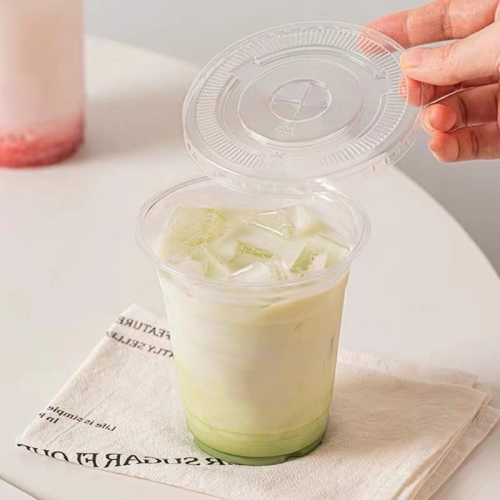
A Comparative Analysis
Choosing the right material is the cornerstone of selecting effective biodegradable food packaging containers. Each material offers a unique set of properties, advantages, and limitations. The table below provides a clear, side-by-side comparison to help you quickly identify the best fit for your specific application.
Biodegradable Food Container Materials: At a Glance
|
Material
|
Key Advantages
|
Key Limitations
|
Ideal Use Cases
|
|---|---|---|---|
|
PLA (Polylactic Acid)
|
– Crystal clear, glossy finish for excellent product visibility
– Good resistance to oils and moisture – Rigid and sturdy structure |
– Limited heat resistance (can warp above 45°C / 113°F)
– Requires industrial composting facilities to break down |
Cold drinks, salads, yogurt pots, deli containers, transparent takeaway boxes
|
|
Bagasse (Sugarcane Pulp)
|
– Excellent heat resistance, suitable for hot and greasy foods
– Very sturdy and microwave-safe – Made from agricultural waste (byproduct of sugar production) |
– Opaque and has a natural, fibrous appearance (less glossy)
– Can become soggy if holding liquids for very long periods |
Hot takeaway meals, pizza boxes, burger clamshells, plates, bowls for soups and sauces
|
|
Kraft Paper
|
– Classic, natural aesthetic that is highly customizable with printing
– Good for both hot and cold foods – Often home-compostable if uncoated |
– Requires a compostable coating (e.g., PLA) to be leak-proof for greasy or wet foods
– Less rigid than PLA or bagasse for heavy items |
Sandwich wrappers, bakery bags, dry food containers, portion cups (with lining)
|
|
PPC (Polypropylene Carbonate)
|
– Emerging technology that utilizes captured CO₂ in production
– Flexible and transparent – Biodegradable under specific conditions |
– Lower heat resistance than other options
– Not as widely available; cost can be higher – Performance is still being optimized |
Promising for cold food storage, flexible packaging films, and an option for innovation-focused brands
|
Material Deep Dives: Making the Right Choice
-
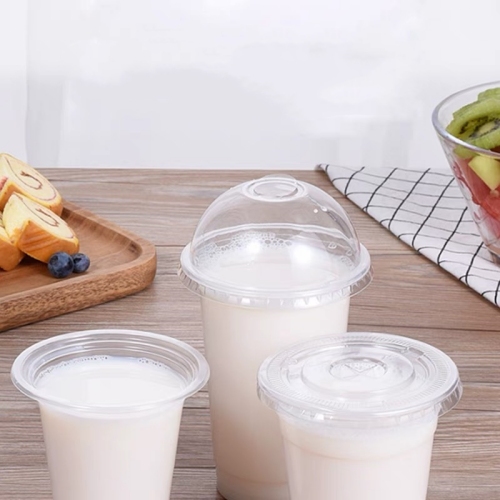
For Clarity and Branding: PLA ContainersIf your priority is to showcase the food and have a high-quality, glossy finish for custom logo printing, PLA is the leading choice. Think of it as the sustainable alternative for clear clamshells, salad bowls, and cold drink cups.
-
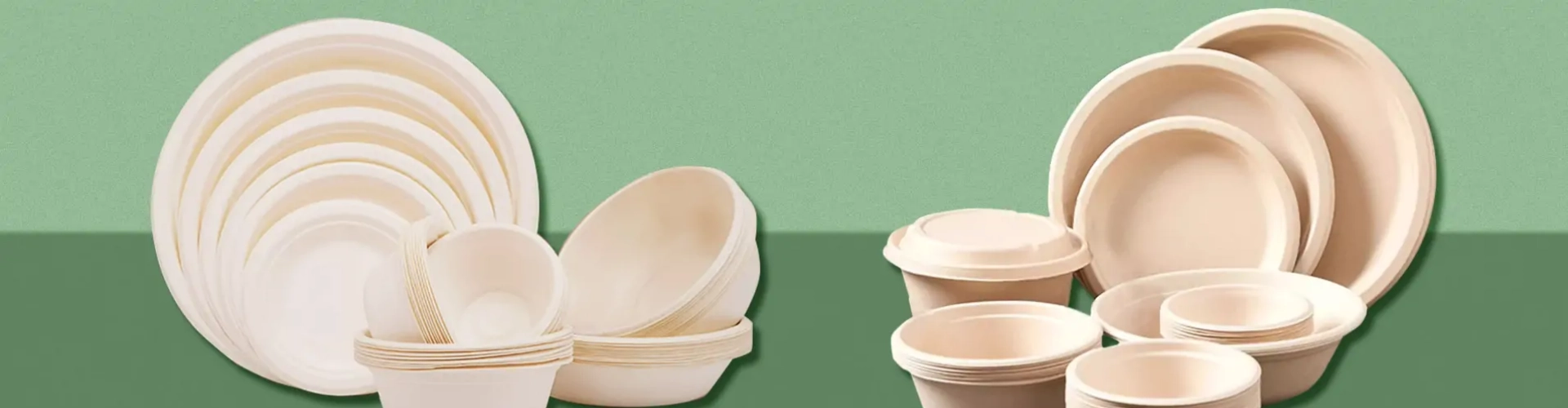
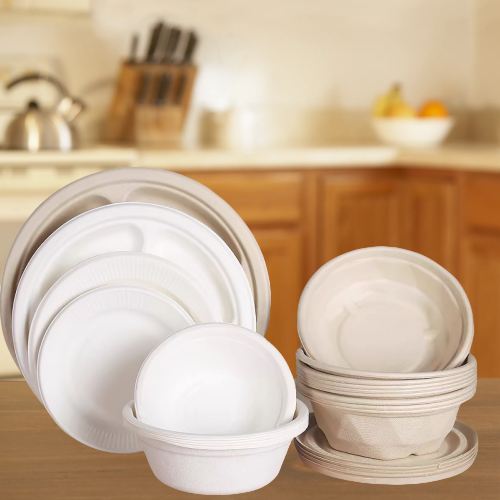
For Heat Resistance and Sturdiness: Bagasse ContainersBagasse is the pulp leftover after crushing sugarcane for juice. By turning this waste into packaging it represents a fantastic example of a circular economy. When you need a container that can handle hot, greasy, or saucy foods without getting soggy, bagasse is the winner. Its natural rigidity makes it ideal for replacing plastic or styrofoam plates and takeout boxes.
-
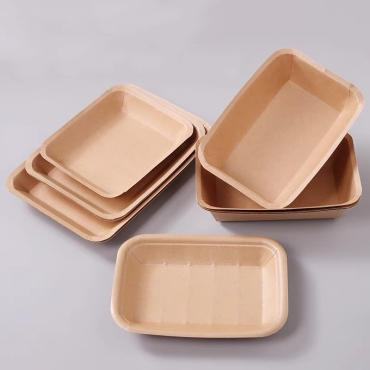
For a Natural Aesthetic and Printability: Kraft Paper ContainersKraft paper bags, wraps, and boxes offer a timeless, eco-conscious look. They are perfect for dry foods and, when paired with a compostable liner, can be used for a wider range of products.
Understanding and Verifying Certifications
This is the most crucial step to avoid greenwashing. The terms “biodegradable” and “compostable” are often used loosely. The only way to be sure of a product’s environmental claims is to look for independent, third-party certifications. These certifications are based on strict international standards that test the material’s ability to break down completely into non-toxic compost within a specific timeframe.
Here are the key certifications to look for:
-
BPI (Biodegradable Products Institute) – North America: The leading certification for compostable products in the U.S. and Canada. A BPI-certified product has been tested to meet ASTM D6400 standards for industrial composting.
-
TÜV Austria OK Compost – Global: A highly respected international certification. Look for two variants:
-
OK Compost INDUSTRIAL: Confirms the product is suitable for decomposition in an industrial composting facility.
-
OK Compost HOME: A more stringent certification, indicating the product will break down in a home compost bin.
-
-
ASTM D6400 / EN 13432: These are the underlying international standards (USA and EU, respectively) that define the testing criteria for compostable plastics. Certifications like BPI and OK Compost are based on these standards.
- ABA (Australian Bioplastics Association) Seedling Logo: The equivalent certification for the Australian and New Zealand markets.
Finding the Right Partner: A Guide to Food Packaging Containers Manufacturers
Selecting the perfect material is only half the battle. The success of your transition to sustainable packaging hinges on partnering with a reliable and expert food packaging containers manufacturer. A true partner does more than just sell you a product; they provide technical guidance, ensure consistent quality, and help you navigate complex supply chains.
To separate credible suppliers from mere resellers, here are the key questions you must ask:
The 5 Key Questions to Ask Every Potential Supplier
-
“Can you provide proof of certifications for this specific product?”
-
This is your first and most important test. Do not accept generic company certifications; ask for the certificate corresponding to the exact product you’re ordering (e.g., the 9×9 inch PLA clamshell). This proves the product itself has passed rigorous tests.
-
-
“What is your Minimum Order Quantity (MOQ) for custom food packaging containers?”
-
MOQs can vary dramatically. A clear answer helps you assess if the supplier is a fit for your business scale, especially if you’re a startup or looking to test a new product line without a massive upfront commitment.
-
-
“Can we request product samples before placing a bulk order?”
-
Samples allow you to conduct real-world tests. Check for durability, leak resistance, how well it holds hot or cold food, and the quality of any printing. A confident manufacturer will always encourage sampling.
-
-
“What is your experience with regulatory compliance for my target market (e.g., EU, USA, Australia)?”
-
Regulations are complex and change frequently. A knowledgeable manufacturer stays ahead of trends like the EU’s SUPD and can guide you on which materials and certifications are required for your specific export markets, reducing your compliance risk.
-
-
“What does your supply chain and production lead time look like?”
-
Transparency in the supply chain—from raw material sourcing to production—ensures stability. Understanding lead times is critical for your inventory planning and avoiding stock-outs.
-
The ShinHigh Bio Advantage: Partnering with an Expert
Navigating these questions is simpler when you work with a manufacturer that prioritizes transparency and expertise. At ShinHigh, our approach is built on a foundation of over 20 years of specialized experience in biodegradable materials.
-
Vertical Integration & R&D Focus: We control the process from raw material modification to finished product manufacturing. This allows for stringent quality control and the ability to innovate, creating solutions tailored to specific performance needs, such as enhanced heat resistance for PLA formulations.
-
Proactive Compliance Guidance: We don’t just sell products; we provide peace of mind. Our team continuously monitors global regulatory shifts, ensuring that the custom food packaging containers we develop for you are not only high-quality but also compliant with the latest international standards.
-
A Partnership Mindset: We view our clients as long-term partners. From the initial sample request to navigating MOQs and ensuring timely delivery, we are committed to supporting your brand’s journey toward authentic sustainability.
Conclusion: Making an Informed and Impactful Sourcing Decision
-
Define Your Needs based on your food type, operational requirements, and end-of-life options.
-
Select the Right Material by weighing the pros and cons of PLA, Bagasse, and others for your specific use case.
-
Verify Certifications Rigorously to ensure environmental claims are legitimate and avoid greenwashing.
-
Choose a Manufacturer Wisely by asking the critical questions that reveal their expertise and reliability.
Ready to Partner with a Trusted Expert in Biodegradable Packaging?
Stop wondering if your packaging supplier is truly reliable. Partner with a manufacturer that combines deep technical expertise with a commitment to transparency.
Contact Us Today for a Free Consultation and Sample Kit. Our specialists will help you evaluate your needs and provide samples of our certified compostable food containers to test for yourself.
Discover the difference that comes with partnering with a manufacturer dedicated to quality, innovation, and authentic sustainability.
Frequently Asked Questions (FAQs)
Q1: How long does it take for a certified compostable container to break down?
-
In an industrial composting facility, where temperatures are carefully controlled at 55-60°C, certified compostable containers typically break down within 90 to 180 days.
-
In a home compost bin, the process is slower and can take anywhere from 6 to 12 months, depending on climate and composting conditions.
-
In a landfill or natural environment, where oxygen and microbial activity are limited, decomposition can be significantly slower and may not be complete. This is why proper disposal through composting programs is essential.
Q2: Can I microwave PLA food containers?
A: This is a common point of confusion. While PLA is derived from plants and is generally considered safe, its main limitation is heat resistance. Most PLA containers start to soften or warp at temperatures above 45°C (113°F). Therefore, we do not recommend microwaving standard PLA containers. Always check the manufacturer’s guidelines for the specific product. For microwavable needs, look for containers made from bagasse (sugarcane pulp) or specific heat-resistant PLA formulations that are explicitly labeled as microwave-safe.
Q3: Are your biodegradable containers also leak-proof?
A: This varies by material. Materials like PLA have excellent inherent resistance to oils and moisture, making them very effective for salads, cold sauces, and dressings. Kraft paper, on its own, is not leak-proof. However, it can be lined or coated with a thin layer of a compostable polymer like PLA to create a leak-resistant barrier. When selecting containers, it’s crucial to match the material’s properties to your food items. We always recommend requesting samples to perform leak tests with your actual food products before making a bulk purchase.
Q4: How can I be sure a supplier’s certifications are legitimate?
-
Ask for the Certificate: Request the specific certification document (e.g., BPI, TÜV OK compost) for the exact product you are buying.
-
Check the Database: Major certifiers like the Biodegradable Products Institute (BPI)and TÜV Austria maintain online, searchable databases of certified products and companies. Look up the supplier’s name or product code to confirm the certification is active and valid.
-
Be Wary of Vague Claims: If a supplier uses terms like “degradable” or “oxo-degradable” without a recognized certification logo, it is a major red flag.