



Your Masterbatch Choice: The Foundation of Plastic Product Success
Selecting the right masterbatch supplier is a critical, yet often underestimated, business decision. The ideal choice doesn’t just add color or function; it safeguards your production line, ensures the reliability of your end product, and protects your brand reputation. A poor choice, however, can lead to costly defects, production delays, and non-compliant products.
This guide moves beyond basic checklists to provide you with a strategic framework of 6 essential criteria to systematically evaluate and identify the perfect masterbatch partner for your specific needs.
The 6 Core Criteria for Choosing the Ideal Masterbatch
Criterion 1: Decoding Your Needs – Material Matching & Performance Requirements
The first step in selecting a masterbatch is clearly defining your base material and final product requirements. Different resins (e.g., PE, PP, ABS) require masterbatches with matching carrier resins to ensure good compatibility and dispersion.
-
Base Resin Type: Identify your plastic substrate (Polyethylene PE, Polypropylene PP, etc.)
-
Processing Method: Different processes like injection molding, blow molding, and extrusion have varying requirements for the masterbatch’s melt flow index.
-
End Use: Special applications like food contact, outdoor use, or medical devices require corresponding functional masterbatches.
-
Performance Requirements: Determine if special functions like UV resistance, anti-oxidation, or flame retardancy are needed.
Pro Tip: If you produce multiple types of plastic products, consider partnering with a supplier who can provide a comprehensive solution series to simplify your supply chain management.
Criterion 2: Quality Certifications – Objective Proof of Reliability
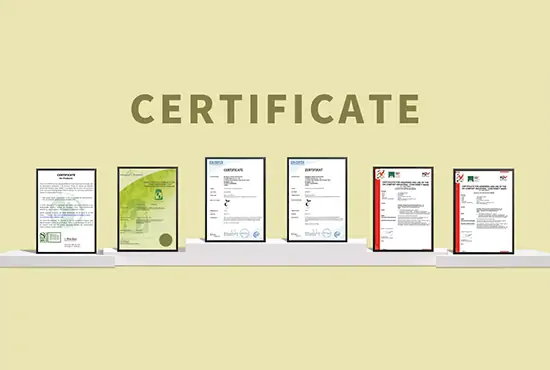
Quality certifications are not “optional extras” but objective proof of a supplier’s professionalism and product reliability. This is especially crucial for applications involving food contact, medical use, or environmental claims, where third-party certifications are paramount.
-
ISO 9001: Foundational Quality Management System certification.
-
Food Contact Certifications: FDA, EU 10/2011, etc. (if applicable).
-
Biodegradable/Compostable Certifications: TUV OK compost, BPI, etc.
-
Industry-Specific Certifications: Such as IATF 16949 for the automotive industry.
Criterion 3:Balancing Cost-Effectiveness Beyond the Price Tag
Excellent masterbatch selection decisions are based on total lifecycle cost, not merely the price per kilogram. A low unit price may hide higher usage costs or losses due to quality issues.
-
Usage Concentration: High-efficiency masterbatches may have a slightly higher unit price but require lower addition levels.
-
Processing Efficiency: Good dispersion can reduce production scrap rates.
-
Performance: Extends product lifespan or increases product added value.
-
Value of Technical Support: Free technical support from suppliers can solve production problems.
Criterion 4:The Power of Technical Support & Expertise
When production line issues like color deviation or dispersion problems occur, the supplier’s response speed and technical depth directly impact your level of loss. A supplier with strong technical capabilities can become an extension of your production department.
-
Technical Team Qualifications: Do they have application engineers providing on-site support?
-
Problem Response Time: How quickly can they provide solutions in emergencies?
-
Sample Testing Support: Do they offer free sample testing and technical guidance?
-
Custom Development Capability: Can they develop custom formulations based on your specific needs
-
Responsive Communication: Assess their willingness to conduct trials, provide samples, and give timely technical advice. This support is invaluable for optimizing your process.
Criterion 5: Consistency & Delivery Reliability – Guarantee for Stable Production
Consistency between masterbatch batches is crucial for maintaining stable product color and performance. Simultaneously, reliable delivery capability ensures your production line doesn’t halt due to material shortages.
-
Does the supplier have a strict batch inspection system?
-
What is the average on-time delivery rate? How are urgent orders handled?
-
Manufacturing Capacity & Lead Times: Can they support your volume demands, especially during peak seasons?
-
Supply Chain Resilience: How do they manage raw material shortages or logistical disruptions?
-
Communication: Is their sales/project management team proactive about updates? A reliable logistics partner is a cornerstone of a smooth operation.
Criterion 6:Embracing Sustainability & Innovation
With tightening global environmental regulations and changing consumer preferences, eco-friendly masterbatches are transitioning from a “competitive advantage” to a “market access requirement.” Choosing a supplier with an eco-friendly product line is an investment in your future competitiveness.
-
Do they offer bio-based, biodegradable masterbatch options?
-
Are there initiatives to reduce the carbon footprint in the production process?
-
Is the packaging material recyclable or reusable?
-
Does it comply with international environmental regulations like REACH and RoHS?
Partnering with an innovative supplier can become a competitive advantage for your own products.
Common Pitfalls in Masterbatch Selection and How to Avoid Them
Even with an understanding of the criteria, many companies still fall into common traps in practice. Here are the three most frequent mistakes and their avoidance strategies:
Avoidance Method: Use the total lifecycle cost formula mentioned above for evaluation and conduct small-batch trial production for verification.
Avoidance Method: Insist on complete trial production testing under actual production conditions to evaluate processing performance, color matching, and final product properties.
FAQs About Masterbatch Selection
Q: What is the difference between masterbatch and compound?
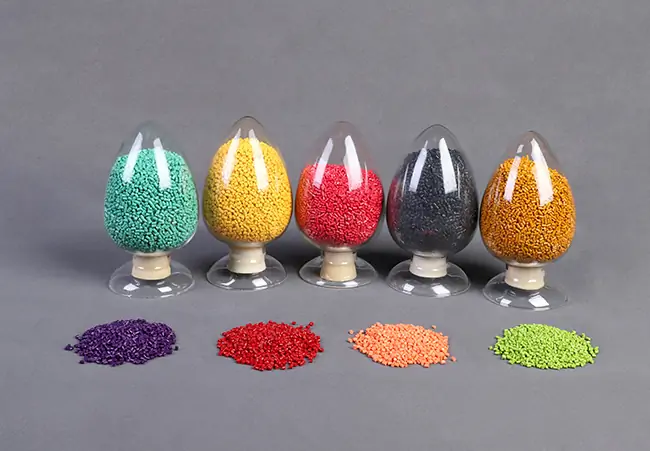
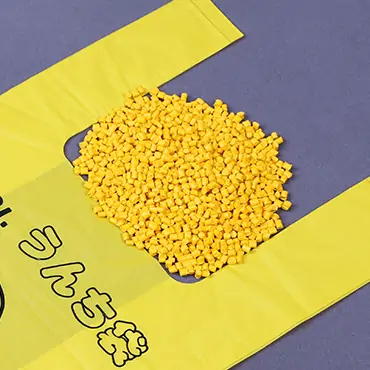
A: This is the most common point of confusion. A masterbatch is a highly concentrated mixture of pigments or additives with a carrier resin, typically in pellet form. It needs to be mixed with the base resin at a certain ratio (usually 1-5%) during use. A compound is a fully pre-mixed, ready-to-process material where additives are uniformly dispersed. Simply put, masterbatch needs dilution; compound can be used directly.
Q: How to calculate the correct addition amount for masterbatch?
A: The addition amount depends on several factors: required color depth, masterbatch concentration, base resin type, and final product thickness. Generally, follow the supplier’s recommended ratio (usually 1-4%), but the best method is to conduct gradient testing — trial production at different ratios to find the minimum effective addition amount that achieves the desired effect, balancing performance and cost.
Q: Can the same masterbatch be used for different types of plastics?
A: Generally not recommended. Masterbatches are designed and optimized for compatibility with specific resin types (e.g., PP, PE). Using a PE-based masterbatch for PP may lead to poor dispersion and weak interfacial bonding. If there is a cross-resin need, choose a “universal” masterbatch specifically designed for this purpose or consult the supplier.
Q: What are the signs of poor-quality masterbatch?
A: Poor-quality masterbatch typically manifests as: 1) Uneven color or color deviation; 2) Reduced mechanical properties (product becomes brittle); 3) Processing difficulties (e.g., die buildup); 4) Migration or blooming (color staining or sticky surface); 5) Significant batch-to-batch variation.
Q: How important are TUV/BPI certifications for compostable masterbatch?
A: Extremely important. These third-party certifications are the only reliable way to prove a product is “truly compostable” and not “greenwashing.” Uncertified compostable claims may face legal risks and market rejection. TUV OK compost is the most widely recognized certification in Europe, and BPI is mainstream in the North American market.
Q: Does using recycled material masterbatch affect performance?
A: This depends on the quality of the recycled material and the masterbatch formulation. High-quality, consistently sourced recycled material combined with a specially designed masterbatch can produce products with excellent performance. However, the inherent performance fluctuations of recycled materials need to be compensated for through customized masterbatch solutions, such as adding toughening agents, stabilizers, etc.
Conclusion: Making a Smart and Sustainable Choice
-
Clarify needs to ensure material and process compatibility.
-
Verify certifications to establish a foundation of quality trust.
-
Analyze the total cost to make the most economical decision.
-
Evaluate technical support to ensure problems are resolved quickly.
-
Confirm consistency to guarantee stable production operation.
-
Consider sustainability to prepare for future markets.
The most successful partnerships are those that transcend mere transactions and develop into technical collaborations. Your masterbatch supplier should understand your business goals and help you achieve them through material innovation.
About ShinHigh Bio – Your Sustainable Masterbatch Solution Partner
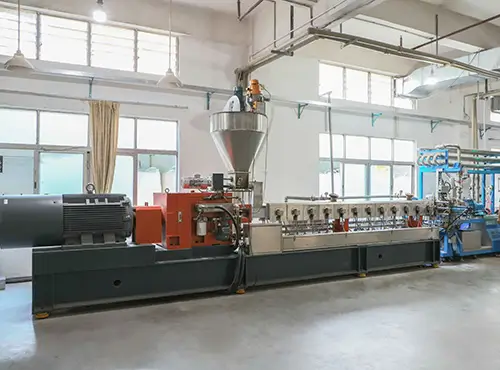
As a professional bio-plastic masterbatch manufacturer, ShinHigh Bio combines over a decade of industry experience with an innovative spirit. We not only provide standard products but also focus on:
-
Customized Solutions: Developing exclusive formulations for your specific application needs.
-
Comprehensive Technical Support: Full-process technical support from sample testing to mass production optimization.
-
Sustainable Product Line: A complete series of bio-based, compostable masterbatches, all certified with TUV OK compost.
-
Global Quality Standards: A strict quality control system ensures high batch-to-batch consistency.